
...

10 Tips for Sourcing Casual Womenswear

Sourcing casual womenswear looks simple until a fabric feels wrong, a size run shifts, or delivery misses the selling season. Buyers must balance comfort, fit, cost, quality, and supplier reliability. Casual Women Wear spans everyday essentials, relaxed workwear, and weekend pieces, so one sourcing formula rarely fits every product. Start with the customer and intended use. A soft cotton tee and a structured casual jacket need different performance checks.

Fashion designer Vivienne Westwood’s advice, “Buy less, choose well, make it last,” offers a useful lens for sourcing. It is not a complete buying strategy, but it highlights the value of durable materials and considered product choices. Request fabric details, care instructions, size specifications, and production timelines before approving an order. Then assess samples under real conditions: check seams after washing, compare measurements across sizes, and note how the garment drapes in motion. Small checks matter.

This guide outlines ten practical tips, from defining your customer and comparing suppliers to reviewing minimum order quantities and inspecting pre-production samples. Ask how suppliers handle quality checks and communicate delays. Confirm details in writing. A polished sample does not guarantee consistent bulk production, and a low unit price can hide costly compromises. No checklist removes every trade-off. Even experienced buyers can miss a detail, so keep records, question assumptions, and improve the process with each order.
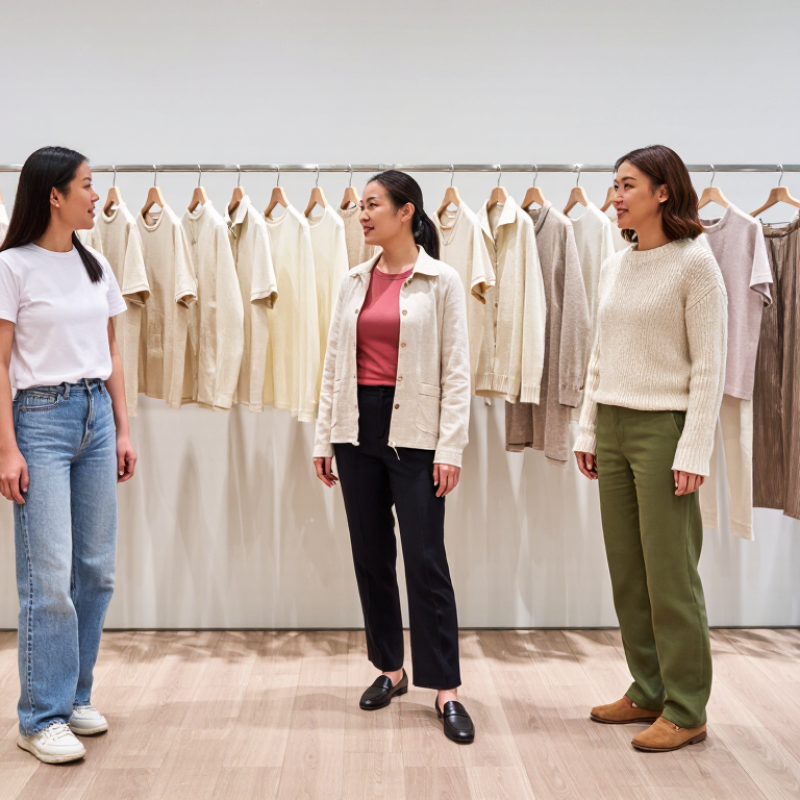
10 Tips for Sourcing Casual Womenswear

Define the Target Customer and Casualwear Assortment

Tip 1: Define the customer before choosing garments. “Women who like casual clothes” is too broad to guide sourcing. Note how customers spend their days, what they can comfortably pay, and which fabrics suit their local weather. A commuter may want washable trousers and a light layer; a parent running errands may value pockets and forgiving fits. Ask a few regular shoppers what they actually wear. Assumptions can miss.

Tip 2: Build the assortment around real use. Choose a clear base of everyday tops, bottoms, and layering pieces, then check that colors and fabrics work together. For example, a cotton shirt should pair with more than one trouser option. Compare size measurements, fabric weight, stitching, and care instructions across supplier samples. Keep notes. A sample can look excellent under showroom lights and feel quite different after washing.

Tip 3: Set limits before placing an order. Decide how many styles, colors, and sizes your budget can support, and leave room to reorder proven sellers. Review sales and customer feedback regularly; an item that looked essential may sit untouched. I’ve seen neat plans fail when sizing or seasonality was guessed too confidently. Treat early buying decisions as testable, not certain.

Find Suppliers That Match Your Product and Volume Needs

Tip 1: Match the supplier’s specialty to your product. Ask whether they regularly make the fabrics, fits, and details you need, such as ribbed cuffs or relaxed shoulders. Request recent samples and check stitching, seam consistency, and fabric recovery after washing. A polished sample matters, but it does not prove every production run will match.

Tip 2: Confirm capacity before discussing large orders. Share your target quantity, size range, and delivery window, then ask about minimum order quantities and monthly output. A small workshop may offer close communication but struggle with a sudden volume increase. A larger factory may meet demand yet require higher minimums. Get production timelines in writing, including sample approval and packing stages. Details can shift.

Tip 3: Compare the full cost, not only the unit price. Ask about fabric surcharges, sample fees, labeling, and shipping terms. Clarify who checks measurements and how defects are recorded. A simple trial order can reveal missed details, though it may not predict peak-season performance. I would reassess the supplier after reviewing actual delivery times and product consistency, not just a confident sales call.

10 Tips for Sourcing Casual Womenswear - Find Suppliers That Match Your Product and Volume Needs

# Sourcing tip Best fit Typical order or timing guide What to verify
1 Define your product and volume before requesting quotes. Any buyer comparing factories or wholesale suppliers. Prepare styles, size range, colors, estimated units per style, target price, and delivery window. Ask whether the quoted minimum applies per style, color, or total order.
2 Match the supplier type to your order size. Small test runs, repeat basics, or larger seasonal orders. Small-batch production may start at tens to a few hundred pieces per style; larger production often requires several hundred or more. Confirm the supplier’s current minimums and whether mixed sizes or colors count toward them.
3 Check fabric availability before approving a style. T-shirts, casual dresses, trousers, knitwear, and lightweight layers. Stock fabrics can shorten sourcing; custom-dyed or specially developed fabrics usually add time and minimum requirements. Request fiber composition, fabric weight, color availability, shrinkage information, and a physical swatch.
4 Request a sample and approve fit before bulk production. New styles, unfamiliar sizing, or suppliers you have not used before. Allow time for sample making, shipping, fit review, and any requested revisions. Check measurements, seams, trims, color, comfort, and how the garment looks after washing.
5 Compare production lead times, not just quoted prices. Buyers with a launch date, seasonal deadline, or planned replenishment. Bulk apparel production commonly takes several weeks after approvals and material readiness; shipping time is additional. Get separate estimates for sampling, materials, production, inspection, and transport.
6 Use a written specification and size chart. Multi-size assortments, repeat orders, or styles with detailed fit requirements. Provide a measurement chart with tolerances and a size breakdown for each order. Agree on measurement points, grading rules, labeling, packaging, and acceptable tolerances.
7 Evaluate quality controls before placing a large order. First-time orders and products where fit, stitching, or color consistency matters. Set inspection points during sampling, production, and pre-shipment review where appropriate. Ask how defects are recorded, how rework is handled, and what inspection criteria will be used.
8 Calculate the landed cost for your target market. Buyers comparing domestic and overseas production options. Compare unit price alongside freight, duties, taxes, packaging, payment fees, and inspection costs. Confirm the shipping term, destination, currency, payment schedule, and who is responsible for import charges.
9 Ask about replenishment and repeat-order consistency. Core casual styles intended to remain available across multiple seasons. Discuss reorder minimums, fabric continuity, and realistic repeat-production lead times. Find out how long fabrics and trims can be reserved and how color or fit changes are managed.
10 Check compliance and traceability relevant to your market. Buyers with labeling, product-safety, or responsible-sourcing requirements. Requirements vary by product and destination; confirm them before production starts. Request applicable test reports, fiber and care-label details, facility information, and supporting records.

Note: Order quantities and lead times are indicative planning ranges, not fixed industry standards. Actual terms depend on style complexity, fabric availability, supplier capacity, order details, and shipping route; confirm them directly before committing.

Evaluate Fabric Quality, Fit, and Production Standards

When sourcing casual womenswear, judge fabric on the finished garment, not a supplier’s swatch alone. Check weight, stretch recovery, seam slippage, pilling, and colorfastness after washing. A soft handfeel can hide weak recovery; cuffs may bag out after repeated wear. Textile Exchange’s Materials Market Report 2024 estimates global fiber production reached 124 million tonnes in 2023, with polyester representing 57% of the total. That scale makes fiber claims worth verifying through certificates and transaction records. Ask for test results tied to the actual fabric lot. Test the real thing.

Fit needs the same scrutiny. Approve a size set, then measure key points against a written specification. Try garments on different body shapes, and sit, reach, and bend in them. A neat fit on one model can still pull across the hip or twist at the side seam. Record tolerances, grading changes, and shrinkage after laundering; do not rely on a single sample. It is easy to over-trust a polished prototype.

For production standards, review the factory’s quality procedures, worker training records, and corrective-action logs. ISO 9001 can indicate a quality-management system, but certification alone does not prove each shipment is consistent. Use risk-based audits and repeat checks during production. Small differences matter. A documented process helps, though it cannot replace careful inspection.

Compare Pricing, Minimum Orders, and Delivery Terms

A low unit price can hide costs that appear later. Compare quotes for the same fabric, stitching, size range, labels, and packing. Ask each supplier to list sample fees, setup charges, and shipping separately. A blouse quote may exclude buttons or individual polybags, so check the written specification before comparing totals. Small details matter.

Minimum order quantities often apply per style, color, or size—not just to the whole order. Confirm the exact rule before choosing a supplier. If you are testing demand, ask whether a smaller trial run is possible and how it changes the unit price. Be careful with broad promises; get the agreed quantity and any price breaks in writing. I would not assume a large order is automatically better. Leftover sizes can sit in storage.

Delivery terms need the same careful comparison. Ask when the production clock starts: after deposit, fabric approval, or final sample approval. Request separate estimates for production and transit, plus the shipping method and who handles freight costs. Check how delays are communicated and whether partial shipments are available. Keep a small buffer before a seasonal launch; schedules can slip, even with clear paperwork. Compare the full landed cost, not just the factory price.

Test Samples and Monitor Supplier Performance

A sample is a promise, not proof. Test it against the approved specification before placing a bulk order. Check measurements across sizes, seam strength, colorfastness, pilling, and shrinkage after washing. Keep a sealed reference sample and record fabric composition, shade, and measurements. Small differences matter. A soft hand-feel can hide a loose seam or fabric that twists after washing.

Do not approve a sample based on appearance alone. Wear-test key styles, then compare production garments with the reference. Track first-pass approvals, defect rates, on-time delivery, and corrective-action closure for each supplier. Fashion Revolution’s 2023 Fashion Transparency Index assessed 250 major fashion companies and reported an average score of 26%. The index measures public transparency, not factory quality, but it highlights why buyers need their own reliable records. A supplier’s polished presentation is not a performance metric.

Review results with the supplier regularly, using dated photos and clear defect examples. If one batch arrives late or measurements drift, document the issue and agree on a specific correction and deadline. Re-test the next sample. I find it easy to overvalue a perfect sample; production consistency is the harder test. Keep the scorecard simple enough to update, and note where your own specifications were unclear.

ICB_lOGO_2023