...

2026 Top Embedded Computer Types What Should Buyers Choose?

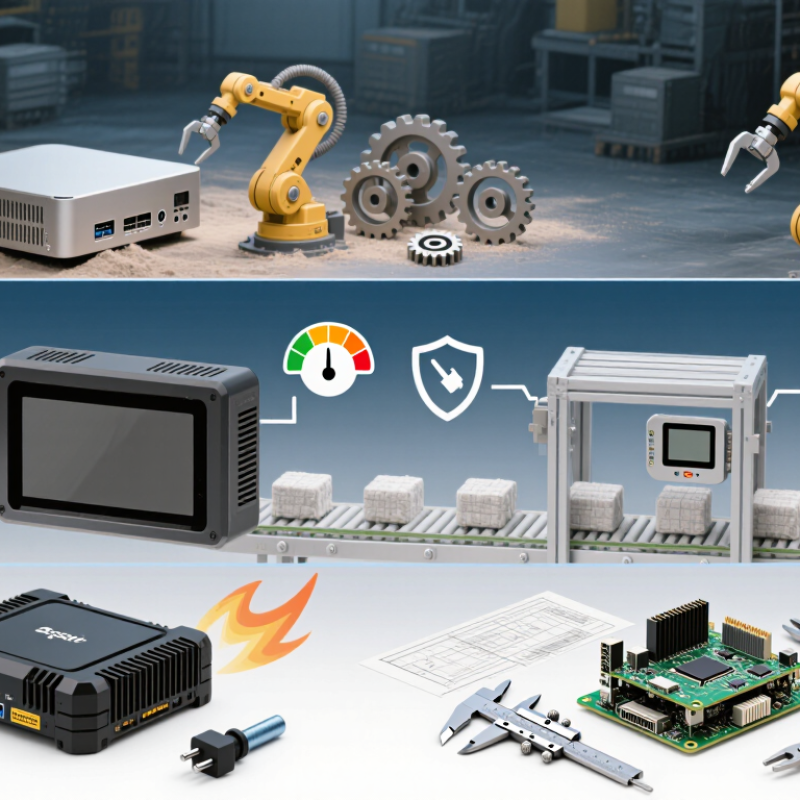
Choosing the right Embedded Computer in 2026 will require more than comparing processor names. Buyers must connect hardware choices with real operating conditions, software demands, and long-term maintenance plans. A fanless box computer may suit a dusty factory floor, while a panel computer can simplify operator control beside a production line. Rugged systems may withstand vibration, heat, and unstable power. Compact systems, including system-on-module designs, can reduce enclosure size but often demand stronger engineering support.

The practical question is not, “Which computer is most powerful?” It is, “Which computer will remain dependable here?” A high-performance processor can struggle inside a sealed cabinet without careful thermal design. Extra memory cannot repair poor software optimization. I have seen attractive specifications hide limited I/O, short product lifecycles, or difficult replacement procedures. That lesson deserves attention.

Reliable selection begins with evidence. Check operating temperature ratings, shock and vibration data, ingress protection, expansion interfaces, cybersecurity provisions, and vendor lifecycle statements. Test the system with the intended cameras, displays, sensors, and communication modules before approving a large purchase. Ask whether the supplier provides BIOS updates, driver support, remote management, and repair options. These details often matter more than a small benchmark advantage.

This guide compares leading Embedded Computer types for 2026 and explains where each design fits. It also considers cost, installation space, power consumption, maintainability, and future upgrades. No category wins everywhere. A careful buyer should accept that trade-offs remain, and revisit assumptions before committing to production.
2026 Top Embedded Computer Types What Should Buyers Choose?

Embedded Computers: Definition, Core Functions, and Common Applications

An embedded computer is a compact computing system built into a larger product or machine. Unlike a general desktop, it performs a defined task for long periods with limited intervention. In 2026, common types include industrial PCs, box computers, panel PCs, edge gateways, and system-on-module designs. Its processor, memory, storage, operating system, and input/output interfaces work as one controlled platform. Many designs use fanless cooling, sealed housings, or wide-temperature components. These details matter where dust, vibration, heat, or limited space are normal.

Core functions include data collection, local processing, equipment control, and network communication. Sensors may send temperature or motion readings every second. The computer filters those signals, runs software rules, and triggers an actuator when conditions change.

It can connect to cameras, displays, serial devices, Ethernet networks, or industrial protocols. Local processing reduces delay and keeps essential operations running during an unstable connection. Security still needs attention. A strong password alone is not a complete plan.

Common applications include factory monitoring, vehicle systems, medical equipment, digital signage, retail terminals, and smart energy controls. In a production line, an embedded computer may inspect images and stop a machine before defective goods continue. Buyers should match performance to the workload, not choose the highest specification automatically. Check processor headroom, I/O types, storage endurance, operating temperature, maintenance access, and software support. I have seen projects fail because a missing connector was noticed too late. Smaller systems are not always simpler.

Key Embedded Computer Types Available in 2026

In 2026, embedded computers fall into several practical types. Fanless box computers suit factories, kiosks, and outdoor cabinets. They reduce dust intake and usually require less maintenance. Panel PCs combine computing hardware with a touchscreen. They work well at production stations, medical carts, and warehouse terminals. Compact modules provide another option. System builders can install them inside robots, instruments, or custom control units.

Rugged embedded computers target vehicles, utility equipment, and harsh industrial sites. Their sealed enclosures resist vibration, moisture, and temperature changes. Check the actual protection rating, not only the product description. Edge AI computers include stronger processors for local video analysis and machine inspection. They can respond quickly without sending every image to a remote server. However, higher performance often means more heat, power use, and configuration work.

Choosing the right type requires field-based testing. Measure startup time, operating temperature, cable space, and available mounting points. A quiet fanless unit may throttle under continuous workloads. A rugged model may exceed the budget for a clean indoor room. Panel computers can simplify installation, but screen replacement may become expensive. Buyers should also verify processor availability, operating system support, expansion ports, and documented lifecycle plans. Short trials with real sensors reveal problems that specifications often hide. No selection is perfect. The best choice depends on workload, environment, maintenance skills, and expected service life.

How Embedded Computer Types Differ in Performance and Design

2026 Top Embedded Computer Types: What Should Buyers Choose?

Embedded computer types differ less by appearance than by how they handle heat, workload, and physical constraints. A single-board computer suits compact gateways, light data collection, and simple control tasks. Box computers usually provide stronger processors, more ports, and easier maintenance. Panel computers add a display, touchscreen, and sealed enclosure, making them practical for operator stations. Rugged systems focus on vibration resistance, wide temperature ranges, and stable operation in demanding locations.

Performance depends on more than processor speed. Check sustained performance, memory capacity, storage endurance, and expansion options. A fanless box may reduce dust problems, but it can throttle under continuous heavy workloads. Active cooling improves thermal headroom, yet fans introduce noise and another failure point. I have seen systems pass short benchmark tests and struggle after hours inside a warm cabinet. Short tests can mislead.

Design should follow the installation, not marketing language. Measure mounting space, cable clearance, airflow, and service access before purchasing. Industrial control may need isolated interfaces and predictable response times. Vision workloads may require stronger graphics processing and faster storage. Remote equipment may benefit from low power consumption and watchdog recovery. Do not overbuy blindly. Extra performance can increase heat, cost, and configuration effort, while weak expansion can force an early replacement. A careful prototype under real temperature and workload conditions remains more reliable than a specification sheet alone.

Choosing the Right Embedded Computer for Specific Project Requirements

2026 Top Embedded Computer Types: What Should Buyers Choose?

Choosing the Right Embedded Computer for Specific Project Requirements

Selecting an embedded computer should begin with the project environment, not the processor name. A factory machine may need a fanless box computer with sealed housing and wide temperature support. A retail kiosk may need a compact panel computer with strong display connectivity. For mobile equipment, low power consumption and shock resistance often matter more than peak speed.

In practical deployments, storage and expansion can become unexpected limits. Check whether the system supports the required memory, industrial interfaces, and long-term storage method. A computer controlling cameras may need fast data transfer and stable processing under continuous load. A gateway in a remote cabinet may need multiple network ports and dependable startup after power interruption. Small details matter.

Thermal testing is essential. A system that performs well in an office can struggle inside a metal enclosure under direct sunlight. Fanless designs reduce moving parts, but they may throttle when heat accumulates. That trade-off is easy to overlook. I have also seen projects select excessive computing power, increasing cost and energy use without improving results. A modest system may be the wiser choice, but only after testing real workloads.

Buyers should evaluate driver support, security updates, mounting options, and service access. Verify these details with measured tests and written specifications. Marketing language can be vague. Project requirements are not.

2026 Top Embedded Computer Types: What Should Buyers Choose?

Embedded Computer Type Typical Processing Profile Common Interfaces and Expansion Environmental Capability Best-Fit Applications Main Advantages Key Buyer Trade-Offs
Single-Board Computer (SBC) Low-power ARM or x86 processors; commonly 1–16 GB of memory; storage through flash, microSD, or an M.2 slot. USB, Ethernet, display outputs, GPIO, serial interfaces, camera connectors, and wireless options. Usually intended for controlled indoor conditions; industrial versions may support wider temperature ranges. Prototyping, smart displays, gateways, educational equipment, compact controllers, and light IoT workloads. Low cost, small footprint, broad software support, and fast development. Limited expansion, thermal headroom, storage endurance, and long-term product availability can be concerns.
Industrial Box PC Multi-core x86 or ARM processors; typically supports higher memory capacity and solid-state storage. Multiple Ethernet ports, USB, serial ports, digital I/O, optional fieldbus, and mini-card or M.2 expansion. Fanless designs, shock and vibration resistance, wide-temperature options, and industrial power input are common. Factory automation, machine control, data acquisition, industrial networking, and edge computing. Strong reliability, flexible I/O, easy cabinet installation, and better lifecycle support than consumer boards. Higher purchase cost and greater physical size than an SBC; passive cooling may limit sustained peak performance.
Panel PC Integrated processor and industrial touchscreen; performance ranges from entry-level control to demanding visualization. Projected-capacitive or resistive touch, Ethernet, USB, serial ports, display interfaces, and optional expansion. Front-panel sealing commonly ranges from basic dust protection to high ingress protection, depending on the design. Human-machine interfaces, production lines, kiosks, process visualization, and building control. Combines computing, display, and operator input in one space-saving enclosure. Screen failure affects the complete unit; mounting dimensions, brightness, touch technology, and cleaning requirements must be checked carefully.
DIN-Rail Embedded PC Low- to mid-range processors optimized for continuous operation and industrial control workloads. Ethernet, serial communication, digital I/O, fieldbus connectivity, USB, and removable or accessible storage. Designed for control cabinets; often supports industrial temperature ranges, vibration resistance, and 9–36 V DC input. Energy management, transportation systems, utility monitoring, PLC companion systems, and remote control cabinets. Efficient cabinet integration, compact wiring, and convenient installation on standard DIN rails. Less suitable for graphics-intensive workloads; cabinet heat dissipation and electrical noise require attention.
Computer-on-Module (COM) Processor, memory, and core chipset mounted on a replaceable module; carrier-board design determines system features. High-speed interfaces may include PCIe, USB, Ethernet, display, serial interfaces, and dedicated industrial signals through the carrier board. Capability depends on the module, carrier, heat spreader, and enclosure; industrial temperature options are available. Customized equipment, medical devices, robotics, transportation electronics, and products requiring controlled hardware integration. Enables product customization while reducing redesign effort when processor technology changes. Requires carrier-board engineering, thermal validation, firmware integration, and careful lifecycle planning.
Rugged Embedded Computer High-performance x86 or ARM processing, often with ECC memory, fast NVMe storage, and optional graphics or accelerator support. Sealed I/O connectors, multiple Ethernet ports, serial communication, video outputs, storage expansion, and specialized interfaces. Built for shock, vibration, dust, moisture, electromagnetic interference, and extended temperature operation. Rail and vehicle systems, outdoor infrastructure, defense-related equipment, mining, and mobile industrial machinery. High durability, reliable operation in harsh environments, and strong mechanical protection. Highest cost and weight among common embedded formats; sealed enclosures complicate servicing and thermal design.
Edge AI Computer Multi-core CPU combined with a GPU, NPU, or other accelerator; designed for local vision and machine-learning inference. High-speed Ethernet, USB, camera inputs, M.2 or PCIe expansion, display outputs, and accelerator-specific interfaces. Available in fanless or actively cooled configurations; environmental rating depends strongly on the enclosure and thermal solution. Machine vision, predictive maintenance, intelligent surveillance, robotics, retail analytics, and real-time inspection. Reduces cloud dependence, lowers latency, supports local data processing, and can improve privacy. Higher power consumption, software-framework dependencies, thermal requirements, and model-optimization effort.
Vehicle-Mounted Embedded Computer Low- to high-performance processors with power-management features for mobile and intermittent power conditions. Automotive Ethernet, CAN or CAN FD, serial interfaces, GNSS, cellular connectivity, USB, and ignition sensing. Designed for vibration, voltage transients, temperature variation, and vehicle electrical environments. Fleet management, mobile data terminals, logistics, public transportation, agricultural machinery, and autonomous platforms. Supports mobile connectivity, vehicle data integration, and operation during engine start or power fluctuations. Requires careful EMC, power, antenna, mounting, and regulatory validation for the target vehicle.
Fanless Embedded Computer Low- to mid-range processors selected for passive cooling; performance is determined by the thermal design power and enclosure. Ethernet, USB, serial ports, digital I/O, display outputs, and expansion through M.2, mini-card, or PCIe options. Reduced dust entry and lower mechanical failure risk; industrial models may support wide-temperature operation. Digital signage, control systems, transportation, laboratory equipment, and continuously operating gateways. Quiet operation, low maintenance, and improved resistance to dust-related fan failures. Passive cooling limits sustained performance; enclosure airflow, mounting orientation, and ambient temperature are critical.
Edge Gateway Typically optimized for protocol conversion, local filtering, buffering, and secure data transmission rather than heavy computation. Multiple Ethernet ports, Wi-Fi, cellular, serial, USB, CAN, fieldbus, and industrial digital I/O. Industrial gateways may provide wide-temperature operation, surge protection, and secure remote management. IoT aggregation, smart buildings, energy systems, remote monitoring, and connecting legacy equipment to cloud platforms. Connects diverse devices, reduces bandwidth usage, and maintains local operation during network interruptions. Usually unsuitable for advanced graphics or intensive AI; cybersecurity, update management, and protocol compatibility are essential.

Evaluation Factors for Buyers: Processing, Connectivity, Reliability, and Cost

Choosing among 2026’s embedded computer types requires more than comparing processor speeds. Buyers may consider fanless systems, computer-on-module designs, rugged computers, or edge AI platforms. Each suits a different operating environment. A fanless unit reduces moving-part failures, while a module can save space inside compact equipment. Rugged systems handle vibration and temperature changes better. More speed is not always better.

Processing needs should match the workload. Basic monitoring may require only modest CPU performance and memory. Machine vision, local analytics, and AI inference need stronger processors, faster storage, and sometimes dedicated acceleration. Overestimating requirements increases heat and cost. Underestimating them creates delays later. A practical test uses real data, peak workloads, and sustained operation.

Connectivity deserves equal attention. Check Ethernet speed, serial interfaces, USB availability, fieldbus support, wireless options, and expansion capacity. Check the details. Reliability depends on operating temperature, dust protection, vibration resistance, watchdog functions, secure boot, and long-term firmware support. Field testing often reveals problems that laboratory demonstrations miss, such as unstable cables or storage failures after repeated power cycles. Cost should include integration, cooling, maintenance, replacement parts, and software development. A low purchase price can become expensive when support is limited. This judgment is uncomfortable: buyers sometimes pay for features they never use, while overlooking one essential port or protection rating.

2026 Top Embedded Computer Types: What Should Buyers Choose?

Comparative buyer evaluation based on typical market characteristics. Scores range from 1 to 10; higher scores indicate stronger suitability for the selected factor.

Single-board computers generally offer the lowest cost, while industrial PCs and rugged edge computers provide stronger reliability for demanding environments. Computer-on-Module designs are highly scalable and space-efficient, and box PCs provide a balanced combination of processing capability, connectivity, and deployment flexibility.

ICB_lOGO_2023