
...

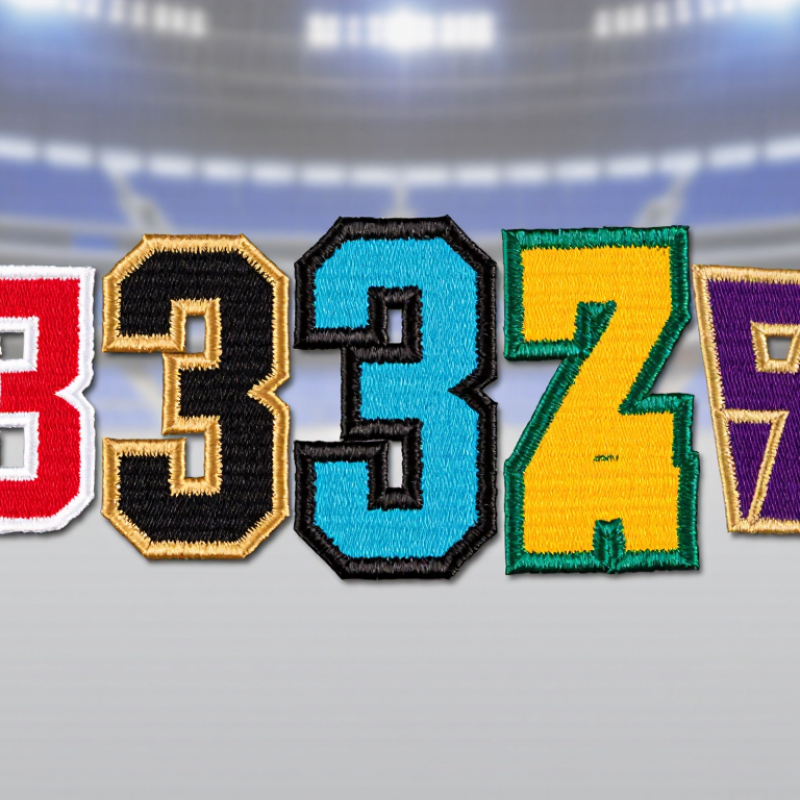
7 Best Number Patches for Sports Jerseys?

A jersey number is more than a digit stitched onto fabric. It identifies a player, reflects team culture, and survives intense movement, washing, and seasonal wear. That makes choosing the right Number Patches a practical design decision, not merely a decorative one.

Market evidence supports this attention to detail. Grand View Research places the global sports apparel market above $200 billion, while the Sports & Fitness Industry Association continues to report strong participation across team sports. These reports measure broad categories, not Number Patches specifically. Still, they reveal a growing demand for customized, durable uniforms. Estimates differ, and that uncertainty matters. A cheap-looking patch can weaken an otherwise professional jersey.

Design authority Charles Eames said, “The details are not the details. They make the design.” His observation fits sports uniforms perfectly. Patch height, stitch density, edge finish, color contrast, and backing material all affect the final result. Small choices become visible under stadium lights. They also become obvious after repeated washing.

This guide examines seven Number Patches suited to different sports, budgets, and customization needs. Some options prioritize lightweight comfort. Others deliver bold visibility or long-term durability. No single patch wins every situation. A youth baseball team may need flexibility, while a school basketball program may prefer sharp contrast and reinforced edges. My ranking may still undervalue personal team style. That is worth remembering before placing a large order. The best choice balances appearance, performance, material quality, and realistic maintenance expectations.
7 Best Number Patches for Sports Jerseys?

Understanding Number Patches for Sports Jerseys

Understanding Number Patches for Sports Jerseys

Number patches do more than identify players. They affect comfort, durability, appearance, and jersey movement.

In my experience, the best choice depends on the sport, fabric, washing routine, and expected use. No single patch works perfectly for every team.

Chenille patches create a raised, traditional texture and suit heavy jerseys.

Tackle twill offers clean edges and strong durability during repeated washing.

Embroidered patches add visible stitching and a handcrafted feel.

Sublimated patches remain lightweight because the design enters the fabric.

Heat-applied patches install quickly, but poor temperature control can cause lifting.

Reflective patches improve visibility during evening training, although their effect depends on lighting.

Flexible PVC patches resist moisture and create a modern surface, but they may feel less breathable.

Check the jersey fabric before choosing an adhesive or stitching method. Stretchy materials usually need flexible patches and reinforced edges.

Test one patch first. Small trials prevent expensive mistakes.

I once preferred thick patches for their bold appearance, but they felt uncomfortable during long matches. That changed my selection process.

Measure the number carefully, inspect the corners, and wash the sample according to the care label.

A patch can look excellent on a table and still fail after sweat, friction, and repeated drying.

Machine stitching often provides better security, yet it may leave visible marks inside lightweight jerseys.

Key Features That Define a High-Quality Number Patch

A high-quality number patch begins with fabric compatibility.

Polyester remains the dominant fiber, representing 59% of global fiber production in 2023, according to Textile Exchange’s 2024 Materials Market Report. Therefore, polyester thread and a stable polyester or twill base often suit modern jerseys. The backing should sit flat without stiff edges. A patch that curls after washing is not high quality.

Stitch density matters, but excessive density can damage lightweight jersey fabric.

Clean satin borders should cover the edge evenly, with no loose thread tails. I check raised numbers by rubbing them against a spare garment panel. They should feel firm, not sharp. Colourfastness also deserves attention. AATCC TM61 uses a 45-minute accelerated laundering test, roughly representing five home washes. This offers useful screening, though real uniforms face sweat, friction, sunlight, and repeated stretching.

Attachment quality separates attractive patches from dependable ones.

Heat-seal adhesive needs even pressure and temperature, while sewn patches require balanced stitches around the perimeter. ASTM D4966 abrasion testing can help assess resistance to rubbing, but laboratory results cannot copy every athlete’s routine. That is where judgment remains imperfect. I would request wash-test samples, inspect the reverse side, and compare measurements before approving a set of seven patches. Even a small one-millimeter shift can make a team number look careless.

Seven Best Number Patch Styles for Different Sports

7 Best Number Patches for Sports Jerseys?

Seven Best Number Patch Styles for Different Sports

A jersey number must survive sweat, washing, contact, and repeated stretching. Seven styles work especially well across different sports. Tackle-twill patches suit football and rugby because layered fabric creates sharp, durable numbers. Chenille patches add a raised, traditional texture for basketball and school teams. Heat-sealed polyurethane numbers are lightweight and flexible for soccer. Sublimated patches match cycling and track jerseys, where breathability matters. Embroidered twill fits baseball and softball, especially on heavier button-front uniforms. Felt numbers provide a soft, vintage appearance for hockey jerseys. Reflective transfer patches improve visibility for evening running, although they may need careful washing.

The 2024 SFIA Topline Participation Report recorded 242.3 million Americans taking part in at least one sport, fitness, or leisure activity during 2023. More active uniforms mean more demand for reliable customization. Textile Exchange’s 2024 Materials Market Report also shows polyester remains the dominant fiber globally. That supports polyester-based patches for moisture-heavy sports, but material matching still matters. A thick patch can trap heat. A thin one may wrinkle. There is no perfect choice.

Tips: Match patch weight to the jersey fabric. Use flexible adhesives for stretch garments. Test one sample before ordering a full set. Keep the number height consistent, even when player sizes differ. Avoid excessive stitching near mesh panels. I have seen attractive patches fail because the backing was too rigid. That small detail deserves more attention. Wash samples inside out, then inspect edges, corners, and adhesive lift.

7 Best Number Patch Styles for Different Sports

Recommended sports coverage by patch style, based on durability, readability, flexibility, and common uniform requirements.

Tackle twill and embroidered patches are strong all-purpose choices for football, baseball, basketball, soccer, rugby, hockey, and lacrosse. Chenille is especially suitable for bold varsity-style designs, while sublimated and heat-transfer patches work well when lightweight flexibility and detailed graphics are important. Reflective patches are most useful for visibility-focused training and outdoor uniforms.

How to Choose the Right Patch for Your Jersey

7 Best Number Patches for Sports Jerseys: How to Choose the Right Patch for Your Jersey

The best number patch depends on the jersey fabric, sport, and washing routine. Tackle-twill patches suit football and hockey because their layered fabric looks sharp and resists light abrasion. Embroidered patches add texture, but thick stitching can feel uncomfortable during contact play. Sublimated numbers remain lightweight and flexible for basketball or running jerseys. Heat-applied patches work well on smooth polyester, yet poor temperature control may cause lifting. The 2024 Textile Exchange Materials Market Report states that polyester represented about 57% of global fiber production in 2023. Therefore, check polyester compatibility before choosing adhesive backing.

Size matters more than many buyers expect. Measure the available panel, then compare the patch height with league rules and teammate uniforms. Reflective numbers improve visibility in low-light training, while chenille patches create a bold school-team appearance. Reversible jerseys need thin, flexible patches that will not press awkwardly against the body. A 2023 Grand View Research report valued the global sports apparel market at approximately $239.78 billion. That scale reflects strong demand, but it does not guarantee every patch will perform well.

Test one patch first. Wash it inside out and inspect the edges after drying. Not always perfect. Check colorfastness, stretch recovery, and corner adhesion. ASTM D4966 abrasion testing can guide durability discussions, although home washing exposes different stresses. I would choose stitching for repeated contact, even when adhesive application looks faster. The cheapest option can become expensive after one season.

Applying, Maintaining, and Replacing Number Patches

Applying, Maintaining, and Replacing Number Patches

A durable number patch starts with a clean, dry jersey. Remove lint and avoid fabric softener before application. Heat must match the patch and jersey material. Excessive heat can flatten synthetic fibers or create a shiny square around the number. Press from the reverse side when possible, then allow the patch to cool completely. AATCC TM61 states that one 45-minute accelerated cycle approximates five home launderings, making early testing valuable. I once underestimated edge lifting. It often appears after repeated stretching, not immediately.

Tips: Wash jerseys inside out in cold water. Use mild detergent. Skip bleach and high-heat dryers. Air-dry the garment flat, away from direct sunlight. Check every corner after washing. A loose edge should be repaired quickly, before dirt enters underneath.

Replacement requires patience. Warm the patch gradually, then lift it with a blunt tool. Do not pull sharply. Test removal on an unseen area first, especially with lightweight polyester. Clean adhesive residue carefully, but avoid harsh solvents that may weaken the fabric. Apply the replacement over a smooth surface, checking alignment from several feet away. Textile Exchange’s 2024 Materials Market Report estimates global fiber production reached 124 million tonnes in 2023 and may reach 160 million tonnes by 2030. Extending a jersey’s useful life through careful patch repair supports practical material conservation, even when the repair is not perfect.

7 Best Number Patches for Sports Jerseys? - Applying, Maintaining, and Replacing Number Patches

Patch Type Best Use Typical Application Durability Care and Maintenance Replacement Guidance
Tackle Twill Competitive team jerseys and traditional uniform designs Sewing is the most secure method; heat-bonded backing may be used before stitching Very high when stitched; edges resist routine washing and game wear Turn the jersey inside out, wash cool or warm, use mild detergent, and avoid chlorine bleach and high heat Replace when stitching loosens, fabric frays, or the twill becomes permanently stained
Heat-Applied PU Film Lightweight performance jerseys and smooth synthetic fabrics Applied with a heat press; many films use approximately 130–160°C, depending on the material High when pressed correctly; flexible and less bulky than sewn patches Wash inside out, avoid fabric softener, do not iron directly over the number, and air-dry when possible Replace if corners lift, the film cracks, or the adhesive loses contact with the fabric
Printed Heat-Transfer Vinyl Short-run uniforms, multicolor numbers, and detailed graphics Heat-pressed onto a compatible textile surface; temperature and dwell time vary by film Moderate to high; printed surfaces may show fading or scratches before the base film fails Use a gentle cycle, mild detergent, low-temperature drying, and keep rough hook-and-loop fasteners away Replace when color loss affects legibility, the print flakes, or the carrier film begins peeling
Sublimated Number Panel Polyester jerseys with complex designs, gradients, or full-color numbering Color is transferred into polyester fibers using heat; it is not a raised surface patch High on suitable polyester; no surface layer normally peels because the ink is embedded in the fabric Wash inside out with cool water, avoid bleach, and limit prolonged exposure to direct sunlight Replacement usually requires a new panel or garment if the fabric is damaged or the design fades significantly
Embroidered Patch Casual jerseys, supporter apparel, and designs that benefit from a textured appearance Sewn attachment is recommended; iron-on backing can provide temporary positioning High when stitched; raised threads can snag on abrasive surfaces Wash inside out on a gentle cycle, place in a mesh bag, and avoid aggressive brushing over the embroidery Replace when thread pulls cannot be trimmed safely, the border unravels, or the backing separates
Reflective Film Patch Night training, running, cycling, and low-light visibility applications Heat-pressed onto compatible fabric using the film supplier’s specified settings Moderate to high; reflective performance may decline from abrasion, folding, or repeated heat exposure Wash gently inside out, avoid ironing the reflective surface, and do not use abrasive cleaners Replace if the reflective layer becomes cracked, cloudy, heavily scratched, or no longer visibly reflects light
Chenille Patch Retro-style jerseys, school apparel, and decorative lettering or numbers Normally sewn onto the garment; its thicker pile requires secure stitching around the full perimeter High for casual and schoolwear use; less suitable for frequent high-abrasion competition Wash inside out on a gentle cycle, avoid wringing, and air-dry flat to help preserve the raised texture Replace when the pile becomes permanently flattened, the border frays, or the patch pulls away from the garment

Application temperatures and pressing times vary by patch material, adhesive, and jersey fabric. Always test on a concealed area and follow the patch manufacturer’s care instructions.

Article Source:

ICB_lOGO_2023