7 Tips for Buying Stock Bulk Bags
Stock Bulk Bags can look interchangeable on a warehouse shelf. Their performance depends on details that are easy to miss: safe working load, fabric strength, dimensions, lifting loops, and discharge design. A bag that fits the product but not the filling or handling equipment can slow work and create avoidable risks. Small details matter.
The Flexible Intermediate Bulk Container Association’s FIBC safety guidance and ISO 21898 provide useful benchmarks for comparing bag designs. Under ISO 21898, the standard safety factor is typically 5:1 for single-use FIBCs and 6:1 for multi-trip designs. These ratings describe design requirements; they do not replace checking the bag’s stated safe working load or intended use. For instance, a 1,000-kilogram-rated bag should not be selected just because its dimensions match a pallet. Product density, filling method, storage conditions, and handling equipment all matter.
This guide presents seven practical tips for buying Stock Bulk Bags, from confirming capacity and material suitability to reviewing supplier specifications. Ask for documentation, including load ratings and any relevant test or compliance information. Check whether liners, coated fabric, UV protection, or specific spouts are needed for your product and storage conditions. Not every feature is necessary. And “standard” can mean different things between suppliers, so clarify the details before ordering. A careful comparison can prevent costly mismatches, though no checklist can replace sound handling procedures.
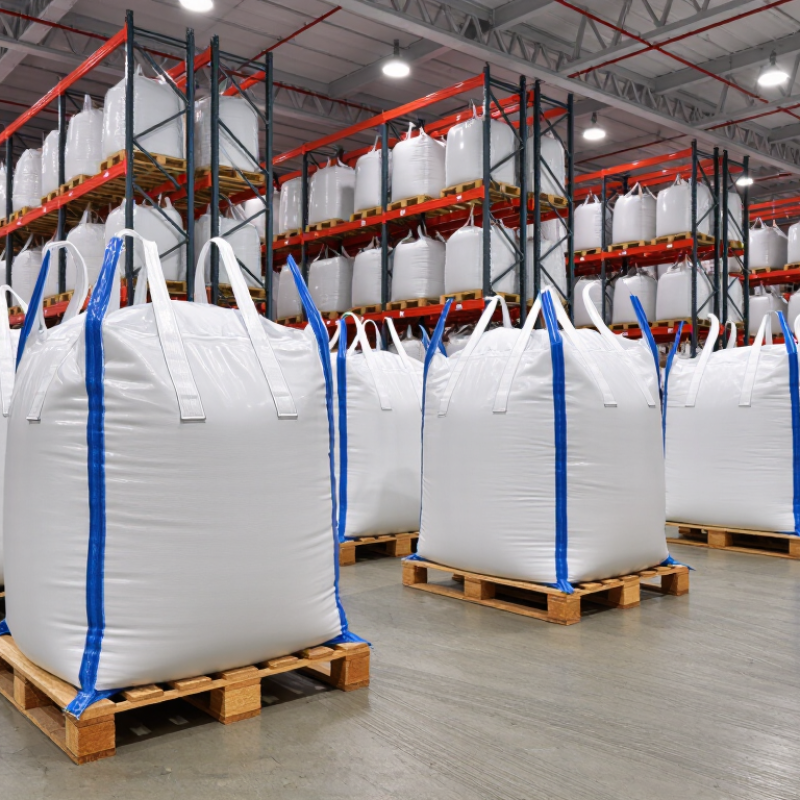
Define Your Material, Load, and Handling Requirements
Before comparing stock bulk bags, describe the material clearly. Is it a free-flowing granule, fine powder, or irregular flake? Note its bulk density, moisture sensitivity, and whether it may shift during transport. These details affect bag size, fabric choice, liner needs, and discharge design. Measure twice. A bag’s outside dimensions must also suit your filling equipment, storage space, and pallet footprint.
Next, calculate the intended net load from the material’s density and the volume you need to move. Do not judge capacity by how full a bag looks. Ask for the bag’s rated safe working load and confirm the lifting configuration matches your operation. A single-loop bag and a four-loop bag do not handle the same way. Leave room for real-world variation, such as uneven filling or a load that settles. Small details matter.
Finally, map each handling step: filling, lifting, staging, transport, and emptying. Check forklift tine spacing, loop access, and whether workers can keep clear of suspended loads. If bags will be stacked, confirm the proposed arrangement is suitable for the bag and its contents. A neat specification can still miss a practical snag; a discharge spout may be awkward beside a wall, for example. Review the setup with the people who use it, and test a representative load before ordering in volume.
Choose Suitable Bag Fabric, Coating, and Construction
A stock bulk bag’s fabric should match the material, handling conditions, and expected load. Woven polypropylene is common because it is strong and relatively light. For rough, angular products, ask about fabric weight and abrasion resistance; thin fabric can wear quickly against pallet edges. For outdoor storage, ultraviolet protection may matter, especially when bags sit in direct sun. Details matter.
Coated fabric helps limit moisture and fine-particle leakage, but it is not automatically the better choice. A coating can reduce breathability, which may matter for products that retain moisture. Uncoated fabric allows more airflow, though dust may escape through the weave. I would avoid choosing by coating alone. Consider how the bag will be filled, stored, and emptied.
Construction deserves an equally close look. Inspect the stitching around lifting loops and corner seams, where stress concentrates during lifting. Check whether the bottom is closed or fitted with a discharge spout that suits your equipment. A spout that is too narrow can slow unloading; one without a secure closure may spill product. Ask for the bag’s rated capacity and safety information, and confirm that the fabric, seams, and loops are designed for that load. Specifications can look reassuring on paper, but a sample inspection may reveal loose threads or awkward handling details.
Check Capacity, Safety Factors, and Compliance Needs
A stock bulk bag can look roomy while still being unsuitable for your material. Check its rated capacity in both weight and volume. A cubic metre of dry grain weighs far less than a cubic metre of dense mineral, so match the bag to the product’s bulk density. Allow space for settling and safe closure. Measure the storage area and check that filled bags can pass through doors or fit on pallets.
Read the safe working load and safety factor on the specification sheet. The safety factor is a design ratio, not permission to exceed the stated load. Confirm how the bag will be lifted: a forklift may need all four loops accessible, while a crane setup may require different handling instructions. Ask for current test records and inspect seams, loops, and fabric before use. Small tears matter.
Compliance needs depend on the material, destination, and handling process. Check required labels, traceability documents, and any applicable packaging or transport standards with your supplier and local authority. Do not assume a bag suitable for one product is suitable for another. This detail is easy to miss when purchasing quickly. Keep written specifications with each order, and review them when the fill weight or storage conditions change. One practical limit: paperwork cannot replace a physical inspection.
Compare Stock Sizes, Features, and Availability
Stock bulk bags are useful only when their dimensions suit the material and handling setup. Compare usable capacity, not just the listed volume. A bag’s filled shape may differ from its flat dimensions, especially when dense material settles unevenly. Easy to miss. Check the safe working load and whether measurements describe the bag inside or outside. A few centimeters can affect pallet fit and stacking.
Features matter as much as size. Coated fabric can limit moisture exposure, while sift-resistant seams help contain fine, dry contents. Choose top closures, lifting loops, and discharge spouts around how the bag will be filled and emptied. It is tempting to select the closest size and move on; that shortcut can leave awkward overhang or make unloading slower. Confirm that lifting equipment can reach and support the bag as intended.
Availability needs a direct check. “Stock size” does not always mean every option is ready to ship today. Ask for current quantities, dispatch estimates, and whether repeat orders can match the same specifications. Small differences in fabric, dimensions, or loop placement may complicate a familiar workflow. I would compare a sample specification sheet with the actual storage and handling space before committing to a larger order. An estimate is not a guarantee.
Typical Stock Bulk Bag Size Comparison
Compare common bag dimensions by estimated geometric volume. Actual filled capacity depends on the bag’s shape, filling method, and material; safe working load is determined by the bag’s specification, not its dimensions alone.
Volumes are calculated from the listed dimensions as length × width × height. Check dimensions, safe working load, lifting-loop design, and current stock availability with the supplier before ordering.

 Skip to content