2026 Best Carbon Steel Pipe for Sale Worldwide?
Finding the right carbon steel pipe for sale requires more than comparing prices online. Buyers must match pipe grade, wall thickness, diameter, and manufacturing method to the project’s actual demands. A pipe used for structural columns differs from one carrying water, steam, oil, or compressed gas. Small specification errors can create costly delays.
This guide examines dependable carbon steel pipe suppliers and practical purchasing criteria for 2026. It considers seamless and welded options, common standards, surface protection, pressure ratings, and available sizes. Mill test certificates, heat numbers, dimensional checks, and independent inspections can reveal whether a product matches its description. Experienced buyers also review packing methods, loading photographs, and delivery terms before placing large orders. Details matter.
Real projects are rarely perfect. Storage may expose pipes to rain, transport may cause coating damage, and local standards may differ from international specifications. A supplier’s certificate is useful, but it should not replace verification. Buyers should confirm compliance with applicable safety, environmental, and import requirements in the destination market. No single product fits every application. This article therefore compares performance, reliability, and total purchasing value instead of promoting the cheapest listing. Some recommendations may need adjustment after site testing, especially where soil chemistry, temperature changes, or operating pressure exceed initial assumptions. Careful selection remains the safer path for long-term service.
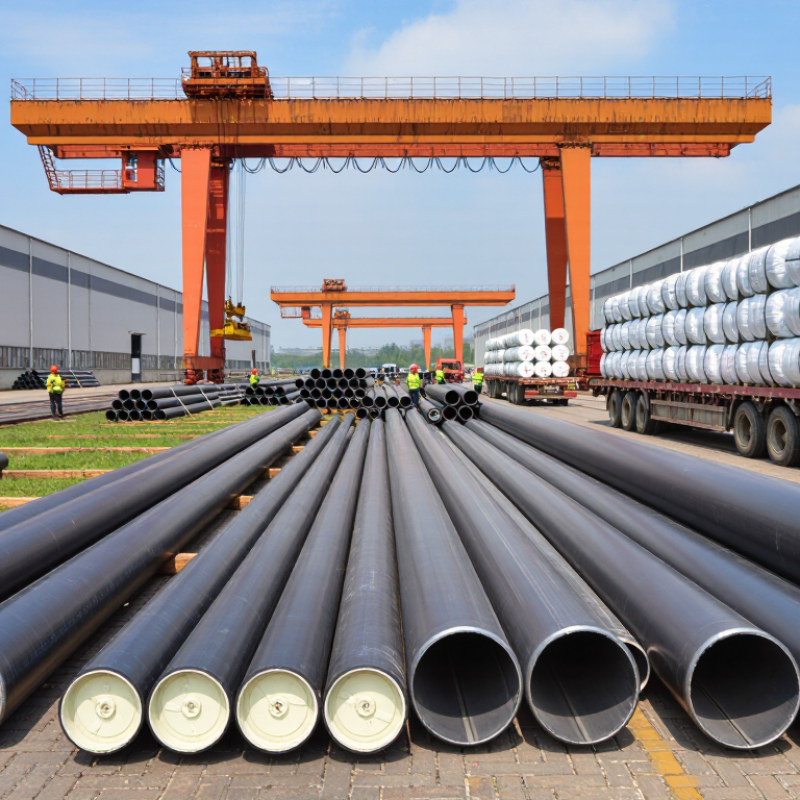
What Is Carbon Steel Pipe and Why Is It Widely Used?
Carbon steel pipe is a tubular product made mainly from iron and carbon. Its carbon content gives the pipe useful strength, hardness, and machinability. It can be manufactured as seamless or welded pipe, depending on pressure, size, and project requirements. On construction sites, workers value its predictable dimensions and easy connection methods. It is not glamorous, but it is dependable.
Carbon steel pipe is widely used because it balances performance and cost. It carries water, compressed air, steam, fuel, and many industrial fluids. Engineers also specify it for structural frames, piles, fire-protection systems, and process equipment. Its thick wall can tolerate demanding service conditions when the correct grade is selected. Corrosion changes everything. Outdoor and buried pipe may require coating, lining, cathodic protection, or careful drainage design. Ignoring moisture is a common and expensive mistake.
For a 2026 worldwide purchase, buyers should check the grade, outside diameter, wall thickness, length, and applicable standards. Reliable documentation should include chemical analysis, mechanical test results, dimensional inspection, and traceability records. Hydrostatic testing may also be required for pressure service. A low price can hide poor welding, uneven walls, or weak corrosion protection. Details matter. I would not choose carbon steel pipe by price alone; service temperature, pressure, installation conditions, and maintenance access deserve equal attention.
2026 Best Carbon Steel Pipe for Sale Worldwide?
Minimum Mechanical Requirements of Common Carbon Steel Pipe Grades
Carbon steel pipe is widely used because it combines high strength, durability, weldability, and cost efficiency. The chart compares the minimum yield strength and tensile strength of commonly specified grades. Higher-strength grades are often selected for demanding oil, gas, water, structural, and industrial applications, while the final choice also depends on pressure, temperature, corrosion conditions, wall thickness, and applicable standards.
Data basis: ASTM A106 Grade B and API 5L PSL2 minimum mechanical requirements. Strength values are shown in MPa.
How to Compare Carbon Steel Pipe Grades, Sizes, and Standards
2026 Best Carbon Steel Pipe for Sale Worldwide?
How to Compare Carbon Steel Pipe Grades, Sizes, and Standards
Choosing carbon steel pipe starts with service conditions, not price. Identify the fluid, operating temperature, pressure, and installation environment. A106 Grade B suits many high-temperature applications because it is commonly supplied as seamless pipe. A53 may fit general mechanical and pressure service, depending on the project specification. Line-pipe projects often require grades and tests defined by API 5L.
Size comparison needs more than nominal diameter. Check outside diameter, wall thickness, schedule, length, and allowable tolerance. A six-inch pipe can have different internal diameters when its wall thickness changes. That difference affects flow, weight, welding, and pumping costs. Measure the design pressure carefully. Do not guess.
Standards also control testing and documentation. ASTM, ASME, API, and EN requirements are not automatically interchangeable. Compare chemical composition, tensile strength, hydrostatic testing, heat treatment, and impact testing. Request a material test certificate with heat number traceability. Check the certificate. In practical procurement, buyers sometimes select a lower-cost grade and discover it cannot meet welding or temperature requirements. That mistake is expensive, and I would challenge any quotation that hides the standard edition, pipe process, or corrosion allowance. Surface coating, end finish, and packing deserve attention too, especially during long-distance transport.
Which Carbon Steel Pipe Fits Different Industrial Applications?
Choosing the best carbon steel pipe in 2026 depends on service conditions, not price alone. The World Steel Association reported about 1.89 billion tonnes of crude steel production in 2023, showing the scale of this material market. Yet pipe performance still depends on grade, manufacturing method, and inspection quality.
For steam, oil, and high-temperature process lines, seamless ASTM A106 pipe is often suitable. It offers consistent strength where weld quality is critical. Welded ASTM A53 pipe can fit lower-pressure water, air, and structural services. For buried pipelines, ISO 3183 line pipe supports demanding transport applications, but coating and cathodic protection remain essential. A thicker wall is not always better.
Start with pressure, temperature, fluid chemistry, and external loads. Then check diameter, wall thickness, impact requirements, and traceable mill certificates. In corrosive environments, carbon steel may need internal lining or a corrosion allowance. The International Energy Agency’s World Energy Outlook 2024 continues to identify large infrastructure needs across energy systems, but demand forecasts cannot replace project-specific engineering.
Small details matter. A pipe stored on wet ground can develop hidden pitting before installation. End protection helps. I have seen specifications focus heavily on tensile strength while overlooking weld inspection and drainage. That is a costly gap. Engineers should verify compliance with the project code, such as ASME B31.3, rather than relying on a catalog description.

 Skip to content