Where to Find the Best Food Packaging Boxes in China?
Finding the best food packaging boxes in China takes more than comparing prices or browsing polished catalogs. A capable supplier should understand your product, packaging format, print requirements, and delivery schedule. Ask how materials are selected, how artwork is checked, and how production quality is monitored. Specific answers matter. Vague promises do not. Request samples that match your intended box style, coating, and finish. Inspect the folds, glue lines, color consistency, and how the package protects its contents. A sample can reveal problems a product photo hides.
Supplier checks deserve equal care. Review the company’s production capabilities, quality procedures, references, and relevant documentation. Confirm that any claimed certificates are current and can be verified with the issuing organization. Requirements for food-contact packaging vary by product and destination, so confirm suitability with qualified specialists before placing an order. A low quote may exclude tooling, shipping, or inspection costs. Clarify those details in writing. Ask about minimum order quantities, lead times, payment terms, and how defects are handled. Then compare suppliers using the same specifications. This makes the decision fairer and easier to explain. Still, no checklist can remove every risk. Production conditions can change, and a small test order may not reflect a full run. Careful questions, clear records, and realistic expectations help buyers choose food packaging boxes with greater confidence.
Understanding China’s Food Packaging Box Manufacturing Landscape
China’s food packaging box industry is large, but the word “manufacturer” can describe very different businesses. China Packaging Federation’s 2023 industry statistics reported about 9,800 large packaging enterprises and roughly RMB 1.15 trillion in sector revenue. That scale means buyers can compare many materials and production capabilities. Not all are equal.
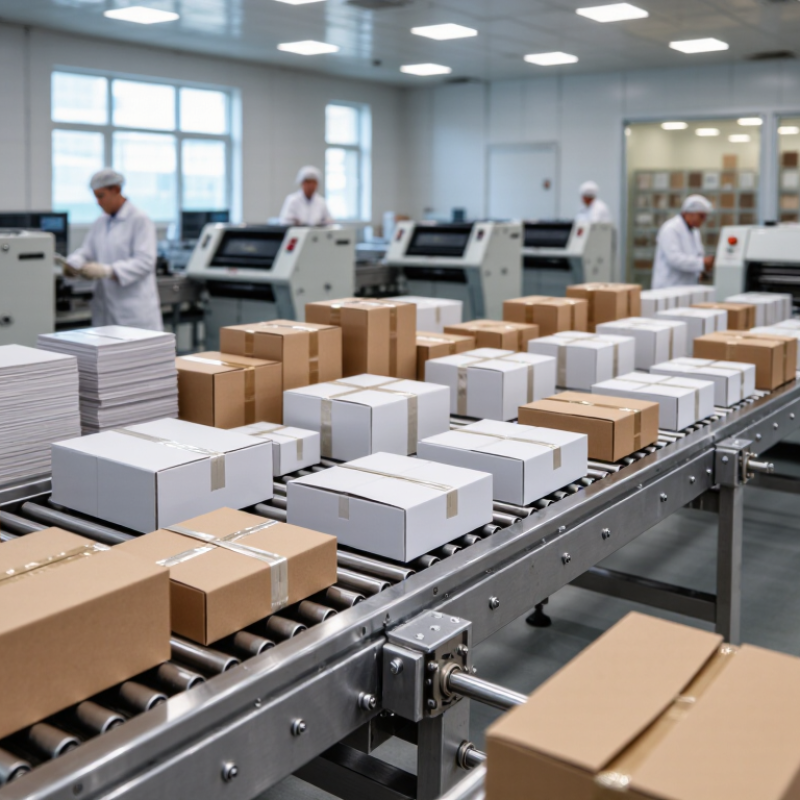
Manufacturing is spread across regional supply networks. Guangdong and Zhejiang, for example, have extensive printing and converting industries, while other provinces supply paperboard, corrugated board, and molded-fiber materials. A food box may pass through several steps: board sourcing, printing, die-cutting, folding, and quality checks. Ask which steps happen in the factory itself. A polished sample does not prove consistent production.
The federation’s revenue figure covers packaging broadly, not food boxes alone, so it should not be treated as a food-box market estimate. Request recent samples, material specifications, and test records relevant to the food’s temperature, grease, and moisture. Compare production tolerances and delivery lead times, not just unit prices. A low quote can hide thin board or weaker folding performance. I would also check how the supplier handles defects; this detail is easy to overlook, and I have seen it matter more than attractive print.
Key Regions and Supplier Hubs for Food Packaging Boxes
China’s food packaging box suppliers cluster around several coastal manufacturing regions. Guangdong, especially Dongguan, Shenzhen, and Guangzhou, offers broad access to printing, paperboard converting, and transport services. Zhejiang cities such as Ningbo and Wenzhou also have established packaging manufacturers, while Jiangsu’s Suzhou and Wuxi sit near major logistics networks. Shanghai can be useful for sourcing and freight coordination, though production may be located in nearby cities.
The best hub depends on the box, not just the map. Guangdong may suit buyers seeking varied finishes and fast sampling. Zhejiang and Jiangsu can be practical for regional distribution and repeat orders. Ask suppliers about board grade, coating, production capacity, and the checks they perform for food-contact suitability. Request a physical sample and inspect its folds, glue seams, and print quality. A neat sample is encouraging, but it cannot guarantee every production batch will match. Maps can mislead.
Tips: Share box dimensions, product weight, storage conditions, and order volume before comparing quotes. Confirm which food-contact documentation applies in your destination market, and verify it independently. Check sample and freight costs too; they can change the real price.
Where to Find Food Packaging Box Suppliers in China
Key regional hubs and their typical sourcing strengths
The relative-fit scores are a qualitative sourcing guide, not official production or supplier-count statistics. The Pearl River Delta is known for export-oriented manufacturing; the Yangtze River Delta for printing and packaging production; Shandong and Henan for links to food processing and paper packaging; and Fujian for tea and seafood packaging. Confirm food-contact compliance, materials, printing capability, and delivery terms with suppliers.
Where to Search for Chinese Packaging Box Manufacturers
To find Chinese packaging box manufacturers, search across several channels rather than relying on one directory. Business-to-business platforms can help you compare product categories, stated capabilities, and minimum order quantities. Use specific search terms, such as “folding carton factory” or “rigid gift box manufacturer,” to narrow results. No directory is perfect. Treat listings as leads, not proof of factory experience.
Trade fairs and regional manufacturing directories offer another route. Ask potential suppliers for recent product photos, material specifications, production timelines, and references for similar orders. Ask for samples. Check whether the board thickness, print finish, and box dimensions match your requirements.
A video call can show equipment and work areas, but it cannot replace independent checks. Details matter.
Request a written quotation that separates tooling, sampling, packaging, and shipping costs. Compare the same specifications across suppliers; otherwise, a lower price may simply reflect thinner board or a different finish.
Some details may still be unclear after the first conversation, so record open questions and resolve them before placing an order.
How to Evaluate Suppliers, Materials, and Customization Options
Finding a capable food packaging box supplier in China takes more than comparing unit prices.
Ask for the business license, production-site details, and recent quality records. Confirm whether testing covers the finished box, not only its raw board. Request a production sample and compare its dimensions, folding, odor, and print alignment with your specification.
A neat sample is not proof.
Check how the supplier handles defects and repeat orders.
Material choice affects protection and end-of-life options. The OECD’s Global Plastics Outlook (2022) estimates that packaging made up 40% of global plastic waste in 2019. Eurostat reports that paper and cardboard represented 40.8% of EU packaging waste in 2022. These figures describe different regions and measures, so they are not direct comparisons. Paperboard may suit dry foods, while moisture-sensitive products can require coatings or other barriers. Ask what those layers contain and whether local recovery systems accept them.
Still, test it.
For customization, send a clear brief:
internal dimensions, board grade, food-contact requirements, print colors, and expected order volume. Request a dieline and a physical proof before approving a full run. Clarify minimum order quantities, tooling charges, lead times, and acceptable color or size variation in writing.
Small details matter.
A box can look excellent on screen yet crease poorly when packed. Pilot a modest batch, then inspect it after filling and transport; the first specification may need revision.
Verifying Food Safety Standards, Samples, and Shipping Terms
When sourcing food packaging boxes in China, verify food-contact safety before comparing unit prices. Ask the supplier to identify the paperboard, coatings, inks, and adhesives used. Request current test reports for the exact materials, including migration results from a qualified laboratory. Check that documentation matches the relevant Chinese GB 4806 food-contact standards and the intended food type. Paperboard alone does not tell the whole story.
Samples need scrutiny. Request a production-equivalent box, not a hand-finished display sample. Fill it with the intended product, then check seams, moisture resistance, odor, and stacking strength. A sample can still flatter a supplier’s real output; repeat checks on a production batch. The FAO’s 2019 report, The State of Food and Agriculture, estimated that 14 percent of food is lost between harvest and retail. Packaging cannot prevent every loss, but weak boxes can add avoidable damage during handling.
Clarify shipping terms in writing, including Incoterms, named delivery points, freight responsibility, and who handles export documents. Ask for carton dimensions, pallet plans, and loading photos before dispatch. Confirm lead times and how delays or damaged cartons are reported. Small details matter. One overlooked humidity issue can soften a stack of boxes before it reaches the warehouse.

 Skip to content