China Top Army Anti Riot Suit Manufacturer?
China’s Army Anti-Riot Suit manufacturing sector has expanded through advanced textiles, molded plastics, and controlled production systems. Yet a polished factory floor does not automatically prove dependable protection. Buyers must examine materials, testing records, worker training, and after-sales support.
Dr. Wei Chen, a protective-equipment engineer and standards adviser, states, “Protection must be measured, fitted, and maintained, never assumed.” His comment reflects a practical truth. A suit may look strong under bright showroom lights, but weak stitching can fail during repeated movement. A clear visor can still restrict peripheral vision. Heavy armor can also reduce mobility and increase fatigue.
This guide introduces China’s leading manufacturers through an evidence-based lens. It considers impact resistance, heat management, ergonomic design, sizing accuracy, and quality-control procedures. It also reviews whether suppliers provide traceable test reports and consistent batch inspections. Responsible manufacturers should explain their compliance with applicable safety standards and lawful procurement requirements. They should not encourage misuse or excessive force.
Experience matters here. Field evaluators often notice details that brochures omit, including loose closures, difficult glove operation, and poor ventilation around the neck. No supplier is perfect. That deserves honest attention. A lower price may hide replacement costs, limited customization, or uncertain documentation.
The strongest manufacturer is not simply the largest exporter. It is the partner that supports transparent testing, responsible use, trained operators, and long-term product care. This introduction sets the foundation for comparing China’s Army Anti-Riot Suit suppliers with greater confidence and practical judgment.
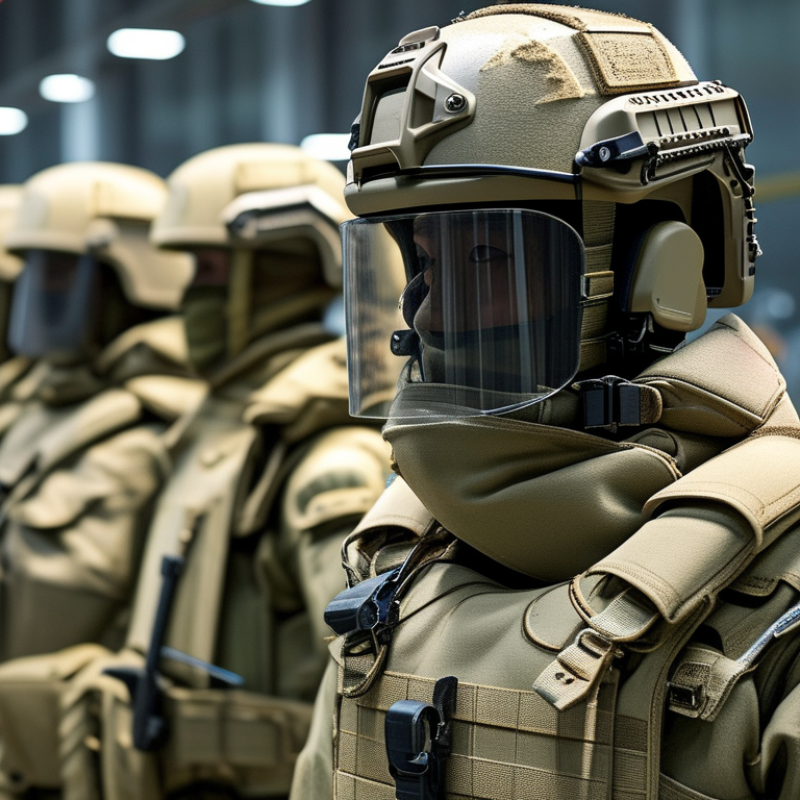
What Defines a Top Army Anti-Riot Suit Manufacturer in China?
China Top Army Anti-Riot Suit Manufacturer?
What Defines a Top Army Anti-Riot Suit Manufacturer in China?
A top manufacturer begins with protection evidence, not catalog photography. Grand View Research valued the global protective clothing market at USD 10.33 billion in 2023. Its outlook expects continued growth through 2030. This demand raises an important question. Does the factory control fabric, protective panels, stitching, and final inspection internally? ISO 13688:2013 addresses ergonomics, sizing, marking, and material safety. A reliable supplier should provide test reports, batch records, and replacement guidance.
Practical design matters during long deployments. Experienced engineers check shoulder mobility, knee articulation, ventilation, and weight distribution. A visor should resist scratching without reducing field visibility. Gloves need secure cuffs. Seams deserve close inspection because weak thread can fail before the main fabric. Independent laboratories should assess abrasion, impact, flame exposure, and environmental aging against agreed standards. MarketsandMarkets projects the protective clothing market to grow from about USD 10.3 billion in 2023 to USD 14.2 billion by 2028. Growth does not excuse vague claims.
A serious Chinese factory also manages traceability. Each lot should link to raw-material certificates, inspection photos, and corrective-action records. Audits should cover worker training and process consistency. Yet laboratory success is not field proof. Rain, dust, heat, and repeated cleaning can expose overlooked weaknesses. The honest manufacturer admits this gap and improves designs through controlled user feedback. That humility is more convincing than a perfect brochure.
Core Materials and Protective Features of Anti-Riot Suits
China Top Army Anti Riot Suit Manufacturer?
Core Materials and Protective Features of Anti-Riot Suits
A reliable anti-riot suit begins with material selection, not appearance. UHMWPE fabric has a density near 0.97 g/cm³, while aramid commonly measures about 1.44 g/cm³. These figures come from published polymer material studies. UHMWPE reduces weight, but aramid usually offers stronger heat resistance. No material is perfect.
Modern suits often combine aramid or UHMWPE panels with EVA foam, molded polyethylene, and impact-resistant polycarbonate. EVA foam absorbs blunt energy around the chest, shoulders, knees, and elbows. Polycarbonate shields can provide high optical clarity and impact performance. EN 13688:2013 emphasizes fit, ergonomics, and harmless materials. ISO 13506 testing also evaluates heat exposure through instrumented manikins. These standards support measurable design decisions, rather than vague claims. Field inspections often expose weak stitching, loose straps, and poor ventilation. Protection can fail at the seams.
Tips: Check the panel layout, stitching density, and closure strength. Ask for laboratory test records, not marketing language. A practical suit should allow walking, crouching, and quick arm movement. Test it with the intended uniform underneath. A lighter suit may improve mobility, but excessive weight reduction can weaken coverage. Manufacturers should document material batches, test conditions, and maintenance limits. Repeated cleaning can change foam recovery and fabric strength. That detail is easy to overlook.
Manufacturing Standards and Quality Control Processes
China Top Army Anti Riot Suit Manufacturer?
A reliable manufacturer starts with documented standards, not attractive product photos. A riot suit should define impact protection, abrasion resistance, flame behavior, sizing, and chemical exposure limits. ISO 9001-based procedures can control purchasing, production, inspection, and corrective action. The ISO Survey 2022 recorded 1,265,216 ISO 9001 certificates worldwide, showing its broad role in quality management.
Incoming materials need traceable batch records. Inspectors should check fabric weight, polymer thickness, stitching density, and buckle strength. Each production lot requires dimensional inspection and functional testing. Independent laboratories should verify performance under relevant EN, ASTM, or NIJ methods, where applicable. Test reports must identify the sample, conditioning process, equipment, and failure point. Clear evidence matters.
Quality control also continues after assembly. Inspectors can examine shoulder joints, glove seams, visor edges, and ventilation openings under bright lighting. Packaging should prevent deformation during transport. Field feedback should return to engineering teams. A loose strap may pass a quick visual check. It can still fail during repeated movement. Human inspection is useful, but not perfect. Sampling plans need review when defect rates change. Manufacturers should publish realistic limitations, because no protective suit offers unlimited coverage or permanent performance.
China Top Army Anti-Riot Suit Manufacturer? Manufacturing Standards and Quality Control Processes
Typical quality-control checkpoints across an anti-riot suit production workflow
The workflow covers commonly applied controls for protective apparel: material verification, component inspection, dimensional checks, impact-protection testing, seam and fastening inspection, and final visual and functional inspection. Actual inspection frequency and acceptance criteria should be defined by the applicable contract, test method, and certification requirements.
Customization, Testing, and Compliance Requirements
China Top Army Anti Riot Suit Manufacturer?
Customization begins with the wearer, not a catalog photograph. Our development team measures body zones, movement limits, climate, and duty duration. A suit may need different padding for the chest, knees, shoulders, and forearms. Ventilation panels matter in humid conditions. So does quick adjustment. Small details affect safe movement.
Testing should follow the buyer’s destination requirements and relevant protective-equipment standards. We check impact resistance, abrasion, seam strength, tear resistance, and material stability. Components are tested separately and as a complete suit. Buckles, closures, and shields can behave differently after repeated use. That lesson is easy to miss. We also review heat exposure, moisture, cleaning cycles, and visibility. Every test report should identify the sample, method, date, and laboratory.
Compliance requires more than a printed certificate. Manufacturers should maintain material records, production controls, inspection data, and traceable batch numbers. Labels must explain sizing, care, limitations, and replacement conditions. Independent testing improves credibility, but it does not replace destination-market review. Requirements can change. We once found that a comfortable prototype restricted shoulder rotation after extended wear. The design passed basic measurements, yet field feedback exposed the weakness. Further fitting, movement trials, and documented corrections made the next version more reliable. That process should remain open to criticism.
How to Evaluate Chinese Anti-Riot Suit Manufacturers
China Top Army Anti Riot Suit Manufacturer?
Evaluating Chinese anti-riot suit manufacturers requires more than comparing catalog prices. Grand View Research estimated the global body armor market at approximately US$3.3 billion in 2023, showing strong demand for certified protective equipment. However, market growth does not prove factory quality. Ask for current test reports, material specifications, and production records. Reports should identify the tested model, sample size, test date, and laboratory accreditation under ISO/IEC 17025.
During a factory audit, inspect stitching around the shoulders, elbows, knees, and fasteners. These areas often fail after repeated movement. Check whether the visor remains clear after simulated impact and temperature changes.
ISO 13688 can help assess general protective-clothing requirements, while ISO 13997 is useful for cut-resistance evaluation where relevant. Request batch traceability, incoming-material inspection records, and documented corrective actions. A polished certificate is not proof of every shipment.
Practical trials matter.
Ask independent users to wear complete suits for several hours. Record heat buildup, restricted movement, fogging, pressure points, and cleaning damage. Request several production samples, not only a specially prepared sample.
I would remain cautious when a supplier refuses destructive testing or provides identical reports for different materials. My own evaluation would also include a small pilot order, because factory visits can create false confidence. Reliable manufacturers explain weaknesses clearly and revise specifications when field feedback exposes them.

 Skip to content