
Choosing the right Golf Divot Tools begins with understanding how your market actually uses them. A private club may value polished finishes, while a busy public course may prioritize strength, speed, and easy replacement. Golfers often notice small details, such as rounded repair prongs, a secure grip, or a magnetic ball marker. These details influence comfort during play.
Real experience should guide every decision. Test samples on firm greens, soft turf, and damp surfaces. Watch how quickly the tool repairs a pitch mark. Check whether the handle feels stable after repeated use. It should not bend easily.
Material quality matters. Stainless steel offers durability and corrosion resistance. Recycled plastics can reduce weight and support sustainability goals. However, material claims need supplier evidence. Attractive packaging cannot replace reliable performance. It can hide weaknesses.
Market research adds another layer. Review customer feedback, return reasons, seasonal demand, and competitor pricing. Golf professionals can reveal problems that ordinary surveys miss. A tool that feels excellent in a showroom may become uncomfortable after eighteen holes. That difference deserves attention.
No tool is perfect. Early assumptions may be wrong. A heavier model may signal quality, yet frustrate younger players or frequent travelers. A budget option may sell quickly, but create more replacements later. This guide examines design, materials, usability, branding, packaging, and supplier reliability. Each point supports a more practical buying decision for retailers, clubs, distributors, and golf brands. The goal is not to select the most impressive tool. It is to choose one that performs consistently for the people and conditions your market serves.
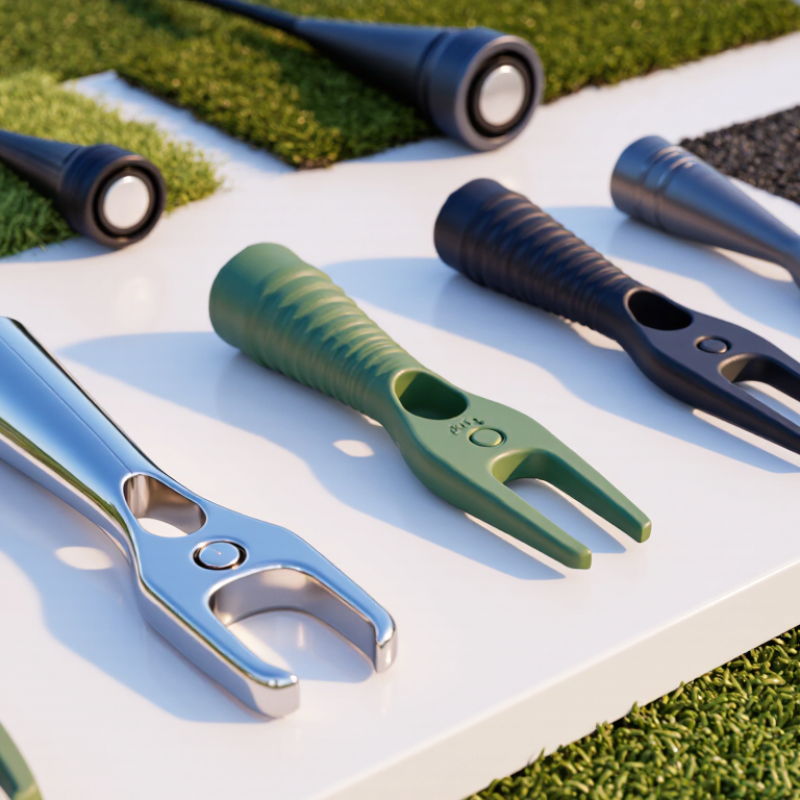
A golf divot tool repairs pitch marks on greens and protects playing quality. It is small, but its market role is practical and visible. The R&A’s Golf Around the World 2023 report recorded 66.6 million adult golfers across 206 countries. That broad audience creates varied needs, from compact tools for walkers to durable models for golf facilities.
Market selection should begin with use conditions. Players in wet regions may prefer corrosion-resistant metal or treated materials. Resorts often need tools that survive repeated handling. Private golfers may value lightweight designs, comfortable grips, and ball-markers. The National Golf Foundation reported more than 531 million U.S. golf rounds in 2023. This figure does not measure divot-tool sales, but it indicates frequent opportunities for course-care products. The connection is useful, though not perfect.
Tips: Test the tool on real turf, not only on a desk. Check tine shape, grip pressure, pocket safety, and cleaning time. Ask greenkeepers for feedback. Their practical experience can expose weak hinges or awkward edges quickly. Keep packaging clear and avoid promising universal performance. A tool may feel excellent in one market, yet fail in another. I have found that “premium” materials do not always mean better field performance. Sometimes, a simpler design works longer. Review local golfer habits, climate, retail pricing, and course maintenance rules before choosing the final product.

Choosing golf divot tools starts with knowing who will use them. The National Golf Foundation reported 45.6 million American golfers in 2023, including on-course and off-course participants. This broad audience should not receive one identical tool.
New players often need simple, lightweight tools with clear repair instructions. Frequent golfers may prefer stronger prongs, comfortable grips, and compact storage. Course members can value durability after repeated use. Tournament organizers may seek practical tools for large quantities, while gift buyers often notice finish, packaging, and perceived quality. These customers play differently.
The R&A’s 2023 Global Golf Participation Report recorded about 66.6 million golfers across 206 countries. This figure suggests varied climates, course conditions, and playing habits. Wet regions may require corrosion-resistant materials. Firm greens may demand precise, narrow prongs. Players with limited hand strength may benefit from wider handles and lower resistance.
Ask better questions.
Do customers walk, use carts, or practice mainly on putting greens? Do they repair one mark per round or several? I have found that attractive tools can still fail when their prongs bend or their grips become slippery. That weakness is easy to overlook during product selection. Claims should be tested through repeated use, not assumed from appearance. A reliable market choice connects local playing conditions with measurable durability, safe handling, and straightforward maintenance.
Choosing a golf divot tool begins with material, not decoration. Stainless steel prongs resist bending and surface rust, making them suitable for wet courses and frequent use. Aluminum feels lighter and can lower shipping costs, but thin sections may deform under pressure. Zinc alloy offers a solid hand feel and detailed shapes, although its coating can chip after repeated impact. Recycled plastic reduces weight and cost, but its hinge may weaken over time. That trade-off matters.
Design should match the playing conditions and buyer expectations. Two-prong tools repair compacted marks efficiently without tearing healthy turf. Foldable mechanisms protect pockets and reduce accidental scratches. Rounded edges improve comfort, while a textured grip helps players work in rain or cold weather. Useful features include a removable ball marker, alignment guide, or cleaning brush. Avoid adding features that increase failure points. Test every moving part.
Durability requires more than a promising specification sheet. In practical product checks, I examine hinge tension, prong alignment, coating adhesion, and spring recovery. Drop tests on hard flooring can reveal loose pins and cracked handles. Salt-spray testing helps assess corrosion resistance for coastal markets. One weakness is easy to miss: a strong prong can still fail when the handle flexes. Overbuilt tools may feel premium, yet excessive weight can discourage daily use. Ask suppliers for material grades, test records, and replacement-part support before choosing a market-ready design.
Choosing golf divot tools requires more than comparing catalog prices. The R&A’s Global Golf Participation Report 2023 recorded 66.6 million golfers across 206 countries. That broad market creates different needs for tournament gifts, retail products, and private-label kits. Ask suppliers about steel grade, finish durability, repair-tool strength, and packaging performance. A polished sample can hide weak springs or uneven engraving.
Cost evaluation should include tooling, artwork, sampling, packaging, freight, and quality inspections. Request separate prices for 500, 1,000, and 5,000 units. Small orders often carry higher mold and setup costs. They may appear affordable, but shipping can change the result. I have seen low unit prices become expensive after custom packaging and repeated sample changes. That deserves attention.
Customization should match the buyer’s market. Laser engraving suits precise logos, while colored coatings create stronger shelf visibility. Confirm logo size, color references, packaging dimensions, and acceptable surface marks in writing. Set a realistic minimum order quantity, production schedule, reorder process, and defect allowance before payment. The National Golf Foundation reported about 45 million American golfers in 2023, including on-course and off-course participants. This supports scalable product planning, but one design will not fit every segment. Test samples with actual users. Their feedback may challenge the original specification.
Choosing the best golf divot tool range starts with market evidence, not attractive packaging. The National Golf Foundation’s 2024 Golf Participation report recorded 28.1 million on-course golfers in the United States during 2023. The R&A’s Golf Around the World 2023 report also identified 66.6 million golfers outside the United States and Mexico. These figures suggest demand, but they do not prove that one tool fits every market.
Test market fit with three to five tool variations. Compare fork shape, repair strength, grip comfort, ball-marker use, and storage size. Ask golfers to repair real pitch marks on firm, wet, and uneven greens. Record completion time and repeated handling errors. A tool that feels elegant indoors may slip beside a damp green.
Keep the first range narrow.
Interview course staff, retailers, and frequent players. Their feedback often reveals practical issues, such as sharp edges catching pocket fabric or magnets losing strength after repeated use. Segment results by climate, golfer experience, and purchase channel. A low-cost tool may suit event distribution, while a heavier metal version may fit specialty retail. However, this assumption deserves testing. Our first prototype may fail because we overvalue appearance and underestimate grip comfort. Small sample sizes can also mislead, so repeat trials across several courses before expanding the range.
| Target Market Segment | Primary Buying Need | Recommended Tool Configuration | Typical Retail Price Band | Suggested Product Range | Market-Fit Test Metrics | Recommended Pass Criteria |
|---|---|---|---|---|---|---|
| Public Golf Courses | Durability and value | Two-prong or reinforced single-prong repair design; corrosion-resistant metal or durable engineering polymer; integrated ball marker; pocket-friendly size of approximately 7–10 cm. | US$5–15 | 2–3 core models: entry-level, standard, and multi-function. | Repeat purchase rate; breakage or bending rate after field use; average purchase price; retailer reorder frequency. | At least 80% of test users report that the tool feels durable; fewer than 5% of units show structural failure during the test period; target gross margin remains commercially viable. |
| Private Clubs and Premium Facilities | Finish and perceived quality | Refined metal body or premium coated finish; ergonomic grip; removable magnetic ball marker; compact storage clip or protective cover. | US$15–35 | 2–4 premium models with different finishes, marker styles, and packaging options. | Perceived quality score; packaging acceptance; gift purchase intention; willingness to pay. | At least 4 out of 5 average quality rating; at least 25% of testers indicate gift or premium-use intent; no visible finish damage after normal handling tests. |
| Golf Retailers and Pro Shops | Fast sell-through and assortment clarity | Clearly differentiated designs by price tier; compact retail packaging; barcode-ready presentation; strong visual distinction between single-function and multi-function tools. | US$8–25 | Good-better-best assortment: basic repair tool, standard tool with marker, and premium giftable tool. | Units sold per display position; 30-day sell-through; conversion by price tier; retailer feedback on display efficiency. | At least 60% sell-through within the initial test period; at least two price tiers achieve repeat demand; fewer than 10% of products require explanation before purchase. |
| Golf Event and Tournament Programs | Customization and delivery reliability | Flat engraving or print-friendly surface; ball marker included; simple assembly; individually packed units suitable for event distribution. | US$3–12 | 1–3 customizable models with standard color options and scalable packaging. | Customization legibility; minimum order flexibility; production lead time; packaging damage rate. | Marking remains legible at normal viewing distance; at least 95% of units arrive without packaging damage; quoted production schedule is met consistently. |
| Beginner and Occasional Golfers | Ease of use and low commitment | Lightweight design; intuitive two-prong or single-prong repair function; clear grip area; integrated marker and simple instructions. | US$5–15 | 1–2 entry-level models with clear packaging and straightforward product benefits. | First-use success rate; time required to understand the product; comfort rating; purchase intent after trial. | At least 90% of first-time users can identify the repair function; at least 85% complete a basic use demonstration successfully; average comfort rating reaches 4 out of 5. |
| Frequent Players and Walking Golfers | Portability and quick access | Lightweight construction, generally under approximately 50 g; secure pocket clip or magnetic attachment; rounded edges; retractable or protected prongs where appropriate. | US$10–25 | 2–3 compact models emphasizing weight, attachment method, and one-handed access. | Carry comfort over 18 holes; attachment security; one-handed operation; accidental opening or loss rate. | At least 80% of testers report comfortable carry throughout a round; at least 90% of attachment tests remain secure; no sharp exposed edges during normal use. |
| Environmentally Conscious Buyers | Material transparency and product life | Long-life metal or verified recycled-content material; minimal packaging; replaceable or recyclable components where practical; clear material information. | US$10–30 | 1–2 durable models supported by concise material and end-of-life information. | Material information comprehension; packaging volume; durability perception; environmental purchase preference. | At least 80% of testers understand the material claim; packaging uses only essential components; durability rating is equal to or higher than the standard model. |
| Online Direct-to-Consumer Sales | Visual appeal and review performance | Distinctive product silhouette; high-contrast product photography; clear demonstration of divot repair; compact dimensions suitable for economical shipping. | US$8–30 | 3–5 models organized by use case: basic, portable, premium, customizable, and gift set. | Product-page conversion rate; add-to-cart rate; return rate; review rating and recurring complaints. | Product-page conversion improves against the current control; return rate remains below the category benchmark; average review rating reaches at least 4 out of 5. |
| Gift and Holiday Buyers | Presentation and perceived usefulness | Coordinated tool and ball-marker set; gift-ready box or sleeve; premium tactile finish; optional personalization area. | US$20–45 | 1–2 gift sets with seasonal packaging and a year-round presentation option. | Gift suitability score; packaging appeal; recipient usefulness rating; seasonal sales concentration. | At least 4 out of 5 giftability rating; packaging protects the tool during shipment; product benefits are understood without additional explanation. |
Price bands are indicative consumer retail ranges in US dollars for comparable golf accessory positioning. Final pricing should be validated by country, material specification, customization, packaging, import costs, retailer margin, and channel fees. Product tests should evaluate divot-repair usability without damaging the putting surface, while also checking durability, attachment security, corrosion resistance, packaging quality, and customer willingness to pay.