
...

How to Choose Large Outdoor Ceramic Flower Pots

Outdoor containers do more than hold soil. They frame an entryway, soften a patio, and face sun, rain, and seasonal temperature changes. Choosing ceramic flower pots large outdoor spaces need takes more than matching a color to a cushion.

The National Gardening Association’s 2022 National Gardening Survey estimated that 80% of U.S. households participated in lawn and garden activities in 2021. Its findings reflect how common home gardening has become, but they do not guarantee that every container suits every climate or plant. The Garden Media Group’s 2024 Garden Trends Report offers additional context on evolving gardening habits and design preferences. Together, these industry sources make one point clear: outdoor pots are practical choices as well as visual ones.

Details matter. A broad rim can make watering easier; a narrow base may feel unstable on a windy deck. Check the pot’s drainage hole, weight when filled, and whether its glaze and material are rated for outdoor conditions. A beautiful pot can still disappoint. Ceramic may chip, retain moisture, or become difficult to move once planted, and product claims vary. I would not choose by appearance alone.

This guide explains how to compare size, shape, finish, drainage, durability, and placement. It also considers the plant’s mature root system and the surface beneath the pot. Small measurements help. A tape measure and a careful look at local weather can prevent an expensive mismatch.
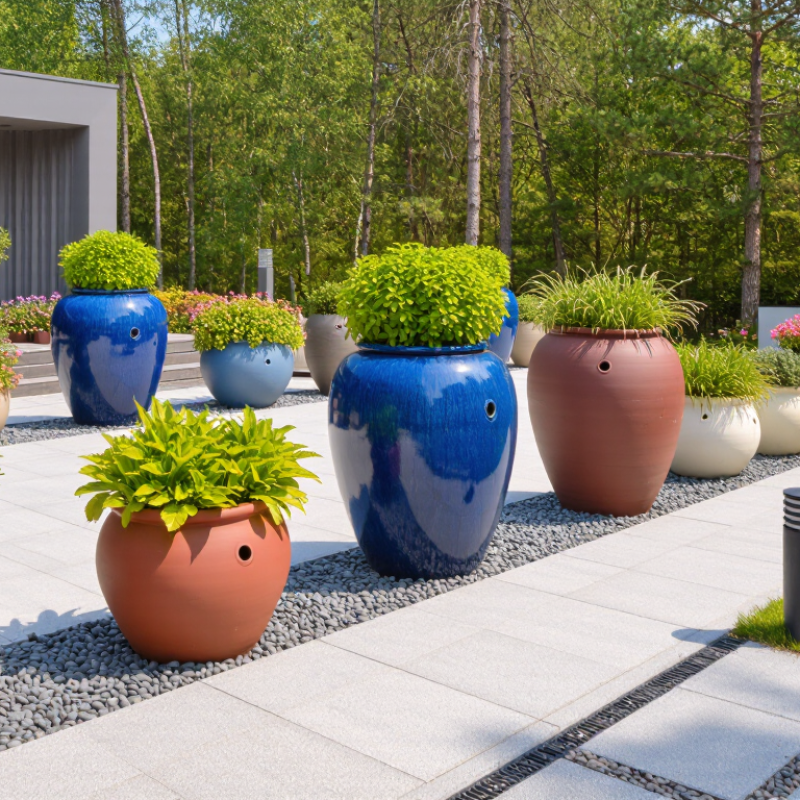
How to Choose Large Outdoor Ceramic Flower Pots

Identify the Planting Needs and Outdoor Location

Match the pot to the plant’s roots and watering needs, not just its height. Check the expected root spread and mature size; a narrow, deep container suits some plants, while shallow-rooted herbs may do better in a wider shape. Leave room for new growth without surrounding a small root ball with a huge volume of wet soil. Drainage holes matter. If the pot has none, water can collect and stress roots, especially after heavy rain. A glazed interior may hold moisture longer, while unglazed ceramic can dry faster in sun and wind. Check the soil rather than following a fixed watering schedule.

Study the outdoor spot at different times of day. Note direct sun, reflected heat from walls, prevailing wind, and where rainwater runs. Wind matters. A tall plant in a broad pot can still tip, but a filled ceramic pot is difficult to move, so test the empty pot’s position first. Measure the path and doorway, too. I would recheck that detail; it is easy to overlook before adding soil. For cold climates, look for ceramic intended to withstand freezing conditions, and keep drainage clear so water does not sit inside. Small pot feet can lift the base from a wet patio, though they may make an already tall planter feel less stable.

Compare Ceramic Types, Finishes, and Construction

Large outdoor ceramic pots differ in body, finish, and wall construction. High-fired, dense clay generally absorbs less water than porous earthenware, but firing quality varies. ANSI A137.1-2022 defines porcelain tile as having no more than 0.5% water absorption, measured using ASTM C373. This is useful comparative data, not a freeze-proof guarantee for flower pots. Pots have different shapes, thicknesses, and manufacturing controls. Ask for pot-specific absorption or freeze-thaw test results.

Glazed surfaces shed rain and make soil marks easier to wipe away. Yet glaze can chip, and water may still enter through the unglazed foot or drainage hole. Unglazed finishes often show texture clearly, but porous bodies need more winter care. Look for a broad, stable base, even wall thickness, and open drainage holes. A heavy pot may resist tipping, though moving it becomes harder. Small detail. Check the foot for cracks before purchase.

ASTM C1026 describes freeze-thaw testing for ceramic tile; it does not certify every planter. For exposed patios, ask whether the finished pot—not just its clay body—was tested. That distinction is easy to miss. Even good specifications cannot predict every wet winter, and a polished finish can create more confidence than the evidence deserves.

How to Choose Large Outdoor Ceramic Flower Pots

Typical firing-temperature ranges by ceramic type (°C)

Firing temperature varies by clay body and manufacturer. For outdoor use, also check water absorption, drainage, glaze coverage, and freeze-thaw suitability; firing temperature alone does not guarantee frost resistance.

Choose the Pot Size, Weight, and Drainage Features

Large ceramic pots look generous, but bigger is not always better. Choose a pot about two to four inches wider than the plant’s root ball, allowing room for growth without leaving a large volume of damp soil around small roots. Measure the plant and its current container before shopping. I still tend to underestimate how quickly a young shrub fills its pot.

Weight changes the decision. An empty ceramic pot may seem manageable, yet wet soil makes it much heavier. Check the route from delivery point to planting spot, including steps and narrow gates. For a balcony or raised deck, confirm the structure can support the filled pot. A wheeled plant caddy can help, but it may not roll smoothly over uneven paving. Plan the final position early.

Drainage holes are essential. Look for several open holes at the base, not just a decorative recess. Set the pot on small feet so water can escape and air can move underneath. Good drainage matters. If using a saucer, empty standing water after heavy rain; roots should not sit in it for days. A mesh screen can keep soil from washing out without blocking the holes. Before planting, test drainage with a watering can. If water lingers, reconsider the setup.

Assess Weather Resistance and Design Compatibility

Large outdoor ceramic pots face more than rain. Before choosing one, check whether its clay body and finish suit your local climate. In freezing areas, moisture absorbed by porous clay can expand and cause cracks. A glazed surface may shed rain, but glaze alone does not guarantee frost resistance. Look for a drainage hole, a stable base, and clear outdoor-care instructions. Small details matter. After a storm, water should not collect around the pot’s foot. Even a durable pot can become a problem if its plant sits in waterlogged soil.

Design compatibility is not only about color. Measure the spot, then compare the pot’s height and width with nearby steps, furniture, and plants. A tall, narrow pot may look elegant beside a doorway but tip more easily in strong wind. Broad pots can balance large shrubs, though their weight makes moving them difficult. Consider mature plant size, too; a young tree can outgrow a container sooner than expected. Pale finishes often blend with stone patios, while darker ones create contrast and may warm more in direct sun. I might choose a slightly smaller pot than the space allows. The grandest option is not always the most practical.

Check Placement, Stability, and Maintenance Requirements

Before buying a large outdoor ceramic pot, measure the planting spot and its route from the door. Leave room for mature foliage, airflow, and a watering can; a pot that fits the patio may still block a gate. Check the surface, too. On a balcony or raised deck, confirm the structure can carry the pot, wet soil, and plant together. A 50-centimeter pot can become surprisingly heavy after watering. Keep it level, and use broad feet to protect paving and let water escape. Small detail. Often missed.

Stability depends on shape and exposure. A wide base and low center of gravity help in gusty locations, while a tall, narrow pot may need shelter from strong wind. Ask whether the ceramic is rated for outdoor freeze-thaw conditions, and check how its drainage hole is finished. ASTM C373 is an established test method for measuring ceramic water absorption; ask manufacturers for relevant test information rather than assuming every ceramic pot performs alike. For maintenance, ensure the hole stays clear and empty standing water from saucers. The U.S. EPA reports that landscape irrigation accounts for nearly one-third of residential water use nationwide, in its outdoor-water-use guidance. Efficient watering matters, but drainage matters too. I might still overlook the saucer after a rainy week. A practical choice should make that mistake less costly.

How to Choose Large Outdoor Ceramic Flower Pots — Check Placement, Stability, and Maintenance Requirements

Selection Factor What to Check Practical Guidance Why It Matters
Available space Measure the pot’s height and widest diameter, plus the space needed to walk around it. Allow enough clearance for doors, paths, furniture, and plant growth. Check the pot’s dimensions at its widest point, which may be near the rim. A large pot can obstruct access or overwhelm a small patio if its footprint is not checked first.
Sunlight and exposure Note the location’s direct sun, shade, wind exposure, and proximity to walls or windows. Choose a position that suits the plant’s light needs. In hot, sunny locations, monitor soil moisture because containers can dry out faster than garden beds. Placement affects plant health, watering frequency, and how much wind the pot and plant will encounter.
Filled weight Consider the weight of the ceramic pot, wet potting mix, water, and mature plant. Confirm that decks, balconies, raised platforms, and other elevated surfaces can support the total load. Ask a qualified professional if the load capacity is uncertain. Ceramic containers can become very heavy when filled, and saturated growing medium adds further weight.
Stability and tipping risk Check the base width, pot shape, center of gravity, and how exposed the location is to wind. For exposed areas, prefer a broad, level base and a shape that is not excessively top-heavy. Place taller plants where they are less exposed to strong gusts. A narrow base, tall plant, or uneven surface can increase the chance of tipping in wind.
Drainage Look for drainage holes and check that excess water can escape from the chosen position. Use a pot with suitable drainage for the plant. Keep holes clear and avoid leaving the pot standing in water; use pot feet if needed to create a drainage gap. Waterlogged growing medium can deprive roots of air and contribute to root problems.
Frost and temperature Check whether local winters bring freezing temperatures and whether the ceramic is rated for outdoor use in those conditions. Water absorbed into a pot can expand when it freezes. In freeze-prone areas, follow the pot maker’s care guidance, keep drainage unobstructed, and consider moving the pot to a sheltered location. Repeated freezing and thawing can crack some ceramic pots, especially when they remain waterlogged.
Surface and placement Inspect the ground for levelness, drainage, and a surface that can bear the pot’s weight. Set the pot on a stable, level surface. Use suitable pot feet or a plant stand only if they are rated for the filled weight and do not make the pot wobble. An uneven or soft surface can cause the pot to tilt, settle, or become difficult to move safely.
Moving and handling Consider how the empty pot will be transported and whether it can be repositioned after planting. Plan its final location before filling. If it must be moved, use appropriate lifting help or equipment and avoid dragging it across surfaces that may scratch or chip. Large ceramic pots are awkward to handle and may be difficult to move once filled.
Cleaning and upkeep Check the finish and whether the pot has textured areas that may collect soil, mineral deposits, or algae. Clean with water and a soft brush or cloth. Avoid harsh abrasives that could damage the finish, and follow any care instructions supplied with the pot. Routine gentle cleaning helps keep the pot looking presentable without unnecessarily wearing its surface.
Plant and pot proportions Compare the plant’s mature size and root needs with the pot’s interior dimensions and usable depth. Choose a container with enough room for the plant’s roots and growing medium, while keeping the overall arrangement proportionate to the space. A suitable pot size supports healthy growth and helps the arrangement remain visually balanced and stable.
ICB_lOGO_2023