
...

How to Choose the Best Agaricus Blazei Extract Supplier?

Choosing the right Agaricus Blazei Extract supplier requires more than comparing prices or reviewing polished product pages. The medicinal mushroom market continues to expand, according to Grand View Research and IMARC Group industry reports. However, these reports also reveal a fragmented supply chain, with major differences in quality, processing, and documentation. Market growth is not proof of product reliability.

A credible supplier should identify the mushroom species clearly. Look for Agaricus blazei, not vague “mushroom blend” language. Ask whether the material is fruiting body, mycelium, or both. The extraction method matters, too. Hot-water extraction may support beta-glucan recovery, while alcohol extraction targets different compounds. Ask for the actual beta-glucan percentage. Total polysaccharides alone can mislead.

Solomon P. Wasser, a recognized medicinal-mushroom researcher, wrote that “mushrooms have a long history of use as food and medicine.” His work in the International Journal of Medicinal Mushrooms supports careful scientific evaluation, not exaggerated promises. A responsible supplier should provide batch-specific certificates of analysis, microbial testing, heavy-metal results, pesticide screening, and identity verification. Third-party laboratory testing adds confidence. Traceability adds more.

The label is only the beginning. A reliable supplier can explain the farm, substrate, harvest date, extraction ratio, and storage conditions. A sealed drum should have a lot number, not just a glossy logo. Suppliers following suitable GMP systems deserve closer attention, but certification alone is not enough. I would still compare test methods and review recent reports. Some claims remain difficult to verify. That weakness deserves honesty. Better sourcing begins with evidence, questions, and a willingness to reject convenient answers.
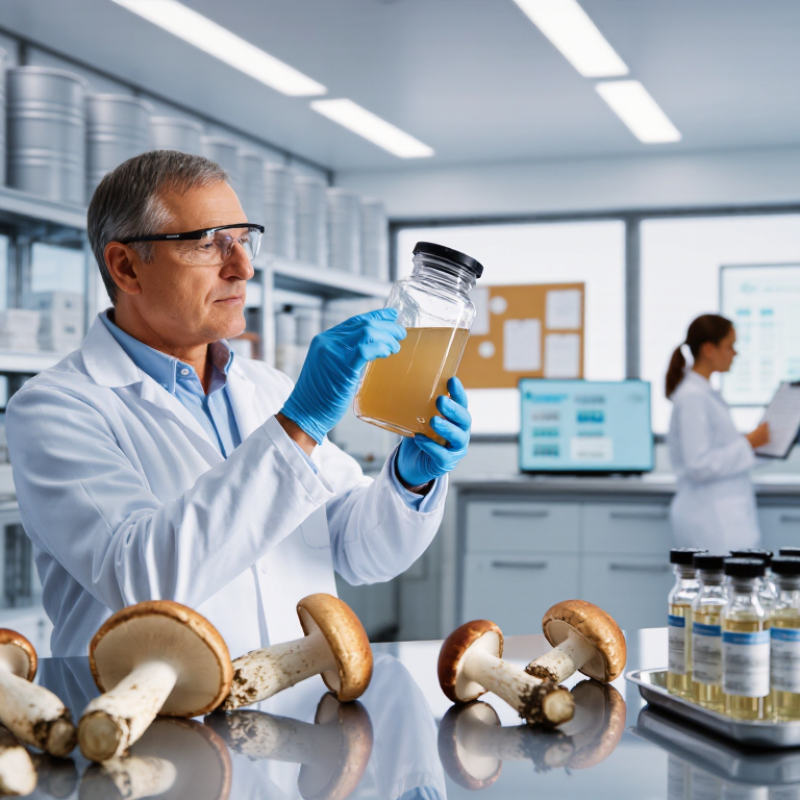
How to Choose the Best Agaricus Blazei Extract Supplier?

Understanding Agaricus Blazei Extract and Its Common Uses

Agaricus blazei extract comes from a medicinal mushroom used in functional food and supplement development. Its main studied components include beta-glucans, polysaccharides, proteins, and other compounds. Hot-water extraction often targets water-soluble polysaccharides. Dual extraction may capture a broader chemical profile. However, the final composition depends on cultivation, drying, and processing conditions. Not every powder is equivalent.

Common uses include capsules, drink powders, nutrition bars, and mushroom blends. Some formulators select it for products supporting normal immune function. Others use it in general wellness formulas or nutritional research. Human evidence remains uneven, so responsible suppliers avoid disease-treatment promises. Claims need restraint. People with medical conditions should seek professional advice before using concentrated extracts. Safety may also depend on dosage, allergies, and product purity.

When choosing a supplier, request the exact species name, extraction method, and active-compound specification. A credible supplier should provide batch-specific certificates of analysis. Check testing for microbes, heavy metals, pesticides, and adulteration. Ask whether the raw material is cultivated or wild-harvested. Traceable records matter from growing substrate to finished package. A tempting assumption is that darker extract means stronger. That shortcut can fail. I would review consistency across several batches, not just trust one attractive laboratory report.

Defining Quality, Potency, and Safety Requirements

Choosing an Agaricus blazei extract supplier starts with defined quality requirements. WHO reported that 170 of 194 member states use traditional medicine, increasing demand for reliable botanical controls (WHO Global Report, 2019). Ask for the mushroom’s scientific identity, cultivation location, harvest date, and extraction method. A clear batch number should connect the raw material, production record, and final certificate of analysis.

Potency needs more than a high polysaccharide percentage. Require testing for beta-glucans, not total polysaccharides, because starch can inflate the result. Confirm the analytical method, reference standards, laboratory qualifications, and detection limits. The USP Dietary Supplements Compendium emphasizes identity, purity, strength, and composition testing. These details help separate meaningful data from attractive paperwork. Look for results from independent laboratories, preferably using validated methods such as HPLC or recognized enzymatic assays.

Safety checks should cover heavy metals, pesticides, microbes, mycotoxins, and residual solvents. Certificates should show actual results, not only “pass” statements. FDA current good manufacturing practice guidance also expects specifications, documented testing, and quality investigations. Traceability matters. Request stability data, packaging controls, and storage conditions, especially for powders exposed to heat or moisture. An experienced buyer should inspect several recent batches, not one perfect sample. Do not guess. A low price may reflect weaker testing, but a premium price is not automatic proof of quality. Supplier audits, corrective-action records, and transparent answers reveal more than polished sales language.

Evaluating Supplier Certifications, Testing, and Traceability

Choosing an Agaricus blazei extract supplier starts with verifiable credentials, not attractive packaging. The 2023 Council for Responsible Nutrition Consumer Survey reported that 74% of U.S. adults use supplements. That level of use increases the need for documented quality controls. Ask for current GMP compliance, HACCP records, and ISO 22000 certification. Check the certificate scope, site address, expiry date, and issuing body. A certificate covering packaging only may not cover mushroom cultivation or extraction.

Testing should identify the actual mushroom and measure its useful compounds. Request batch-specific certificates of analysis from an ISO/IEC 17025-accredited laboratory. The report should show beta-glucan results, moisture, microbial counts, heavy metals, pesticides, and residual solvents. DNA testing can support species identity, but it may not confirm the final extract’s potency. The WHO Global Report on Traditional and Complementary Medicine notes that 170 of 194 Member States report using traditional medicine. That broad use does not replace laboratory evidence. It only highlights why evidence matters.

Traceability should work backward from the finished lot to the growing site, harvest date, substrate, extraction solvent, concentration ratio, and processing records. A supplier should provide sealed retain samples and a clear recall procedure. I would be cautious when every batch shows identical numbers; nature is less tidy. An unusually high beta-glucan result deserves a second test, not immediate praise. Paperwork can look complete and still miss contamination between production steps. Ask for independent audit findings, not only supplier-issued documents.

Comparing Production Methods, Pricing, and Supply Reliability

Choosing an Agaricus blazei extract supplier requires more than comparing a price per kilogram. Production methods can change the product’s identity, strength, and consistency.

Ask whether the extract uses fruiting bodies, cultured mycelium, or a blended material. These sources may show different levels of beta-glucans and other measurable compounds. Hot-water extraction is common for polysaccharide-rich products, while other processes may use additional solvents. The supplier should clearly describe each step. Request batch-specific testing for identity, moisture, microbial limits, heavy metals, and active compounds. A clean certificate is useful, but it should match the actual batch. I have seen documents look impressive while leaving key testing details unclear. That is worth questioning.

Pricing needs careful adjustment. Compare the cost per kilogram, extraction ratio, active-compound content, packaging, and shipping terms. A cheaper powder may contain more carrier material or offer weaker standardization. Small trial orders can reveal color, aroma, solubility, and sediment before a larger commitment. Keep records. They expose differences that a spreadsheet may miss.

Supply reliability depends on traceable cultivation, stable raw-material access, and realistic lead times. Ask about harvest seasons, reserve inventory, minimum order quantities, and backup processing capacity. Check whether the supplier retains samples from each lot and handles complaints with documented procedures. Request recent delivery records, not vague promises. No supplier is perfectly predictable. Weather, crop variation, and transport delays still matter. A strong partner explains these risks openly and offers practical alternatives.

How to Choose the Best Agaricus Blazei Extract Supplier? - Comparing Production Methods, Pricing, and Supply Reliability

Practical comparison of common Agaricus blazei extract supply models

Supplier Profile Typical Production Method Typical Extract Specification Indicative Bulk Price* Minimum Order Quantity Typical Lead Time Supply Reliability Best Fit
Commodity powder supplier Hot-water extraction followed by filtration and spray drying; often based on cultivated fruiting bodies or mycelial biomass. 4:1 to 8:1 extract ratio; commonly standardized by total polysaccharides rather than beta-glucans. Approximately US$18–35 per kg for standard bulk powder. Usually 25–100 kg. 2–6 weeks, depending on stock and export documentation. Medium; pricing is competitive, but batch-to-batch specifications may require closer monitoring. Cost-sensitive food, beverage, and general wellness products.
Standardized extract supplier Controlled hot-water extraction with concentration, drying, and laboratory standardization of active markers. Usually declared beta-glucans or polysaccharides, with a batch-specific certificate of analysis. Approximately US$35–75 per kg, depending on assay level and documentation. Usually 10–50 kg. 3–8 weeks for regular production; longer for customized specifications. High when the supplier maintains retained samples, validated testing, and documented batch controls. Capsules, tablets, and products requiring consistent label claims.
High-potency fruiting-body extract supplier Fruiting bodies are dried, milled, extracted with hot water, concentrated, and commonly spray dried or vacuum dried. Often 8:1 to 15:1 extract ratio; may include a defined beta-glucan range and low excipient content. Approximately US$60–120 per kg. Usually 10–25 kg. 4–10 weeks because cultivation and raw-material selection are more restrictive. High for planned orders; vulnerable to seasonal cultivation and limited fruiting-body availability. Premium supplements and formulations emphasizing fruiting-body origin.
Dual-extraction supplier Sequential hot-water and food-grade alcohol extraction, followed by solvent removal, concentration, and drying. Designed to recover both water-soluble polysaccharides and selected alcohol-soluble compounds; exact marker profile varies by process. Approximately US$80–160 per kg. Usually 5–25 kg. 5–12 weeks, including additional process controls and testing. Medium to high; reliability depends on solvent-residue testing and process capacity. Premium research-led formulas and products requiring a broader chemical profile.
Organic-certified supply model Certified cultivation and extraction using approved processing aids, with segregation and traceability throughout production. Specification may range from 4:1 to 10:1; certification applies to the applicable agricultural and processing chain. Approximately US$45–100 per kg, excluding special packaging or private testing. Usually 25–100 kg. 4–10 weeks, with possible delays when certified raw material is limited. High when certification, lot segregation, and annual audit records are current. Organic-labeled products and retailers requiring certified sourcing.
Custom-formulation supplier Customized extraction ratio, carrier system, particle size, flavor treatment, or blend development based on the buyer’s product requirements. Tailored beta-glucan, moisture, microbiological, heavy-metal, and solubility specifications. Approximately US$90–200+ per kg, depending on development and testing requirements. Typically 50–250 kg after approval; development samples may be smaller. 8–16 weeks for the first commercial batch; repeat orders are usually faster. High after validation, but initial project timelines are longer. Large-volume brands needing unique specifications, technical support, or supply agreements.

Supplier evaluation checklist: Confirm the mushroom source, fruiting-body or mycelium status, extraction ratio, beta-glucan testing method, moisture level, microbial limits, heavy-metal results, pesticide screening, allergen statement, certificate of analysis, retained-sample policy, production capacity, and written lead-time commitment.

*Pricing note: The figures are indicative bulk-market ranges for dried Agaricus blazei extract and can vary according to origin, assay level, certification, packaging, testing, Incoterms, order volume, and currency. Obtain a current quotation and verify the specification before purchase.

Selecting a Supplier Through Samples, Audits, and Clear Agreements

How to Choose the Best Agaricus Blazei Extract Supplier?

A sample is the first practical test of an Agaricus blazei extract supplier. Request a sealed sample with a batch number, production date, and storage instructions. Check its color, aroma, solubility, and texture under consistent conditions. Simple observations can reveal handling problems. However, appearance cannot prove purity. Ask for testing results covering identity, beta-glucan content, moisture, heavy metals, microbes, pesticides, and unwanted residues. An independent laboratory report is more useful than a polished sales sheet. Keep retained samples for later comparison. This step is often overlooked.

An audit should examine more than clean floors. Review raw-material sourcing, extraction records, employee training, sanitation controls, and batch traceability. Confirm that the supplier can explain every major processing step. During a remote audit, request time-stamped records and live video evidence where practical. Documents can look complete while actual controls remain weak. That possibility deserves attention.

Clear agreements protect both sides. Specify the mushroom species, extract ratio, test methods, acceptance limits, packaging, shelf life, and shipping conditions. Define what happens after a failed test or delayed delivery. Require advance notice for changes in raw materials, facilities, or processing methods. A certificate of analysis should accompany each shipment, not arrive weeks later. Leave no vague promises. Even experienced buyers may miss a small clause, so have quality and purchasing staff review the agreement together.

ICB_lOGO_2023