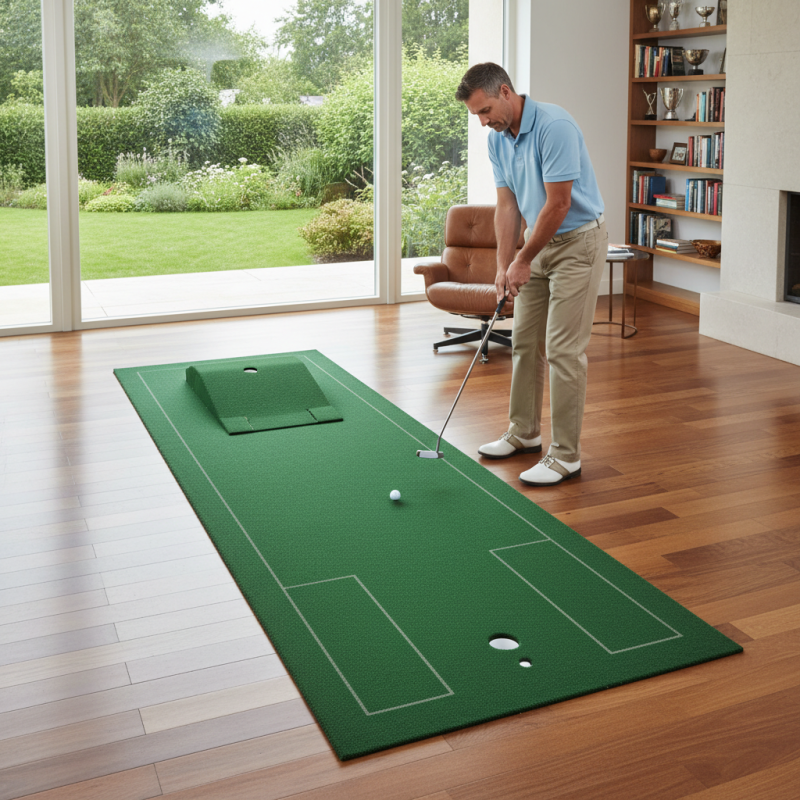
How to Choose the Best Traditional Putting Mat for Your Home?
Choosing the right Traditional Putting Mat can significantly enhance your indoor practice. According to golf expert John McClure, "A well-chosen mat can transform your game." Many golfers underestimate the importance of quality in a putting mat.
When selecting a Traditional Putting Mat, consider the material and size. A durable surface mimics real greens. You want a mat that provides realistic feedback. Look for features like alignment guides and adjustable slopes to improve your skills.
Finding the right balance can be challenging. Many options exist in the market, and it's easy to feel overwhelmed. Not every mat suits every golfer. Reflect on your needs and practice habits. Investing time in research can lead to better choices. Ultimately, the right Traditional Putting Mat not only trains your precision but also enhances your enjoyment of the game.
Understanding Different Types of Traditional Putting Mats Available
When selecting a traditional putting mat, understanding the types available is crucial. Different putting mats cater to various skill levels and preferences. Basic options often feature simple turf. They are easy to set up and store, making them ideal for beginners. More advanced models may simulate real greens, complete with slope and speed variations. The choice here affects your practice quality.
According to a recent industry report, around 30% of golfers practice indoors. This statistic highlights the need for quality putting mats. For a better experience, look for materials that mimic natural grass. Some mats even offer markings that help with alignment and distance control. These details are vital for improving your skills.
However, not all mats perform equally. Some less expensive options may wear out quickly or lack realistic feel. It’s important to read reviews and watch product demos before making a decision. Consider your practice habits and space limitations as well. Finding the perfect putting mat means balancing quality and usability. Review multiple sources before settling on your choice. Each small detail contributes to improving your game.
How to Choose the Best Traditional Putting Mat for Your Home?
| Mat Type | Material | Length (ft) | Features | Price Range ($) |
| Indoor Putting Mat | Nylon | 6 | Automatic Ball Return | 50 - 100 |
| Outdoor Putting Green | Polypropylene | 12 | UV Resistant | 100 - 250 |
| Portable Putting Mat | Rubber | 4 | Compact Design | 30 - 70 |
| Professional Putting Mat | Artificial Turf | 10 | Realistic Grass Feel | 150 - 300 |
Key Features to Consider When Selecting a Putting Mat
When selecting a traditional putting mat, the key features play a crucial role. Look for materials that mimic real grass. This can enhance the practice experience. Reports indicate that mats with a blend of polyester and nylon offer durability and a realistic feel. Many golfers note improved skills with consistent practice on quality mats.
The size of the mat matters. A standard length ranges from 6 to 12 feet. Choosing the right length depends on your available space. Some mats also include alignment guides and ball return systems. These features can add convenience. However, not every mat designed with these extras is effective.
Consider the ease of storage. Some mats are foldable, others are rigid. Safety is also important, especially for families. Mats with a non-slip backing reduce accidents. Industry insights suggest that 30% of buyers overlook this detail. Investing in a quality mat can lead to noticeable improvements in your short game. However, it’s essential to choose based on your personal needs and space constraints.
Evaluating Material Durability and Quality in Putting Mats
When choosing the best traditional putting mat, material durability and quality are crucial factors. First, look at the type of material used. Common options include nylon and polyester, both known for their resilience. A high-quality mat should withstand repeated use. Inspect the stitching and edges as well. Poorly finished edges can fray quickly. Mats that are not well-stitched often develop holes.
Consider whether the mat has a backing that prevents slipping. A durable backing will keep the mat in place during practice. It’s important to find a mat that can endure various indoor conditions. Some materials may warp or fade under specific types of lighting.
Maintaining the mat’s quality is part of ownership. Regular cleaning and proper storage extend its lifespan. If the surface wears down, your practice quality declines. Reflect on your playing style and frequency of use. A mat that looks great might not hold up under long-term use. Investing in a durable mat pays off in the end.
Durability and Quality Comparison of Different Putting Mat Materials
Sizing and Space Considerations for Home Putting Mats
When choosing a putting mat for home use, sizing and space are crucial factors. According to industry reports, a standard putting mat should be at least 9 feet long for effective practice. This length allows for various putting drills and mimics the greens' experience. However, space can be a limitation. A smaller mat may suffice if your area is compact. Consider your available space before committing.
It’s also important to measure your indoors. If you have a long hallway or an unused corner, that could be ideal for a putting mat. Tight spaces can lead to frustration. You might find yourself constantly moving furniture or feeling cramped. Conversely, a large area gives you room to maneuver. Choosing a mat under 15 feet can help avoid overwhelming your space.
Additionally, think about mat thickness. A thicker mat provides a more realistic feel but may require more room. Some mats are portable, allowing you to practice in different settings. This flexibility can suit changing moods or family dynamics. If space is a struggle, consider rolling the mat up when not in use. Find what works for you, and don’t hesitate to adjust as needed.
Setting a Budget: Price Ranges for Quality Putting Mats
Setting a budget is crucial when selecting a traditional putting mat. Prices can vary significantly based on materials, size, and features. You might find simple mats starting around $30. These can be great for beginners. However, they may lack durability and realistic feel. Investing a bit more can lead to better quality.
Higher-end putting mats can range from $100 to $300. These often feature smooth surfaces and realistic grass textures. For avid golfers, this price range may feel justifiable. But remember, expensive doesn’t always mean perfect. You might buy a mat that looks great but feels off during use. It's essential to consider personal preferences in terms of material and size.
Look for mats that fit your space and style. A great mat can improve your game. But a poorly chosen one may lead to frustration. It’s wise to weigh your options carefully. Test different mats if possible. Seek a balance between quality and cost that feels right for you.

 Skip to content