
...

7 Foil Pouch Buying Tips for Global Buyers

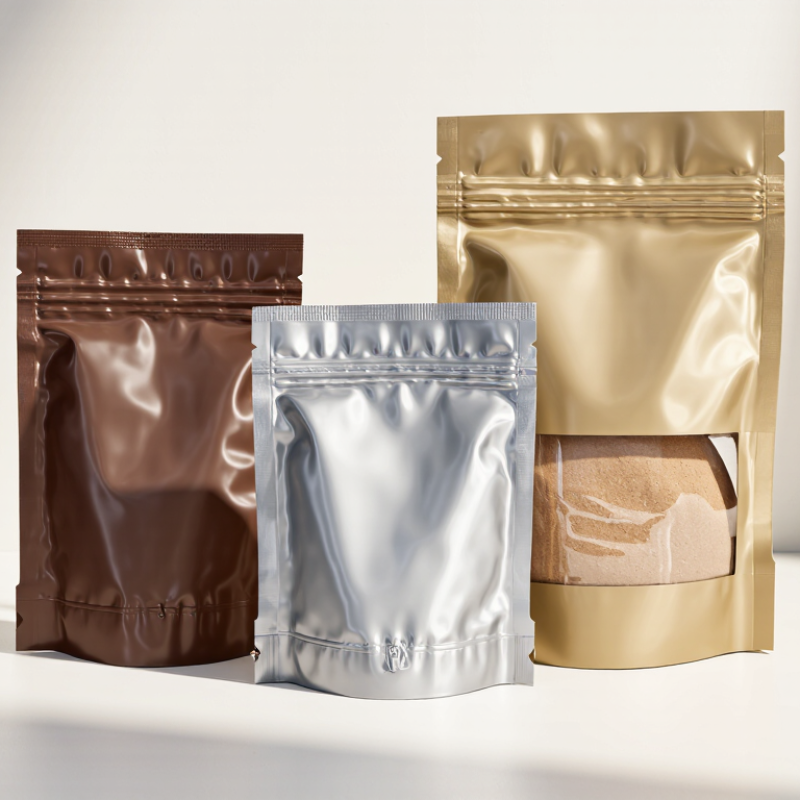
Buying a Foil Pouch for an international market involves more than choosing a size and attractive print. The pouch must protect the product, seal consistently, and suit its filling and shipping conditions. A glossy sample can look convincing. The real test comes when seals meet production speed, cartons face long transit, and the product reaches a different climate. Small details matter.

This introduction uses a fictional expert voice, not a real or independently verified quotation: packaging adviser Alex Morgan puts the buying principle this way, “Choose the pouch for the product’s journey, not just for its shelf appearance.” Treat that as an editorial line, not a sourced statement. The guide will help buyers ask practical questions about laminate structure, barrier needs, pouch format, seal quality, printing, minimum order quantities, and lead times. Request samples. Check dimensions and filling requirements. Ask suppliers how they verify consistency between samples and production runs. Useful questions, not formalities.

There is no universal best pouch. A coffee pouch, a snack pouch, and a powder pouch may need different materials and closures. Buyers should share product details with qualified suppliers and review samples under realistic conditions. One point deserves reflection: a lower unit price can be costly if the format causes filling problems or product damage. Compare the complete offer, including specifications, shipping, and quality checks. Then make the decision with evidence—not appearance alone.
7 Foil Pouch Buying Tips for Global Buyers

Define Product Requirements, Pouch Size, and Intended Use

Before comparing foil pouches, write down what the product needs from its packaging. Is it dry, oily, powdery, or sensitive to moisture and light? Note its weight, texture, and expected shelf life. A fine powder may collect in the seal area, while sharp pieces can stress pouch seams. Small details matter. Ask suppliers for material specifications and confirm that the pouch is suitable for direct product contact.

Choose dimensions using a real fill test, not appearance alone. Measure the product after settling, then allow room for headspace, sealing, and any scoop or insert. A pouch that looks generous when empty can become awkward to fill once the product is added. Consider how customers will open, store, and reuse it, if applicable. Will it stand on a shelf? Does it need a tear notch or resealable closure? Intended use also includes shipping and storage conditions, such as heat, humidity, and handling. Request samples in the proposed size and test them with the actual product. Check seal strength and barrier performance with your packaging partner. It is tempting to specify the highest barrier available, but that may add cost without solving a real need. Requirements sometimes change after testing; revise them before approving a production run.
Compare Foil Structures, Barrier Levels, and Printing Options

7 Foil Pouch Buying Tips for Global Buyers

Foil pouch performance depends on the full laminate, not just its shiny surface. A PET, aluminum foil, and PE structure can offer strong light, oxygen, and moisture protection. Metallized film may look similar, but its barrier performance is generally different. Match the structure to the product’s sensitivity and expected shelf life. Check oxygen and water vapor transmission data, then confirm how the pouch performs after filling and sealing. Details matter.

Printing choices affect both appearance and production consistency. Rotogravure can suit large runs, while digital printing may be practical for shorter runs or changing designs. Ask for a printed sample on the proposed material. Inspect small text, color matching, and registration near the seals. A design can look crisp on screen but lose detail on a flexible pouch. Test before scaling. Seal strength and barrier integrity should be checked on finished pouches, not inferred from a material sheet alone.

Tips: Compare laminate specifications line by line. Request test conditions and sample pouches. Confirm whether inks and adhesives suit the chosen structure. One detail buyers sometimes overlook is how creasing or sharp folds may affect the barrier. It is worth testing, even when the pouch looks flawless.

7 Foil Pouch Buying Tips for Global Buyers - Compare Foil Structures, Barrier Levels, and Printing Options

Buying tip Structure or option Typical barrier / performance What to check before ordering
1. Match the barrier to the product PET / aluminum foil / PE Very high light, oxygen, and moisture barrier when the laminate and seals are intact. The foil layer is opaque and can be damaged by flexing or puncture. Confirm the product’s sensitivity, shelf-life target, storage conditions, and whether an opaque pack is acceptable.
2. Compare foil with metallized film PET / VMPET / PE Metallized PET provides light protection and improved gas and moisture barrier over many uncoated films, but generally does not match intact aluminum foil barrier. Ask for product-specific oxygen and water-vapor transmission data, test methods, and conditions; do not treat “metallized” as equivalent to foil.
3. Consider a non-foil option when suitable PET / PE or other polymer laminates Barrier varies by resin, thickness, coatings, and construction. These structures can offer a clear pack, but may provide less light or oxygen protection than foil laminates. Request a structure specification and confirm the required shelf life with packaging trials or shelf-life testing.
4. Choose the sealant for the filling process PE or CPP inner seal layer The inner layer forms the pouch seals. Seal performance depends on the film grade, seal temperature, pressure, dwell time, and product contamination at the seal area. Test on the intended filling line, especially for hot-fill, oily, powdered, or liquid products; verify seal strength and leak resistance.
5. Check resistance to handling and puncture Nylon (PA) / PE or reinforced laminate constructions Nylon can improve toughness and puncture resistance in suitable constructions. It is not, by itself, a substitute for a high oxygen- or moisture-barrier layer. Consider product edges, pack weight, shipping conditions, drop handling, and whether the pouch needs to stand or carry a spout.
6. Select printing by run size and artwork needs Gravure, flexographic, or digital printing Gravure commonly suits longer runs and detailed, consistent graphics; flexography is widely used for flexible packaging; digital printing can suit shorter runs and variable designs without conventional printing plates. Compare setup costs, minimum order quantity, color requirements, lead time, proofing process, and food-contact compliance for the intended use.
7. Confirm specifications and end-of-life requirements Printed multi-layer laminate; optional zipper, tear notch, or window Foil and mixed-material laminates can be difficult to recycle through conventional film recycling streams. Added features and windows may affect barrier performance or sorting. Approve a full specification covering layer order, thickness, dimensions, tolerances, closure, and test methods; check local recycling guidance and applicable food-packaging regulations.

Barrier performance depends on the complete pouch construction, converting quality, seals, and test conditions. Request test data for the proposed specification and validate it with the actual product and filling process.

Check Food Safety Rules and Packaging Standards in Target Markets

For foil pouches, food safety depends on the complete package, not just its shiny aluminum layer. The sealant and adhesive touch or sit close to food, and heat can change how materials behave. Check the rules in every destination market. In the European Union, Regulation (EC) No 1935/2004 sets general requirements for food-contact materials; plastic layers also fall under Regulation (EU) No 10/2011. For the United States, confirm that each food-contact substance and its intended use meet applicable FDA requirements.

Ask suppliers for a declaration of compliance, material specifications, and migration-test reports for the finished pouch. The test conditions should reflect your product: oily sauce, acidic fruit, hot filling, or retort processing. A test for dry snacks may not cover a pouch sterilized at high temperature. The European Commission’s 2022 RASFF annual report recorded 282 notifications involving food-contact materials. That figure is a useful reminder, not a measure of all packaging risks. A certificate helps, but it does not replace checking whether the tested structure matches your order. I would verify that detail twice. Ask for test methods, dates, and intended-use limits, then keep the records with the packaging specification.

Evaluate Suppliers, Minimum Orders, Pricing, and Lead Times

A dependable foil pouch supplier should explain the material structure, barrier properties, seal options, and printing limits in plain terms. Ask for a specification sheet, not just a sales brochure. Compare it with your product’s moisture, light, and handling needs. Request physical samples in the intended size and thickness. Check the seal. Look for wrinkles, weak corners, or inconsistent layers.

Minimum order quantities can vary by pouch size, material, and print method. Ask for prices at several order levels, such as 5,000, 10,000, and 25,000 units. This shows how unit cost changes as volume grows. Confirm whether setup, cylinder, sampling, or packing fees are separate. A low unit price may hide costs elsewhere. I would still check the math twice; quotes do not always include the same items.

Get lead times in writing, with separate estimates for sampling, artwork approval, production, and shipment. Ask what could delay each stage, especially during busy seasons. Share your delivery location and preferred shipping method before comparing offers. A supplier’s estimate is useful, but it is not a guarantee. Leave room for delays. One detail buyers sometimes miss is approval timing: a late design sign-off can shift the whole schedule. Keep the final specifications and agreed dates in one document, so both sides can check them.

Test Samples and Confirm Shipping, Storage, and Quality Terms

Before approving a foil pouch order, request samples from the intended production material, not a hand-finished mock-up. Fill them with your actual product or a safe test substitute. Check seal uniformity, pouch dimensions, pinholes, and whether the laminate flexes or delaminates at the corners. Samples can mislead. A clean sample is evidence, not proof of consistent production.

The Flexible Packaging Association’s 2024 industry report estimated U.S. flexible-packaging sales at $42.9 billion in 2023. That figure covers a broad sector, not foil pouches alone, but it shows the scale of the supply chain. Ask for test records tied to the sample lot. Where transit risk matters, agree on distribution testing for vibration, drops, and compression. Confirm the test method and pass criteria in writing; “tested” alone is vague.

Set storage limits for temperature, humidity, and sunlight, then ask how the supplier controls them. Specify shelf life, carton stacking limits, inspection tolerances, and what happens if delivered pouches fail agreed checks. Confirm who arranges freight, who bears damage risk, and how claims must be documented. Keep one approved sample as a reference. I would still revisit these terms after the first shipment; real handling can reveal flaws a desk review misses.

ICB_lOGO_2023