Why Are Steel Trestle Legs Important for Structural Support?
Steel Trestle Legs play a pivotal role in providing structural support for various constructions. They ensure stability and safety in load-bearing applications. According to a report by the American Institute of Steel Construction, over 30% of structural failures can be traced back to inadequate support systems. This alarming statistic emphasizes the need for robust designs involving steel trestle legs.
Dr. Emily J. Anderson, a leading expert in structural engineering, stated, "Steel trestle legs are essential for ensuring the integrity of load-bearing structures." Her insights underline the critical function these legs serve. They not only bear weight but also help distribute forces across a wider area. This distribution minimizes the risk of localized failures.
Despite their importance, there are challenges in the design and implementation of steel trestle legs. Miscalculations in load requirements often lead to structural weaknesses. Engineers must remain vigilant and thorough in their designs. The reliability of steel trestle legs hinges not only on quality material but also on accurate engineering assessments. Every decision affects overall safety and performance.
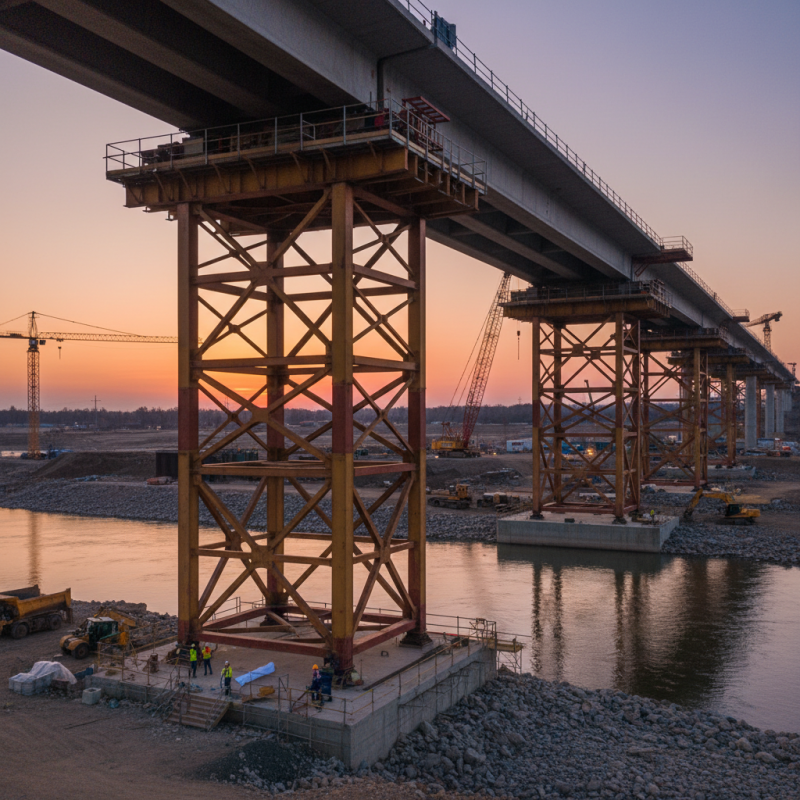
Factors Influencing the Design of Steel Trestle Legs
The design of steel trestle legs is crucial for ensuring structural support. Several factors play a role in this design process. Load distribution is one of the most significant considerations. Engineers must assess how weight will be transferred through the legs. A poorly designed leg might lead to uneven distribution, resulting in structural failure.
Additionally, the environmental conditions impacts the design. For instance, exposure to moisture can lead to corrosion. This factor pushes engineers to consider protective coatings or materials. In colder climates, snow load becomes a critical consideration. Steel legs need to withstand heavy snow without buckling.
Aesthetic considerations also demand attention. Many projects require trestles that blend with their surroundings. This compromise can limit structural options. Designers often feel torn between functionality and appearance. Balancing these factors is challenging. Sometimes, designs may favor looks over strength, leading to future complications. It's essential to reflect on these design decisions consistently.
Materials Used in Steel Trestle Leg Construction
Steel trestle legs play a crucial role in structural support. The materials chosen for their construction significantly impact durability and performance. Commonly, materials like carbon steel and stainless steel are preferred. These metals offer high strength and resistance to corrosion. This is vital for trestles exposed to harsh weather conditions.
Carbon steel is often used due to its affordability and high tensile strength. However, it may require additional coatings to prevent rusting. Stainless steel, while more expensive, is ideal for environments where corrosion is a concern. Its longevity can offset higher initial costs. The choice of material should also consider the specific environment and load requirements.
In practice, many overlook the importance of these material choices. Sometimes, cheaper options are selected without considering long-term implications. This can lead to structural failures or costly repairs. Evaluating the right materials is essential. It ensures safety and extends the lifespan of the trestles. Decision-makers must reflect on these choices for future projects.
Load Distribution and Structural Integrity in Trestle Design
Steel trestle legs play a crucial role in load distribution. They support significant structural weight, which ensures stability. According to the American Institute of Steel Construction, a properly designed trestle can handle loads exceeding 100 tons. This capability is essential for high-traffic areas.
The design of steel trestle legs impacts structural integrity. Miscalculations in leg thickness or positioning can lead to failure. A report from the National Highway Traffic Safety Administration highlights that inadequate support design contributes to over 30% of structural failures in bridge constructions. Engineers must be vigilant about load distributions and potential stress points.
However, designing these legs is not without its challenges. Often, engineers overlook environmental factors like vibration and corrosion. This oversight can undermine the structure's longevity. Regular inspections and recalibrations are vital to address these issues. Without them, even the best designs can fail over time.
Common Applications of Steel Trestle Legs in Engineering
Steel trestle legs play a crucial role in various engineering applications. They provide stability and support for structures like bridges and elevated highways. These legs are designed to bear heavy loads and withstand environmental stresses. Their durability makes them ideal for long-term use in infrastructure.
In the construction of railways, steel trestle legs are essential. They elevate tracks and ensure smooth train operations. This is especially important in rough terrain. Trestles made from steel can adapt to different conditions, maintaining strength over time. However, the design and positioning of these legs must be carefully considered. A miscalculation can lead to serious issues.
Additionally, steel trestle legs are common in industrial settings. They support platforms and machinery, optimizing space. This allows for better workflow and efficiency. Yet, the maintenance of these structures is often overlooked. Regular inspections can prevent costly accidents down the line. Balancing strength and design is critical in creating effective trestle systems.
Why Are Steel Trestle Legs Important for Structural Support?
| Application | Material Type | Load Capacity (tons) | Length (meters) | Corrosion Resistance |
| Railway Bridges | Steel | 50 | 15 | Yes |
| Highway Overpasses | Galvanized Steel | 60 | 20 | Yes |
| Communication Towers | Steel | 30 | 25 | No |
| Water Towers | Stainless Steel | 40 | 18 | Yes |
Maintenance and Inspection Practices for Steel Trestle Legs
Steel trestle legs play a vital role in providing stability and support for structures. Their proper maintenance and inspection can prevent catastrophic failures. The American Institute of Steel Construction reported that unmaintained steel structures can incur repair costs of up to 30% higher than well-maintained counterparts. Regular checks are essential.
Inspection practices should focus on identifying signs of corrosion and wear. The National Association of Corrosion Engineers highlights that corrosion can reduce the lifespan of steel by over 50% if not addressed timely. Simple techniques like ultrasonic testing can detect internal flaws early. However, many projects neglect these methods due to budget constraints.
Routine maintenance is equally important. This includes cleaning and applying protective coatings. Surprisingly, a study from the Federal Highway Administration revealed that less than 40% of bridge inspections include thorough assessments of lower legs. This oversight can lead to critical failures down the road, emphasizing the need for a shift in priorities. Investing in inspection practices is not just smart; it is necessary for safety and longevity.

 Skip to content