Industrial Vision Inspection Trends at Canton Fair 2026?
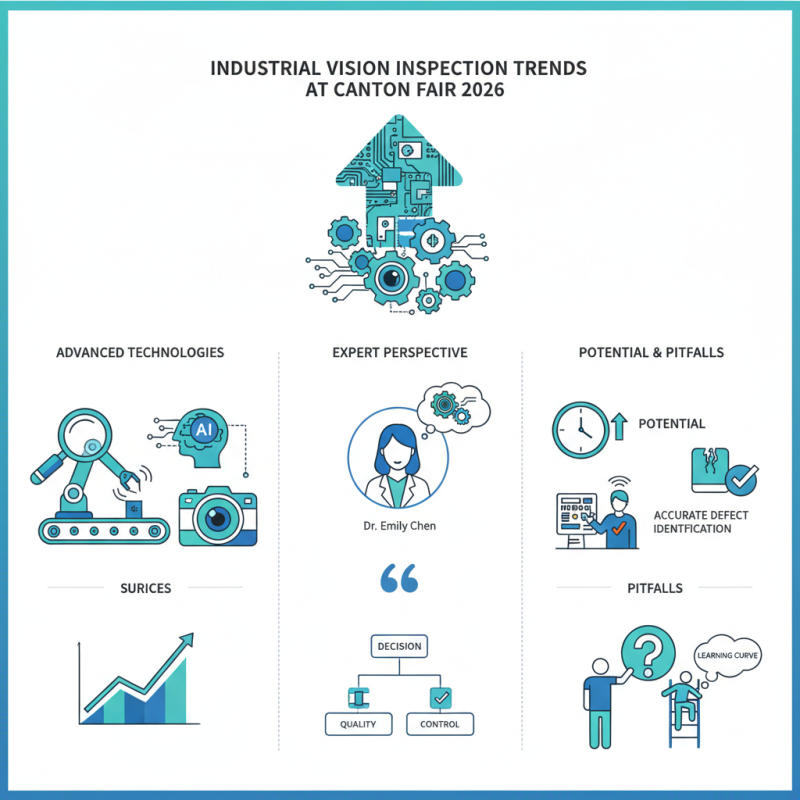
The 2026 Canton Fair will spotlight advanced technologies, including Industrial Vision Inspection. Dr. Emily Chen, a leading expert in the field, emphasized, “The future of manufacturing and quality control relies on precise vision systems.” This statement encapsulates the critical role of vision inspection technologies.
Industrial Vision Inspection is evolving rapidly, particularly in manufacturing and quality assurance. With AI-driven solutions on display, buyers can expect enhanced efficiency. The fair will introduce cutting-edge tools that can identify defects with remarkable accuracy. However, the integration of AI raises questions about reliance on technology.
As manufacturers embrace these innovations, they must also consider the implications. Can they maintain oversight without losing the human touch? Additionally, while technology improves efficiency, the learning curve for operators may pose challenges. As we delve into the trends at the 2026 Canton Fair, examining both the potential and pitfalls of Industrial Vision Inspection becomes essential.
Industrial Vision Inspection Market Growth and Forecast for 2026
The industrial vision inspection market is set for robust growth by 2026. Reports suggest a compound annual growth rate (CAGR) of around 12% from 2021 to 2026. Key factors driving this growth include the rising demand for quality control across manufacturing sectors. Companies must ensure that their processes meet stringent standards to compete effectively.
Tips: Embrace automation. It enhances precision and reduces errors in inspection tasks.
Innovative technologies, like AI and machine learning, are revolutionizing the inspection process. These tools can analyze vast amounts of data in real time. This results in faster decision-making. However, not all industries are adapting quickly. Some still rely heavily on manual inspections, leading to inconsistencies in results. This gap highlights a need for training and technological investment.
Tips: Regular training for staff is essential. It helps to bridge the knowledge gap in using advanced inspection technologies.
As industries prepare for participation in events like the Canton Fair, showcasing advancements in vision inspection will be vital. Markets are evolving, and companies must adapt or risk falling behind. The future of inspection lies in integrating smart technologies with human expertise.
Key Technologies Driving Industrial Vision Inspection at Canton Fair 2026
The Canton Fair 2026 promises to showcase exciting advancements in industrial vision inspection technologies. Automated systems are set to dominate the scene. These systems enhance quality control processes across various sectors. Their ability to identify defects in real-time is transforming manufacturing standards. However, dependency on automation raises concerns about data accuracy.
High-resolution cameras and advanced algorithms will feature prominently. These technologies make inspections faster and more reliable. Yet, there are challenges. Not all environments support high-tech setups. The adaptability of these systems remains a question. Sometimes, the cost of implementation can outweigh the benefits.
Furthermore, integration with existing systems can be complex. Companies must ensure compatibility. This process often requires substantial adjustments. It’s essential to reflect on whether these innovations truly meet specific needs. Assessing their practicality in diverse industrial settings is crucial.
Impact of AI and Machine Learning on Vision Inspection Systems
The integration of AI and machine learning in vision inspection systems is transforming industrial operations. Recent reports highlight that businesses using these technologies can improve defect detection rates by up to 90%. In the high-stakes environment of manufacturing, this speed and accuracy are critical. However, the implementation is not always seamless. Many companies struggle with data integration across legacy systems.
Training AI algorithms requires a substantial amount of data. This often necessitates revisiting older processes to gather high-quality data. It’s frustrating when the AI doesn’t perform as expected. Issues like false positives can lead to unnecessary downtime. The workforce may feel overwhelmed by these new technologies. Balancing human expertise and machine accuracy remains a challenge.
As AI evolves, it's essential to adapt inspection systems continually. By 2026, utilizing machine learning for real-time adjustments promises to enhance operational efficiency. Yet, companies must remain vigilant. The rapid pace of change can lead to gaps in knowledge among staff. Ensuring that the team is well-trained and updated is crucial for success.
Emerging Trends in Quality Control and Compliance for Industrial Inspection
The Canton Fair 2026 will showcase the latest trends in industrial vision inspection, focusing on quality control and compliance. As industries evolve, the need for enhanced scrutiny in inspection processes becomes crucial. Recent data indicates that the global market for industrial automation is expected to reach $300 billion by 2026. This growth reflects an increasing reliance on technology for quality assurance.
Emerging trends highlight the integration of artificial intelligence and machine learning. These tools can help identify defects more accurately than traditional methods. They can reduce human error while enhancing speed. Current studies show that companies using AI-driven inspection report a 30% drop in error rates. However, there are still challenges to address, such as the need for skilled personnel who understand these complex systems.
Moreover, regulatory compliance is becoming stricter. Companies must adapt to avoid penalties. Insight from a recent report indicates that about 45% of manufacturers struggle to meet compliance standards effectively. This gap in adherence signals a pressing need for better systems. Focusing solely on technology may lead to overlooking essential human oversight. It calls for a more balanced approach.
Challenges and Solutions in Implementing Vision Inspection Technologies
The implementation of vision inspection technologies is gaining traction in various industries. However, challenges remain. According to a recent industry report, around 30% of manufacturers struggle with integrating these systems. The complexity of existing workflows can hinder adoption. Employees may need extensive training to operate new technologies effectively. This often leads to a delay in productivity and increased operational costs.
Integration issues can also surface. Many companies face difficulties in aligning vision systems with current machinery. This misalignment often results in quality control lapses. A survey revealed that 40% of organizations reported inconsistent results from their vision systems. Fine-tuning these tools can be time-consuming. Therefore, investing in adaptable solutions that accommodate existing processes is crucial.
Data security cannot be overlooked. As vision systems become more advanced, they gather sensitive information. Protecting this data is essential, and many companies lack sufficient cybersecurity measures. This oversight can lead to vulnerabilities. To navigate these challenges, businesses should adopt robust training programs and prioritize integration strategies that foster seamless operation. Ultimately, paving the way for successful vision inspection relies on addressing these core issues.
 Skip to content