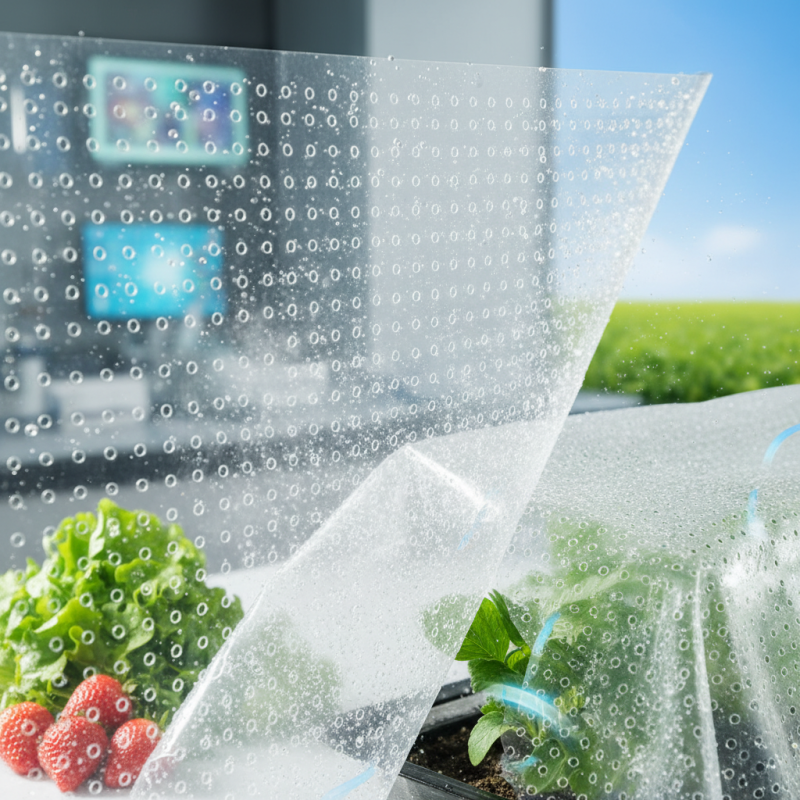
What is Perforated Pe Film and How is it Used?
Perforated Pe Film is becoming essential in various industries. This versatile material allows for controlled ventilation while maintaining moisture barrier properties. Dr. Emily Carter, an expert in polymer science, states, "Perforated PE Film bridges the gap between protection and breathability."
In agriculture, it plays a crucial role in crop cover applications. By enabling airflow, it reduces moisture build-up, which can lead to mold. Additionally, in the packaging sector, it is used to preserve freshness without compromising on breathability.
The benefits of Perforated PE Film are clear. However, there are challenges in its production process. Achieving the right perforation size and pattern is vital but can be complex. Future innovations may address these challenges, enhancing its reliability and efficiency.
Definition of Perforated PE Film and Its Characteristics
Perforated PE film is a unique material made from polyethylene. It features small holes or perforations that provide it with distinct advantages. The perforations allow for breathability, which is essential for various applications. This film is often used in packaging food products. The ability to let air circulate helps maintain freshness and reduces spoilage.
One of the key characteristics of perforated PE film is its versatility. It can be used in agriculture, particularly for covering crops. The breathable nature helps regulate humidity and temperature. This encourages healthy plant growth while protecting them from pests. However, the film's durability may sometimes be a concern. In various environments, it can degrade more quickly than expected.
Another interesting aspect is its suitability for composting. Unlike some plastics, perforated PE film can be designed to break down more naturally. This aligns with the growing focus on sustainability. While the film offers many benefits, users should carefully consider its environmental impact. Proper disposal methods are essential to maximize its ecological advantages and minimize waste.
Common Applications of Perforated PE Film in Various Industries
Perforated polyethylene (PE) film has gained traction across various industries due to its unique properties. This film comprises small holes that allow for airflow while providing essential moisture barriers. Its applications extend to agriculture, packaging, and construction.
In agriculture, perforated PE film is used for crop covering. The holes regulate humidity and temperature, enhancing plant growth. It allows excess moisture to escape, preventing fungal issues. Farmers often rely on this film to create ideal microclimates for sensitive crops.
In packaging, perforated PE film helps maintain freshness. It is widely used in food packaging. The perforations prevent condensation buildup, keeping food products from spoiling quickly. Moreover, it is beneficial in shipping delicate items. Air can circulate while keeping the items secure.
**Tip:** When selecting perforated PE film, consider the hole size. Smaller holes control humidity better, while larger holes provide ventilation.
In construction, this film is often used as a vapor barrier. It mitigates moisture retention in walls, reducing mold growth risks. Builders sometimes overlook the importance of proper installation. Even minor mistakes can lead to significant moisture problems.
**Tip:** Ensure the film is properly sealed at seams. A small gap can allow moisture to penetrate. Proper installation is essential to its effectiveness.
What is Perforated Pe Film and How is it Used? - Common Applications of Perforated PE Film in Various Industries
| Industry | Application | Features | Benefits |
| Agriculture | Plant Covers | Breathable and light-permeable | Enhances growth, reduces pest infestation |
| Food Packaging | Wrapping Fresh Produce | Allows moisture escape | Maintains freshness and prevents spoilage |
| Construction | Moisture Barriers | Perforated for air flow | Prevents mold and damage |
| Pharmaceutical | Packaging for Medical Supplies | Sterile and protective | Ensures safety and integrity of products |
| Textiles | Protective Covers | Lightweight yet durable | Protects against dust and moisture |
Benefits of Using Perforated PE Film in Packaging Solutions
Perforated PE (polyethylene) film is gaining traction in the packaging industry. Its unique design features holes that promote airflow while still providing a protective barrier. This makes it particularly beneficial for perishable goods. Fruits and vegetables, for instance, stay fresher longer. The perforations reduce moisture build-up, helping to prevent spoilage.
The sustainability aspect of perforated PE film should not be overlooked. Manufacturers can produce it from recycled material, minimizing environmental impact. It is lightweight, which can lower transportation costs. Despite these advantages, it is crucial to assess the specific needs of products being packaged. Some items may still require full barrier protection. Packaging solutions are not one-size-fits-all, and the learning curve can be steep. Firms must remain adaptable to ensure quality.
Another important factor is user experience. The ease of opening perforated film can enhance consumer satisfaction. Packaging that is challenging to open can frustrate customers. Yet, consistency in quality is vital. If perforation sizes are inconsistent, it can lead to packaging defects. Continuous testing and optimization are required to maintain high standards. Balancing these elements is key to successful packaging solutions.
Manufacturing Process of Perforated PE Film
The manufacturing process of perforated PE film involves several critical steps. Initially, the raw polyethylene is melted and extruded into a flat sheet. This is performed at high temperatures, which allows the material to flow uniformly. The extrusion process generally employs a capacitor to ensure the film's thickness is consistent, often around 10 to 30 microns. A recent industry report highlights that the global market for polyethylene films is projected to reach approximately $42 billion by 2026, underscoring the material's relevance.
Perforation is achieved through a series of precise processes. Laser perforation or mechanical punch methods create tiny holes in the film, enhancing breathability and allowing for moisture escape. This stage requires stringent quality checks. Data reveals that the perforation process can influence the film's tensile strength and elongation properties. It is essential to find a balance between permeability and structural integrity. Achieving this balance can be challenging, as improper perforation may lead to film failure in applications such as agricultural mulch or packaging.
After perforating, the film is cooled and rolled for storage or transport. The entire manufacturing process must adhere to strict industry standards to ensure product reliability. Surveys show that 85% of manufacturers prioritize sustainability in their processes, aiming to reduce waste and energy usage. However, achieving this ideal remains a work in progress for many. The performance of perforated PE film largely depends on these manufacturing nuances, underscoring the importance of precision at every stage.
Environmental Impact and Sustainability Considerations of Perforated PE Film
Perforated PE film is widely used in agriculture for its unique properties. Its perforations enhance air circulation and moisture retention, benefiting crops. Yet, this convenience comes with environmental challenges.
The production of polyethylene, a common material for this film, can lead to significant carbon emissions. According to a study by the Plastics Industry Association, manufacturing polyethylene can generate up to 2.2 kg of CO2 per kg of plastic. This raises concerns about its long-term sustainability.
Additionally, perforated PE film often ends up in landfills. A report from the Ellen MacArthur Foundation highlights that around 79% of plastic waste accumulates in landfills or the environment. This presents a critical issue for ecosystems and wildlife, as plastic pollution poses a serious risk. Awareness of these impacts is vital for informed decision-making in agricultural practices, prompting research into biodegradable alternatives.

 Skip to content