
A Rubble Bag is a heavy-duty container for collecting and moving construction debris, garden waste, and other bulky materials. On a renovation site, it can hold broken plaster, timber offcuts, tiles, and packaging in one defined place. That helps keep walkways clearer. It also makes cleanup easier to plan.
“Choose the bag for the material and the job, not just the price,” says Elena Brooks, a hypothetical construction-waste adviser used here to illustrate a practical industry perspective. Her rule captures an important detail: a bag that suits light packaging may not suit sharp fragments or dense rubble. Check the manufacturer’s stated capacity and weight limit. Keep sharp edges from cutting the fabric, and avoid overfilling. Simple steps matter.
Rubble Bags are useful where a skip would be impractical, where access is limited, or where debris needs to be gathered before collection. Their woven sides can make them easier to handle than loose piles, but they are not indestructible. Ground conditions, lifting equipment, and the type of waste all affect safe use. A torn seam can turn an ordinary cleanup into a frustrating one. It happens.
This guide explains common Rubble Bag uses, material choices, capacity considerations, and handling basics. It also looks at limitations, because no single bag fits every site. Choosing carefully can save effort; assuming every bag is built the same cannot.
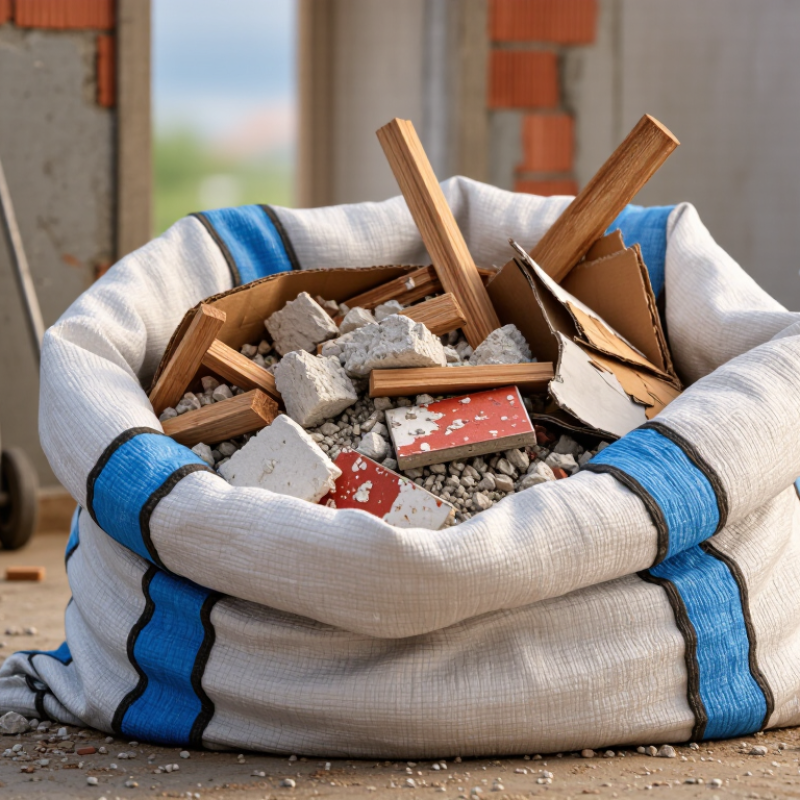
A rubble bag is a heavy-duty container for collecting and moving renovation debris, such as broken tile, plaster, brick, and concrete fragments. Many are made from woven polypropylene, whose interlaced strands help resist tearing and abrasion. Reinforced seams and lifting loops support handling, but construction varies. Check the stated safe working load; a bag designed for carrying is not automatically suitable for lifting by machinery. The design is practical, not foolproof. A sharp tile edge can still cut the fabric.
The scale of building waste makes proper collection important. The U.S. Environmental Protection Agency estimated that 600 million tons of construction and demolition debris were generated in 2018—more than twice the amount of municipal solid waste. That figure describes the whole sector, not rubble bags specifically, but it shows why durable, manageable containers matter. A wide opening helps workers load awkward pieces, while a stable base can reduce tipping on uneven ground.
Tips: Keep debris below the marked fill line, distribute heavy pieces evenly, and inspect loops and seams before lifting. Don’t guess the capacity. A bag that looks sturdy may still be overloaded.

A rubble bag holds broken concrete, bricks, tiles, plaster, and other renovation debris for collection and transport. Many are made from woven polypropylene, with reinforced seams and lifting loops, but construction and capacity vary. Check the bag’s safe working load before filling it. Weight matters. A bag can look manageable and still shift awkwardly when lifted.
The U.S. Environmental Protection Agency estimated that construction and demolition activities generated 600 million tons of debris in 2018, more than twice the amount of municipal solid waste. That scale makes practical handling important, even on a small site. Keep rubble below the bag’s rim, distribute it evenly, and avoid packing sharp pieces against the sides. NIOSH’s Applications Manual for the Revised NIOSH Lifting Equation assesses lifting risk using factors such as load weight, reach, posture, and frequency. A bag’s rated capacity does not guarantee that every lift is safe. For heavy or awkward loads, use suitable lifting equipment and keep people clear of suspended bags. I used to think fuller meant fewer trips; it can also make a bag unstable.
Rubble bags hold and help transport construction and garden debris. The chart compares the estimated weight of different materials in the same 0.1 m³ volume.
Weights are approximate and vary with material, moisture, and how tightly it is packed. Check the bag’s rated capacity and follow safe lifting instructions; never overfill it.
A rubble bag is a tough, flexible container for collecting debris where a skip is impractical. During construction, crews use one for broken masonry, mortar, offcuts, and packaging. On a renovation, it can hold stripped plaster, tiles, and dusty fragments as rooms are cleared. Keep heavy pieces low and distribute them evenly.
A bag that looks spacious can become unsafe to lift long before it looks full.
Check its rated capacity, and keep sharp edges from cutting through the fabric. Small details matter.
Landscaping creates different loads: pruned branches, weeds, turf, and loose soil can be gathered near the work area. Separate wet green waste from dense rubble when possible; mixed loads are awkward and may be rejected by a collection service.
The U.S. Environmental Protection Agency’s 2018 construction and demolition materials report estimated 600 million tons of such debris generated in the United States. That scale makes careful sorting worthwhile, even on a modest garden job.
Still, a bag is not a magic fix. I’d leave room at the top, because overfilling is easy when the last handful seems harmless. Check disposal requirements with the local service before loading.
A rubble bag carries heavy renovation waste such as broken plaster, brick fragments, and concrete chips. Choosing one starts with the material, not just the bag’s advertised volume.
The US Environmental Protection Agency estimated that 600 million tons of construction and demolition debris were generated in 2018. Its report, Construction and Demolition Debris Generation in the United States, 2018, shows the scale of this waste stream. A suitable bag can help keep debris contained during handling and transport.
Check the bag’s stated load rating, dimensions, and construction. Woven polypropylene bags are often used for bulky, rough debris, but seams and lifting loops still need inspection. Sharp tile edges can puncture a bag; place them carefully, and don’t drag a loaded bag across concrete. Check twice. Match capacity to what workers can safely lift, rather than filling the bag to its rim. Damp plaster or soil can make a seemingly manageable load much heavier. Think about access, too: a wide bag may hold more, but can be awkward through a narrow doorway. Site conditions vary, and specifications are easy to overlook. That is worth admitting. Choose a bag rated for the debris and handling method, then follow its instructions.
What Is a Rubble Bag Used For?
Safe Loading, Handling, and Disposal Practices
A rubble bag holds heavy renovation waste, such as broken tiles, plaster, and small masonry pieces. Choose a bag rated for the material and inspect its seams, handles, and base before loading. Spread debris evenly, keep sharp edges away from the fabric, and stop below the rated capacity. A bag may look roomy, but that is not a reason to fill it to the seams. Lift with a straight back, keep the load close, and get help or use a trolley when it feels awkward.
NIOSH’s Revised Lifting Equation gives a 51-pound recommended limit under ideal lifting conditions. This is not a safe target for every rubble bag; uneven, shifting debris makes handling harder. EPA estimated that the United States generated 600 million tons of construction and demolition debris in 2018, more than twice its municipal solid waste total. Sort reusable materials where practical, and check with the receiving facility about accepted waste and bag requirements. Do not assume every disposal site accepts filled rubble bags.
Tips: Wear sturdy gloves and footwear. Fill gradually, test the handles before moving, and avoid dragging the bag over sharp ground. If the load shifts, set it down and repack it. A small tear can worsen quickly.
| Topic | Practical guidance | Safety or disposal check |
|---|---|---|
| Primary use | A rubble bag is a heavy-duty container for collecting and moving small amounts of renovation, construction, or garden waste, such as broken masonry, tiles, soil, and stones. | Use it only for waste types and handling methods allowed by the bag’s instructions. |
| Suitable materials | Common contents include small pieces of brick, concrete, plaster, ceramic tile, and soil. Some bags may also be suitable for mixed light construction debris. | Check local disposal rules. Keep hazardous materials, chemicals, asbestos-containing materials, and other restricted waste separate. |
| Choosing a bag | Select a bag designed for the intended material and lifting method. Check its stated working load limit, dimensions, and handling instructions before use. | Do not assume all rubble bags have the same capacity or are suitable for mechanical lifting. |
| Preparing the bag | Place the bag on stable, level ground with enough clear space around it. Open it fully and keep its base flat while loading. | Do not use a bag with torn fabric, damaged seams, faulty lifting loops, or other visible defects. |
| Loading rubble | Add debris gradually and distribute it evenly. Place heavier pieces low in the bag and avoid concentrating weight on one side. | Keep sharp or protruding pieces from cutting the fabric. Do not exceed the stated load limit or fill level. |
| Manual handling | Keep the load manageable, use a stable stance, and avoid twisting while lifting. Use a trolley or ask for assistance when appropriate. | Never drag a loaded bag by its lifting loops. Do not lift a load that feels unsafe or exceeds your ability. |
| Mechanical lifting | Use lifting equipment only when the bag is specifically rated for that method and the equipment is suitable for the load. | Follow the bag and equipment instructions. Keep people clear of suspended loads and never stand beneath one. |
| Moving and storage | Keep filled bags upright on firm, level ground and protect them from vehicle impact, unstable stacking, and unnecessary movement. | Do not stack bags unless the bag instructions and site conditions permit it. Keep access routes clear. |
| Personal protection | Wear suitable gloves and sturdy footwear when handling rubble. Use eye protection where dust or flying fragments may be present. | Take care with sharp edges and dusty materials; follow site rules and applicable safety guidance. |
| Disposal | Arrange collection or take the bag to an authorized waste facility that accepts the contents and container type. | Separate waste where required and follow local rules for construction debris. Do not leave filled bags on public land without permission. |
Important: Bag capacities, load limits, permitted contents, and lifting requirements vary by product and location. Always follow the bag instructions and local waste regulations.