 Skip to content
Buying Nail Varnish Wraps in bulk can reduce unit costs, but only when the product suits your customers and storage conditions. Check the adhesive, finish, sizing range, and removal guidance before comparing carton prices. Ask suppliers for current product specifications and samples. Then inspect the wraps under bright light: look for smooth edges, even color, and packaging that protects each sheet from dust and bending. Small details matter.
A practical reminder from fictional sourcing specialist Elena Brooks, created for this introduction: “A low price is useful only when every sheet is sellable.” Treat that as a buying principle, not a verified industry quotation. Confirm minimum order quantities, production dates, lead times, and policies for damaged goods in writing. Compare cost per usable sheet, not just cost per pack. Check whether designs are consistent across batches, especially if you plan seasonal promotions or repeat orders. Store a sample carton as your team would store the full shipment; heat and pressure may affect packaging or adhesive performance. Test before scaling.
Bulk buying still involves judgment. A larger order can leave you with slow-moving designs, and sample results may not predict every batch. Track customer feedback and reorder data. Keep notes. The outline that follows explores ten practical checks, from supplier questions to inventory planning, so buyers can make a more informed decision about Nail Varnish Wraps. One caveat: no checklist replaces hands-on testing.
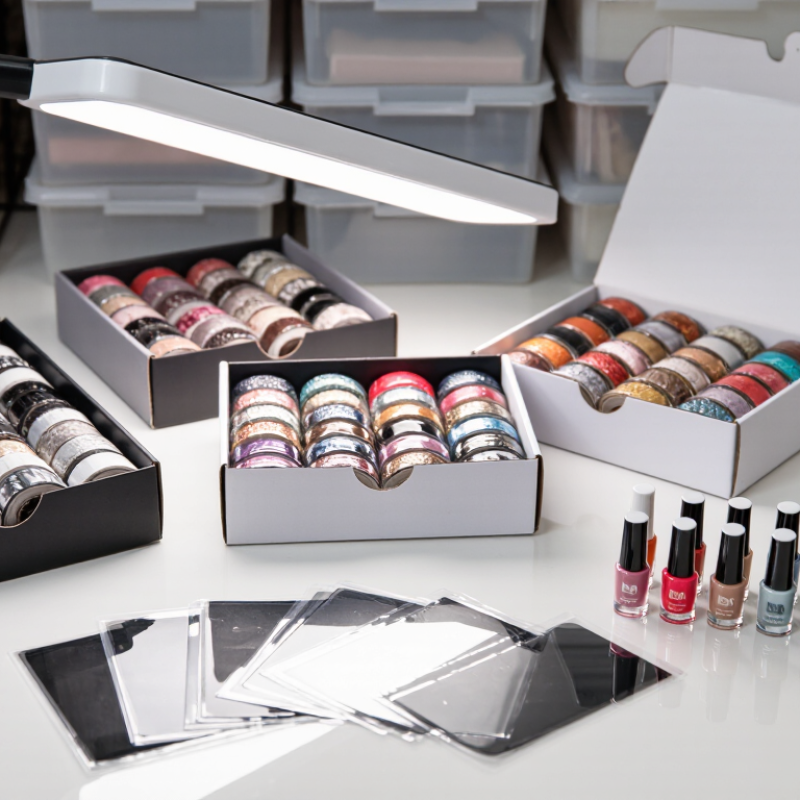
Nail varnish wraps are thin, flexible strips that carry color and often decorative patterns. They are applied to clean, dry nails and shaped by trimming or filing away extra material. Unlike liquid polish, wraps avoid brush strokes, but they still need careful placement. A small wrinkle near the cuticle can catch hair or clothing.
People use wraps for quick color changes, accent nails, or designs that are difficult to paint by hand. Some products need gentle heat or a finishing coat; others follow different instructions. Check the package directions rather than assuming every wrap works the same way. Fit matters more. Nail width and curve vary, so one size may not sit smoothly on every finger.
For bulk purchases, understanding the product helps prevent waste. Look for clear details about material, sizing, application steps, and storage conditions. Heat and direct sunlight may affect some wraps, so keep stock in a cool, dry place and inspect packaging before use. Sample a few pieces before committing to a large quantity. I would not judge a set by its printed pattern alone; flexibility and reliable adhesion matter during application. Even then, results can vary with nail shape and preparation. A little trial and error is normal.
| No. | Buying Dimension | What to Check | Practical Bulk-Buying Tip |
|---|---|---|---|
| 1 | Wrap type and construction | Confirm whether the product is a nail-polish film, a printed adhesive film, or another type of nail wrap. Materials and application methods vary by product. | Request a product specification and sample before ordering. Check whether the wraps are intended for natural nails, artificial nails, or both. |
| 2 | Intended use | Some wraps are designed to cover the full nail, while others are partial decals or accents. Application and removal instructions may differ. | Match the assortment to how customers will use it, and make sure the packaging clearly explains application, finishing, and removal. |
| 3 | Size range and fit | Check the number of strip widths in each set and compare them with a range of nail widths. A close fit helps reduce trimming and lifting at the edges. | Test sample sheets on different nail sizes before selecting a bulk assortment. Confirm that the set includes enough strips for a complete manicure. |
| 4 | Adhesion and flexibility | Assess whether the film adheres smoothly without excessive stretching, wrinkling, or lifting. Results can depend on nail preparation and application technique. | Apply samples to clean, dry nails and follow the supplier’s instructions. Compare results across several nails rather than relying on a single test. |
| 5 | Finish and appearance | Check color consistency, print alignment, surface finish, and whether the actual product matches its listing or sample. | Review samples under ordinary indoor lighting and daylight. Approve a reference sample before placing a large order, especially for printed designs. |
| 6 | Wear and removal instructions | Wear time depends on the product, nail condition, preparation, and daily activities. Removal methods also vary between formulations. | Do not assume all wraps have the same durability or removal method. Verify the supplier’s instructions and check them with a small trial order. |
| 7 | Quantity and minimum order | Ask about the minimum order quantity, units per pack, case quantity, and whether designs or sizes must be ordered in fixed assortments. | Estimate order quantities from sales history or a small market test. Include expected demand by design and allow for sample use and damaged units. |
| 8 | Packaging and protection | Packaging should help keep the adhesive surface clean and protect the wraps from bending, moisture, and unnecessary exposure to air. | Inspect the individual sleeves or pouches, seals, and outer cartons. Confirm that packs remain intact during storage and routine shipping. |
| 9 | Storage and date information | Ask for storage guidance and any applicable manufacturing, lot, or use-by information. Follow the product-specific instructions rather than assuming a universal shelf life. | Store inventory in its original packaging in a clean, dry place, away from excessive heat and direct sunlight. Use lot details to rotate stock consistently. |
| 10 | Quality control and reorder planning | Check the supplier’s process for handling defects, short shipments, and inconsistent batches. Confirm lead times and reorder requirements. | Record the approved sample, order quantities, and batch details. Recheck a sample from each delivery before distributing the full shipment. |