
...

10 Tips for Choosing the Best Animal Puzzle

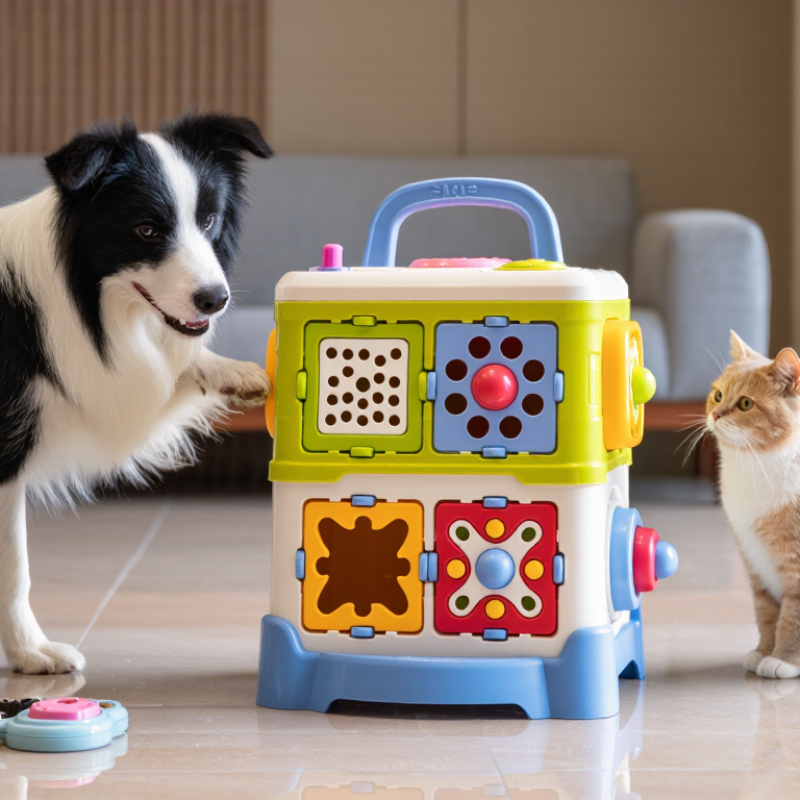
Choosing the right Animal Puzzle is not simply about bright colors or clever packaging. It is about matching the puzzle to an animal’s age, size, instincts, and learning experience. A toy that entertains a confident border collie may overwhelm a cautious cat. A puzzle with tiny compartments may also create frustration, especially for animals with short noses or limited mobility.

Nina Ottosson, a pioneer in interactive pet toys, has stated, “The best puzzle is one that makes dogs think, not quit.” This practical idea guides our approach. A strong Animal Puzzle should encourage curiosity, provide manageable challenges, and remain safe during repeated use. Look for sturdy materials, stable bases, smooth edges, and parts that cannot be swallowed. Observe how the animal reacts. Does it sniff, paw, investigate, or walk away?

Real experience matters.

The ten tips in this guide examine difficulty levels, cleaning needs, durability, treat compatibility, and supervision. They also consider details that product descriptions often ignore, such as slippery floors, noisy mechanisms, and food trapped inside narrow spaces. No single puzzle suits every animal. That is the imperfect truth.

Even expert recommendations need testing. Watch the first few sessions closely. Adjust the challenge when needed. A successful Animal Puzzle should create focused engagement, not stress, damage, or boredom. These practical checks can help owners make a safer, more informed choice.
10 Tips for Choosing the Best Animal Puzzle

Understanding Animal Puzzle Types and Formats

Choosing the best animal puzzle begins with understanding its type and format. A jigsaw puzzle suits children who enjoy visual matching and gradual challenges. Tray puzzles offer clear outlines, making them helpful for beginners. Peg puzzles provide easy handling for small hands. Floor puzzles create larger scenes, while 3D puzzles add shape, balance, and spatial reasoning. Digital puzzles can be convenient, but they may offer less tactile learning.

Match the format to the player’s age, attention span, and experience. Check the piece size, material, number of pieces, and image clarity. Younger children usually need chunky pieces with strong color contrast. Older children may prefer realistic animals, habitats, or layered designs. A family puzzle should include varied difficulty, so everyone can participate. I once chose a beautiful puzzle with tiny pieces, and it quickly became frustrating. The picture alone was not enough.

Consider storage, durability, and safe construction before buying. Wooden pieces often resist bending, while thick cardboard is lighter and easier to store. Magnetic formats work well for travel, though loose pieces can disappear quickly. No format is perfect. Think about where the puzzle will be used. A quiet table favors jigsaws, while a carpeted floor suits large scene puzzles. Look for accurate animal details, smooth edges, and instructions that support independent play. The best choice encourages curiosity without making every mistake feel like failure.

Matching Puzzle Difficulty to Age and Skill Level

Choosing the best animal puzzle starts with the child, not the picture. A three-year-old may enjoy chunky pieces, clear outlines, and six to twelve parts. Older children can manage smaller pieces, unusual shapes, and less obvious animal details. NAEYC’s Developmentally Appropriate Practice position statement describes five connected developmental domains, including cognitive, physical, and social-emotional growth. A puzzle should support these areas without creating unnecessary frustration. The American Academy of Pediatrics also links play with executive function, language, and self-regulation.

Tip 1: Match the piece count to attention span. Watch the child work for five minutes. If they quit quickly, the puzzle may be too difficult. If they finish without thinking, add moderate challenge. Tip 2: Check motor demands. Thick wooden pieces suit developing hand control, while thin cardboard pieces require stronger precision. The CPSC’s annual toy safety reporting repeatedly emphasizes following age guidance and inspecting toys for damage. That advice matters, even when a puzzle looks harmless.

Tip 3: Use familiar animals for younger learners. A large, bright elephant is easier to identify than a camouflaged tree frog. Tip 4: Increase one challenge at a time. Add more pieces or a busier image, but not both together. I have sometimes chosen puzzles that looked impressive, yet children needed constant help. That was poor matching, not poor effort. NAEYC guidance supports observing individual readiness rather than relying only on a printed age range. Watch for quiet concentration, repeated attempts, and relaxed hands. These details often reveal the right difficulty better than a number on the box.

Evaluating Materials, Safety, and Product Durability

Tip 1: Check the puzzle’s materials before buying. Solid, non-toxic wood or thick, food-grade plastic usually withstands repeated handling. Avoid sharp edges, peeling paint, and strong chemical odors. Tip 2: Match the puzzle to the animal’s size and behavior. Large pieces may suit a powerful chewer, while smaller pieces can create choking risks. Tip 3: Inspect every part carefully. Loose knobs, thin ropes, and fragile hinges often fail first.

Tip 4: Look for reliable safety information, including age guidance and cleaning instructions. A clear warning label shows responsible product testing, although labels are not a substitute for supervision. Tip 5: Test the puzzle yourself. Can pieces slide smoothly? Does the base stay stable on a hard floor? My first inspection sometimes misses hidden cracks, so I check again after several uses. Tip 6: Choose designs that allow easy cleaning. Food residue trapped inside narrow gaps can develop unpleasant odors and bacteria. Washable surfaces matter.

Tip 7: Consider durability, not just appearance. A puzzle with reinforced corners and secure fasteners may cost more, but it can reduce replacement waste. Tip 8: Observe how the animal uses it. Scratches, splinters, or widening gaps signal damage. Stop using it then. Tip 9: Select adjustable difficulty, such as removable covers or multiple compartments. This supports gradual learning without forcing frustration. Tip 10: Read independent user experiences, but treat dramatic claims carefully. Real reliability comes from safe materials, sensible construction, and consistent performance over time.

10 Tips for Choosing the Best Animal Puzzle - Evaluating Materials, Safety, and Product Durability

Tip Evaluation Dimension Recommended Evidence or Benchmark Why It Matters Priority
1 Material Composition Choose solid wood, food-grade silicone, durable plastic, or tightly woven fabric. Prefer products with clearly stated material information and no unexplained coatings. Transparent material information makes it easier to assess odor, splintering, chemical exposure, and long-term wear. Very High
2 Small-Part Safety For children under 3, avoid detachable pieces that can fit completely inside a small-parts test cylinder measuring approximately 31.7 mm in diameter and 57.1 mm deep. Small detachable components create a choking risk for young children. Very High
3 Edges, Points, and Surface Finish Inspect every edge, corner, hole, and joint. Surfaces should be smooth, free from sharp points, loose splinters, burrs, and cracking. Rough or pointed surfaces may cause cuts, punctures, or skin irritation during handling. Very High
4 Paint, Dye, and Coating Safety Look for coatings that are fully cured, resistant to ordinary handling, and tested for applicable limits on substances such as lead and certain phthalates. Children and pets may mouth or lick puzzle components, increasing the importance of stable, low-transfer finishes. Very High
5 Structural Strength Check that knobs, pegs, lids, hinges, ropes, and puzzle panels are firmly attached. Avoid visible gaps, weak joints, or components that wobble under moderate hand pressure. Strong construction reduces breakage and prevents detached parts from becoming hazards. High
6 Size and Fit Match the puzzle dimensions to the user. Pieces should be large enough for the intended age group and, for pets, too large to swallow; follow the maker’s size guidance. Correct sizing supports safe handling, prevents swallowing, and improves usability. Very High
7 Cleanability and Moisture Resistance Prefer sealed, non-porous surfaces for frequent cleaning. Confirm whether the product is wipe-clean, hand-washable, or unsuitable for water immersion. Moisture and food residue can promote odor, staining, mold growth, or material degradation. High
8 Age and Skill Alignment Use the stated age range and select a difficulty level that allows gradual progress. For pets, consider chewing strength, food motivation, and supervision needs. A suitable challenge encourages learning without creating frustration or unsafe misuse. Medium
9 Safety Testing and Instructions Check for clear warnings, use instructions, care guidance, and evidence of testing against applicable requirements such as ASTM F963, EN 71, or relevant national regulations. Testing and instructions provide practical information about intended use, hazards, and maintenance. Very High
10 Durability and Replacement Parts Review the expected use frequency, resistance to repeated assembly, and availability of replacement pieces. Stop using the puzzle if parts crack, splinter, loosen, or become difficult to clean. A durable design offers better value and reduces the likelihood of failures during repeated use. High
Practical check: Inspect the puzzle before each use and discontinue it immediately if any component becomes loose, broken, sharp, splintered, or small enough to present a swallowing or choking hazard.

Assessing Educational Value, Design, and Engagement

10 Tips for Choosing the Best Animal Puzzle

Assessing Educational Value, Design, and Engagement

A strong animal puzzle should teach without feeling like a worksheet. Look for clear species names, accurate colors, and habitat details. The National Research Council’s Early Childhood Development report links play with language, memory, and problem-solving growth. That makes picture labels useful, but only when children can read or hear them naturally. Avoid crowded boards. A child should quickly recognize where each piece belongs.

Design affects both learning and safety. Choose thick, smoothly finished pieces with easy-to-grip edges. Check the recommended age carefully. The American Academy of Pediatrics advises selecting toys that match a child’s developmental stage and encourage shared interaction. A puzzle showing a fox in a forest may invite questions about food, movement, and shelter. Tiny decorative parts may look attractive, yet they can distract from the learning goal.

Engagement is harder to measure. The Education Endowment Foundation reports that collaborative learning approaches can add about five months of progress, though results vary by setting. Invite a child to explain each choice instead of correcting every mistake. Quiet pieces help concentration. Bright colors help recognition. I once favored the most detailed puzzle, but children ignored it after two attempts. My scoring was not perfect. Watch for replay value, not just a beautiful first impression. A puzzle that allows sorting, storytelling, and cooperative play usually earns more meaningful use.

Comparing Reviews, Prices, and Overall Puzzle Quality

10 Tips for Choosing the Best Animal Puzzle

Comparing reviews, prices, and overall quality matters more than a colorful box. The Spiegel Research Center found that purchase likelihood can rise by 270% when a product has at least five reviews. However, review numbers alone can mislead. I look for repeated details about piece thickness, image accuracy, and missing parts. A review mentioning a loose fit is more useful than “great puzzle.” Check recent comments, too.

Price should match construction, not just piece count. A 100-piece puzzle with thick cardboard may outperform a cheaper 150-piece puzzle. The Toy Association’s industry research consistently identifies developmental value as a major reason families buy puzzles. That value depends on suitable challenge, clear animal illustrations, and safe, durable materials. For younger children, large pieces and rounded edges matter. Small details can prevent frustration.

Quality becomes visible during handling. Pieces should resist bending but separate without tearing. The printed surface should remain sharp under indoor lighting. I once trusted a high rating and ignored complaints about poor color contrast. That was a mistake. Compare the price per usable piece, not the price per piece alone. Grand View Research reported strong growth in the global puzzle games market, showing wider consumer interest, but market growth does not guarantee every puzzle is well made. Read several reviews, inspect dimensions, and accept that “educational” claims still need evidence.

Article Source:

ICB_lOGO_2023