
 Skip to content
A Plastic Jerry Can 5 Ltr may look simple, but small design details matter. The handle should feel steady in the hand. The cap should close cleanly, and the body should resist ordinary bumps during storage and transport. For buyers, comparing suppliers means looking beyond price and product photos. Material consistency, molding quality, customization options, clear specifications, and responsive communication all deserve attention.
This guide reviews ten worldwide suppliers of Plastic Jerry Can 5 Ltr products. It is intended as a starting point, not a substitute for checking current product data, samples, and suitability for your application. A five-liter container can vary in shape, wall thickness, closure design, and available documentation. Those differences may be easy to miss on a listing page.
I can’t responsibly attribute a quotation to a named industry expert without a verifiable source. A polished article should not invent one. Share the expert’s name or a source quotation, and it can be included accurately. For now, use this practical reminder: the best supplier is not simply the one with the lowest quoted price. Fit matters. Consistency matters too.
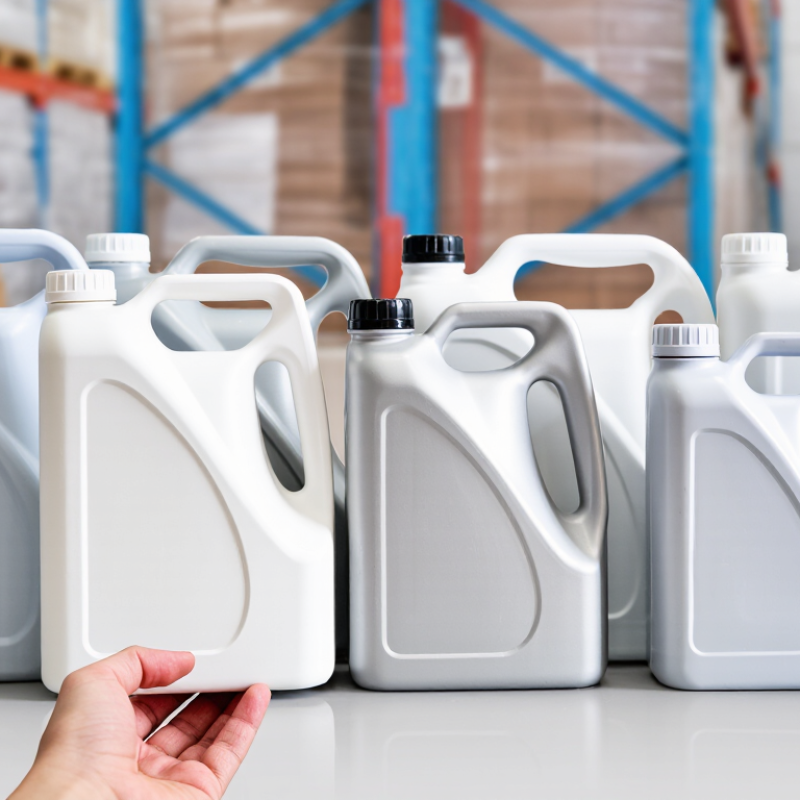
A 5-liter plastic jerry can is compact enough for a shelf, service cart, or vehicle storage compartment. Its molded handle makes short-distance carrying easier, while a narrow opening can help control pouring. The exact shape, wall thickness, and cap design vary by intended use. Small details matter.
These containers commonly hold water, cleaning solutions, automotive fluids, and other compatible liquids. Check the container’s material and supplier specifications before filling it; not every plastic can suits every liquid. For drinking water, use a container explicitly rated for potable water, and keep it separate from chemical storage. A clear label helps prevent mix-ups later.
Look closely at the seams, cap threads, and base before use. A can that feels sturdy when empty may flex when full, especially during transport. I would not assume that a familiar smell or color proves compatibility. That can be misleading. Rinse or maintain the container only as its maker recommends, and replace it if cracks, leaks, or a damaged closure appear.
The entries below describe supplier capability categories, not named companies or a verified ranking. Product specifications and regulatory suitability vary by manufacturer and destination market; confirm them directly before purchasing.
| No. | Supplier capability category | Common 5-liter can use | Typical product considerations | What to verify when sourcing |
|---|---|---|---|---|
| 1 | General-purpose HDPE container manufacturers | Household liquids, cleaning products, and non-hazardous industrial liquids | Blow-molded high-density polyethylene (HDPE) is commonly used; handle, neck, and closure designs vary. | Nominal capacity, filled dimensions, wall construction, cap fit, and compatibility with the intended liquid. |
| 2 | Manufacturers offering UN performance-tested packaging | Certain regulated dangerous goods, where the specific package approval is suitable | UN marking relates to tested packaging performance; approval depends on the package design and applicable dangerous-goods requirements. | Valid marking and test documentation, permitted substance or packing group, closure instructions, and transport rules. |
| 3 | Food-contact packaging manufacturers | Edible oils, syrups, and other food products when the package is designed for that use | Food-contact suitability depends on the resin, additives, closures, manufacturing controls, and destination-market rules. | Food-contact declarations, traceability, hygiene controls, and suitability for the particular food and storage conditions. |
| 4 | Agricultural chemical packaging specialists | Some liquid fertilizers, crop-care products, and agricultural concentrates | Chemical resistance and closure performance are product-specific; a general-purpose can may not be suitable. | Compatibility testing, seal and leakage performance, chemical labeling needs, and any required transport certification. |
| 5 | Automotive-fluid packaging suppliers | Some coolants, screenwash, and other vehicle-care liquids | Container and closure choices should account for the fluid’s formulation, storage temperature, and dispensing method. | Liquid compatibility, cap liner or seal, tamper evidence, label area, and resistance to leakage during handling. |
| 6 | Household and institutional cleaning-product packaging suppliers | Detergents, cleaning concentrates, and janitorial liquids | Handle ergonomics, controlled pouring, secure closures, and resistance to the specific formulation are common design concerns. | Neck and cap compatibility, dispensing requirements, chemical compatibility, and packaging for the intended user group. |
| 7 | Custom-molded container manufacturers | Products needing a particular handle, shape, color, or label panel | Custom designs may require mold investment, sampling, and production-volume commitments. | Tooling ownership, minimum order quantity, sample approval, lead time, and change-control terms. |
| 8 | Recycled-content packaging manufacturers | Suitable non-food applications where recycled resin is permitted and technically appropriate | Recycled resin availability and permitted uses depend on the application and applicable regulations; food-contact use needs specific verification. | Recycled-content documentation, resin traceability, performance consistency, color variation, and end-use restrictions. |
| 9 | Integrated container-and-closure suppliers | Liquid products requiring coordinated cans, caps, liners, or tamper-evident closures | A matched package system can simplify fit checks, but the complete combination still needs application testing. | Closure dimensions, sealing method, liner compatibility, tamper-evidence features, and filling-line fit. |
| 10 | Export-oriented packaging manufacturers and distributors | Bulk procurement for distributors, contract fillers, and cross-border supply chains | Export suitability depends on destination requirements, shipping method, packaging configuration, and consistent supply capacity. | Export documentation, palletization, shipping protection, production capacity, delivery terms, and destination-market compliance. |
Note: “5-liter” generally refers to nominal capacity; external dimensions, brimful capacity, weight, and usable volume differ by design. Confirm the exact specification and test the container with the intended contents before placing a production order.