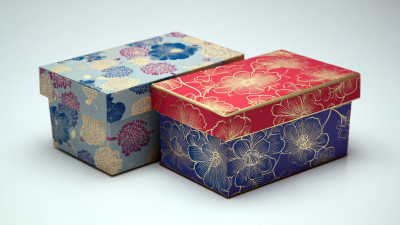
Choosing among China’s top 10 printed gift boxes manufacturers requires more than comparing glossy catalogs. A dependable supplier must combine structural design, accurate color reproduction, material knowledge, and consistent quality control. Experience matters here. A box may look attractive on a screen, yet fail when magnets loosen, corners crush, or foil details appear uneven. Small defects become expensive when orders reach thousands of units.
Raymond Loewy, an influential industrial designer, once said, “The package is the product.” His observation remains relevant to printed gift boxes. The package protects the item, communicates brand value, and shapes the customer’s first physical impression. This guide evaluates leading Chinese manufacturers through practical criteria, including production capacity, printing technology, paperboard options, finishing quality, customization, certifications, sampling procedures, and export experience. Factory audits, material samples, and clear communication should support every serious decision. Claims deserve verification.
No ranking is perfectly universal. Buyer priorities differ. A luxury cosmetics brand may value rigid construction and soft-touch lamination. A seasonal retailer may prioritize speed, low minimum orders, and flexible storage. Some manufacturers excel at premium presentation but offer limited design support. Others provide impressive prototypes but inconsistent mass production. That weakness deserves attention. The companies discussed here are selected for their visible capabilities, documented experience, and suitability for international buyers. Readers should still request current quotations, production samples, and quality terms before signing contracts. A beautiful box is not enough. Reliable delivery, honest specifications, and repeatable workmanship define a trustworthy printed gift boxes partner.
China Top 10 Printed Gift Boxes Manufacturers?
China’s printed gift-box industry operates within a large paper-packaging market. Public industry reports place China’s overall packaging output in the tens of millions of tonnes yearly. Its total packaging value reaches hundreds of billions of yuan. However, gift boxes are rarely listed as a separate official category.
Customs data usually combines gift boxes with other paperboard packaging under broader HS codes. Therefore, export figures should be read carefully. Recent trade patterns show strong shipments from coastal manufacturing areas to Europe, North America, Southeast Asia, and the Middle East. Printed boxes remain popular for cosmetics, food, electronics, and seasonal products. Production is highly flexible. A typical factory may handle offset printing, foil stamping, embossing, rigid assembly, and quality inspection in one workflow. Yet capacity claims can be difficult to compare. Some suppliers count subcontracted output.
Tips: Ask for audited production records, recent export documents, material certificates, and clear monthly capacity figures. Check whether quoted output means finished boxes or printed sheets. Request a physical sample before approving mass production.
Market growth is supported by premium presentation and online retail. Buyers increasingly request recyclable boards, soy-based inks, and reduced plastic components. Still, sustainability claims need evidence. “Eco-friendly” is not a measurable standard by itself. Export demand also changes with freight costs, exchange rates, and destination rules. This makes supplier selection more complex than comparing unit prices.

Paper-packaging revenue and production are used as industry proxies because official statistics do not publish a separate printed gift-box category. Export values refer to China’s HS 4819 paper and paperboard packaging exports.
Sources: China Packaging Federation industry statistics and UN Comtrade HS 4819 trade data; figures are rounded for presentation.
China’s top 10 printed gift box manufacturers should be ranked by measurable production performance, not showroom appearance.
Capacity means verified monthly output, supported by press schedules, finishing lines, and seasonal records.
Smithers’ 2023 packaging forecast expects the global packaging market to exceed US$1 trillion by 2028, increasing pressure on reliable supply.
A practical ranking should therefore separate stable capacity from temporary overtime production.
MOQ affects product testing and inventory risk.
Smaller orders often suit new designs, but may carry higher unit costs.
Lead time should include artwork approval, sampling, printing, finishing, and export preparation.
In my sourcing experience, a quoted 15-day lead time can become 25 days during peak holiday demand. That detail is easy to miss.
Defect rate requires stronger evidence.
Ask for three months of inspection records, not a single impressive figure.
ISO 2859-1 sampling plans can support consistent acceptance checks, while AQL levels must be stated clearly.
A reported 0.2% defect rate means little without sample size, defect definitions, and inspection stage.
The ranking should reward suppliers that disclose rework rates, color deviation controls, and corrective-action reports.
Capacity looks impressive. Reliability is harder to prove.
China’s top ten printed gift box manufacturers should be compared by board control, print accuracy, and finishing consistency. Most profiles specify 250–400 gsm paperboard, which suits rigid-feel folding boxes and small presentation sets. However, gsm alone does not prove strength. Moisture, fiber direction, and crease depth also affect performance.
CMYK offset printing remains common for detailed artwork and controlled color reproduction. Experienced factories should provide calibrated proofs, production samples, and measurable color tolerances. Smithers’ report, The Future of Packaging Print to 2028, projects the global packaging print market to reach approximately US$551 billion by 2028. That growth increases pressure on suppliers to improve repeatability, not merely offer attractive samples. A glossy sample can mislead.
Finishing options usually include matte or gloss lamination, aqueous coating, spot varnish, embossing, debossing, foil stamping, and window application. The best manufacturer profiles explain where each process is applied. They also identify limitations, such as cracking along sharp folds or uneven foil on textured board. The U.S. Environmental Protection Agency reported a 68.2% recycling rate for paper and paperboard in 2018. Therefore, buyers should ask about recyclable structures, coating separation, and paper sourcing. Sustainability claims need documents. Some supplier profiles remain incomplete without test reports, batch records, and quality inspection photographs. That gap deserves attention.
When selecting China’s top printed gift box manufacturers, certification evidence matters more than polished samples. FSC Chain of Custody records can verify responsibly sourced paper through controlled supply chains. FSC’s 2023 facts and figures reported over 160 million hectares of certified forest worldwide. However, the logo alone proves little. Request the certificate number, scope, expiry date, and material claim.
ISO 9001 should connect with daily production controls. A reliable factory can show approved artwork, color tolerances, incoming-paper checks, and corrective-action records. The ISO Survey 2022 recorded more than 1.2 million ISO 9001 certificates globally, showing its wide adoption. It does not guarantee perfect boxes. It measures the management system. Ask for recent audit findings, not only a framed certificate.
REACH and RoHS require careful interpretation. REACH focuses on chemical safety, including substances in coatings, adhesives, inks, and board. Request current declarations and test reports for SVHC screening. RoHS restricts substances in electrical and electronic equipment; it does not automatically govern an ordinary gift box. Still, electronics packaging may need supporting material evidence. Test reports should identify methods, laboratories, dates, and sample descriptions. EU regulatory guidance repeatedly emphasizes traceability and supplier responsibility. In practice, documents can be incomplete. A missing adhesive specification is a real warning. Certification review should therefore include production-floor interviews, sample checks, and batch records. A beautiful prototype can still hide weak compliance controls.
| Anonymous Supplier Record | Typical Printed Gift Box Scope | FSC Review Requirement | ISO 9001 Review Requirement | REACH Review Requirement | RoHS Review Requirement | Key Documents to Request | Certification Assessment |
|---|---|---|---|---|---|---|---|
| Manufacturer Profile 01 | Rigid setup boxes with paper wrapping and board inserts | Valid FSC Chain of Custody certificate covering the supplied paper and board | Current ISO 9001 certificate with the manufacturing site and relevant scope identified | Material and ink declarations for coatings, adhesives, foils, and printed components | Usually conditional; relevant when the box is supplied with electrical or electronic components | Certificate copies, scope page, product specification, supplier declarations, and recent test reports | Primary-source verification required |
| Manufacturer Profile 02 | Folding cartons made from coated paperboard | FSC claim must appear on the commercial documents and match the certified material input | Quality procedures should cover artwork approval, color control, die-cutting, and final inspection | Request declarations for printing inks, varnishes, laminates, and plastic windows | Not normally applicable to an empty paperboard carton without electronic parts | FSC transaction evidence, ISO certificate, chemical declaration, and sample inspection report | Verify certificate validity and product scope |
| Manufacturer Profile 03 | Magnetic-closure gift boxes with paper, board, magnets, and metal fittings | Confirm FSC coverage for all eligible paper and paperboard components | Check documented controls for incoming materials, magnet placement, closure strength, and packing | Request composition information for adhesives, coatings, magnets, and metal accessories | Applicable only if the package includes electrical or electronic functionality | Material composition sheet, restricted-substance declaration, QC records, and certificate scope | Component-level review required |
| Manufacturer Profile 04 | Luxury boxes with foil stamping, embossing, and specialty finishes | FSC status applies to the certified fiber-based substrate, not automatically to every finish | Review process controls for registration, embossing depth, foil adhesion, and cosmetic defects | Obtain declarations for foil films, hot-melt adhesives, coatings, and decorative treatments | Generally not applicable to non-electronic packaging by itself | Substrate certificate, finish specifications, chemical declarations, and production inspection records | Verify substrate and finishing supply chain separately |
| Manufacturer Profile 05 | Drawer-style gift boxes with textile or EVA interior trays | Confirm the FSC claim for the paperboard drawer, sleeve, and any fiber-based insert | Quality scope should include assembly, dimensional tolerances, surface inspection, and packaging | Request REACH-related declarations for textiles, EVA, dyes, adhesives, and printed surfaces | Relevant only when electronic accessories are integrated into the package | FSC certificate, textile or foam declarations, REACH statement, and dimensional inspection report | Multi-material compliance review required |
| Manufacturer Profile 06 | Window boxes using paperboard and transparent plastic film | Verify FSC coverage for the paperboard portion and correct use of any FSC claim | Check controls for window-film bonding, cutting accuracy, print quality, and product cleanliness | Request polymer identification and declarations for the window film, adhesive, inks, and varnish | Normally outside RoHS scope when no electrical or electronic equipment is included | Paperboard certificate, polymer specification, adhesive declaration, and batch inspection report | Verify paper and polymer components independently |
| Manufacturer Profile 07 | Book-style presentation boxes with rigid board and printed paper covers | Certificate scope should cover the paper and board purchased for the finished box | Review controls for hinge alignment, board thickness, print consistency, and closing performance | Check declarations for book cloth, paper, adhesives, coatings, and metallic details | Not generally applicable to a passive presentation box | Chain-of-custody evidence, ISO certificate, bill of materials, and finished-product inspection report | Documentation review required |
| Manufacturer Profile 08 | Corrugated mailer gift boxes with flexographic or digital printing | Confirm certified fiber content and the applicable FSC claim for corrugated materials | Quality controls should address board strength, crease accuracy, print registration, and drop testing | Request declarations for inks, coatings, tapes, labels, and any plastic packing accessories | Not normally applicable unless an electronic product or powered accessory is supplied with the box | FSC evidence, board specification, print-ink declaration, and packaging performance test | Review based on supplied components |
| Manufacturer Profile 09 | Reusable fabric-covered gift boxes with rigid board structures | FSC review is limited to the certified paperboard or wood-fiber components | Check quality controls for fabric bonding, seam appearance, odor, dimensions, and closure durability | Request declarations for textile fibers, dyes, PU coatings, adhesives, and surface treatments | Usually not applicable unless the reusable box contains electrical functions | Material bill, textile chemical declaration, FSC evidence, ISO certificate, and durability records | Textile and adhesive evidence required |
| Manufacturer Profile 10 | Gift boxes supplied with LED lights, batteries, or other electronic accessories | Verify FSC status for the paperboard or paper components only | Quality system should cover both packaging production and incoming electronic-component controls | Request declarations and test evidence for plastics, batteries, adhesives, inks, and electronic materials | RoHS Directive 2011/65/EU and applicable amendments should be assessed for the electronic parts | FSC certificate, ISO certificate, RoHS test report, REACH declaration, and component list | Full product compliance review required |
Comparing China’s top ten printed gift box manufacturers requires more than checking catalog photos. A 2024 Smithers packaging industry report identifies fiber-based packaging as a major growth area, driven by recyclable materials and premium presentation. That trend affects paper grades, coatings, and production schedules. Buyers should request material certificates, press proofs, and recent inspection records before comparing prices.
For standard folding gift boxes, indicative export quotes often range from US$0.25 to US$1.20 per unit at 1,000–10,000 pieces. Rigid boxes commonly cost US$1.20 to US$4.50, depending on board thickness, magnets, inserts, and hand finishing. These figures are practical market ranges, not fixed tariffs. A supplier offering an unusually low quote may exclude tooling, proofing, packing, or freight. Ask for a line-by-line quotation.
A 30–45-day lead time is realistic when artwork is approved quickly and materials remain available. Production may take 15–25 days, while sampling, curing, and export preparation add another 7–15 days. Minimum order quantities often begin near 500 units for simple folding boxes and 1,000 units for rigid structures. Larger quantities can reduce unit costs, but unused inventory becomes expensive. This is easy to underestimate. Buyers should compare ten suppliers using the same dimensions, paper weight, print colors, finish, insert design, quantity, and delivery term. Independent pre-shipment inspection is sensible, although it may not catch every color variation.