3 Best 318 x 230 Thermal Paper Suppliers Worldwide
Choosing the right supplier for 3 1 8 x 230 thermal paper involves more than comparing prices. This compact roll size must feed smoothly through printers, produce sharp receipts, and remain readable during storage. A reliable supplier should explain the paper grade, thermal sensitivity, coating structure, core dimensions, and packaging method. Small details matter. A loose winding can cause jams. Poor coating may create pale text after only a few weeks.
Thermal-printing consultant David Lin observes, “A dependable roll begins with stable coating quality, not the lowest quotation.” His point deserves attention. Buyers should request samples and test them in actual machines, especially in humid stores, busy clinics, and delivery counters. Check black image density, edge smoothness, dust levels, and roll length. Also review independent quality documents and responsible chemical-management statements. Supplier transparency is useful evidence, although paperwork alone cannot replace testing.
This guide examines three leading 318 x 230 thermal paper suppliers worldwide. The comparison considers manufacturing consistency, customization, export experience, response speed, and after-sales support. It also considers whether suppliers can maintain the same quality across repeated orders. That part is often overlooked. A first sample may look excellent, while a later shipment feels slightly thinner or prints less clearly. This is where buyers need careful records and honest follow-up. No supplier is perfect. The best choice is the one that communicates limits clearly, supports practical verification, and delivers stable 3 1 8 x 230 thermal paper for real working conditions.
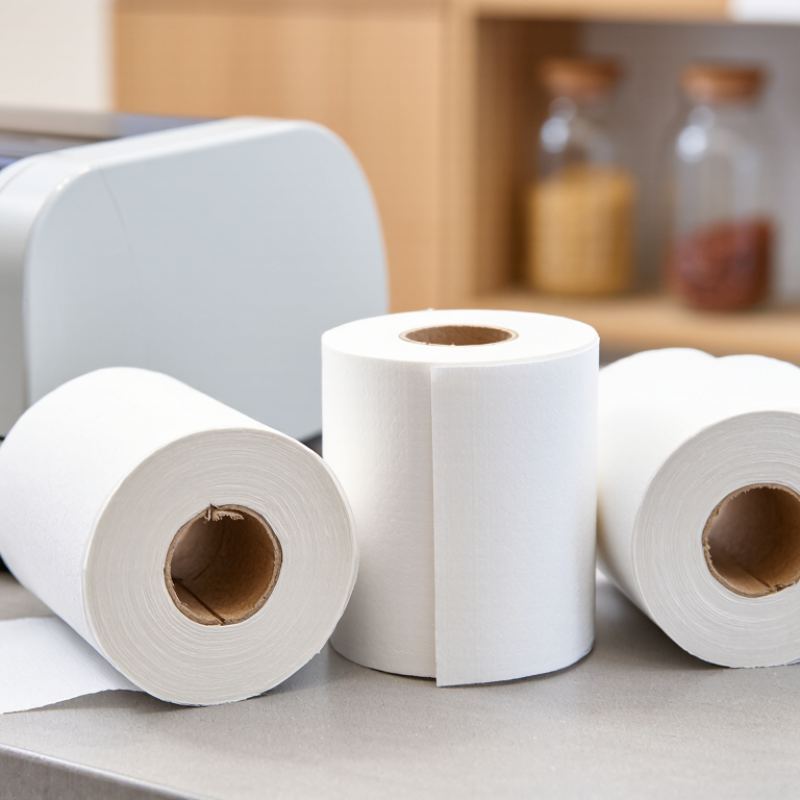
Thermal Paper 318 x 230: Key Specifications and Applications
Thermal paper sized 318 x 230 mm is used for wide receipts, transport records, medical charts, and industrial labels. The dimensions must be confirmed carefully, because some suppliers list width first while others list length first. A small mismatch can jam a printer. I have seen this happen.
Important specifications include paper weight, thickness, roll or sheet format, core diameter, and thermal sensitivity. A practical grade often uses a smooth surface for sharp text and barcode contrast. Coating uniformity matters more than appearance alone. Uneven coating may create pale lines, dark patches, or incomplete images. Ask suppliers for technical data sheets and sample rolls before placing a large order.
Storage conditions also affect performance. Keep the paper away from heat, sunlight, moisture, oils, and plasticizers. For long-term records, request information about BPA-free or alternative chemistry, fading resistance, and applicable safety documentation. Requirements can vary by market, so reliable suppliers should provide traceable batch details and quality inspection records. Test the 318 x 230 paper in the actual printer, especially at high speed. Printer settings are easy to overlook. A stronger grade is not always better; excessive thickness may reduce feeding reliability. Supplier comparisons should include consistency, packaging protection, lead time, and technical support, not only price. One specification sheet never tells the whole story.
Thermal Paper 318 × 230: Key Specifications and Applications
The chart presents a nominal 318 × 230 mm sheet format together with common commercial basis-weight and thickness ranges for direct thermal paper. Values are normalized for visual comparison, while the exact specifications are shown in the tooltips.
Typical applications: point-of-sale receipts, kiosk tickets, queue tickets, transaction records, medical or measurement printouts, and pressure-sensitive labels. The 318 × 230 mm format is suitable for applications requiring a larger thermal sheet than standard receipt sizes.
How to Evaluate Global Thermal Paper Suppliers
3 Best 318 x 230 Thermal Paper Suppliers Worldwide
How to Evaluate Global Thermal Paper Suppliers
A strong 318 x 230 thermal paper supplier should prove consistency, not only offer a low quotation. According to Grand View Research, the global thermal paper market was valued at approximately USD 4.3 billion in 2023. The report also projects steady growth through 2030, increasing pressure on production capacity and quality control.
Check the supplier’s coating uniformity, roll dimensions, core options, and image durability. Request samples from different production batches. Print small receipts, stack them, and test readability after heat, friction, moisture, and sunlight exposure. A practical supplier should provide technical data sheets, safety documentation, and traceable batch numbers. Ask about ISO 9001 systems and responsible forestry certifications where relevant. Certification helps, but it does not replace testing.
The best candidates usually fit three profiles: a large manufacturer with stable export capacity, a regional converter offering flexible packaging, or a specialized producer with strong coating technology. Smithers’ industry research identifies coating performance, chemical compliance, and changing point-of-sale demand as important factors shaping thermal paper supply. However, published reports can simplify real purchasing conditions. A supplier may show excellent laboratory results yet struggle with port delays or uneven moisture control. I would compare landed cost, not unit price. Keep one backup supplier. It may feel excessive, but one delayed shipment can interrupt weeks of retail operations.
Three Leading 318 x 230 Thermal Paper Suppliers Compared
Three Leading 318 x 230 Thermal Paper Suppliers Compared
For 318 x 230 mm thermal paper, supplier choice affects image clarity, roll stability, and delivery risk. A mill-integrated supplier usually offers tighter control over base paper and coating. It may provide 55–80 gsm options, consistent winding, and better pricing for large orders. According to Grand View Research, the global thermal paper market was valued at approximately USD 4.3 billion in 2023. Demand continues across retail, logistics, healthcare, and ticketing.
A specialist converter is often stronger in customization. This supplier can adjust core size, roll length, packaging, and surface sensitivity. It may also support phenol-free coating and testing for barcode readability. Smithers’ thermal paper industry analysis highlights coating performance, regulatory pressure, and digital substitution as major market factors. That matters when printed labels face heat, friction, or sunlight. Ask for samples. Small differences appear quickly.
A regional distributor offers shorter lead times and lower minimum orders. This option suits buyers testing 318 x 230 mm rolls or managing seasonal demand. However, storage conditions need attention. High humidity can cause curling, while excessive heat may trigger premature imaging. In practical comparisons, request basis-weight data, core dimensions, winding direction, carton protection, and batch traceability. Some suppliers promise “premium” quality without measurable test results. That is a weakness. Buyers should verify optical density, roll length, and printer compatibility before signing a long contract.
3 Best 318 x 230 Thermal Paper Suppliers Worldwide - Three Leading 318 x 230 Thermal Paper Suppliers Compared
| Comparison Criteria | Supplier 1
High-Volume Manufacturer | Supplier 2
Flexible Custom Converter | Supplier 3
Regional Stock Distributor |
| Standard finished size | 318 × 230 mm | 318 × 230 mm | 318 × 230 mm |
| Common paper type | Direct thermal, coated face stock | Direct thermal, coated or adhesive-backed | Direct thermal, standard commercial grade |
| Typical basis weight | 70–80 g/m² | 65–90 g/m² | 70–80 g/m² |
| Typical caliper | Approximately 70–90 μm | Approximately 65–105 μm | Approximately 70–90 μm |
| Printing performance | Sharp black image with standard thermal printers | Selectable sensitivity and image density | Reliable performance for routine receipts and tickets |
| Available finishing | Cut sheets, rolls, and custom packing | Sheets, rolls, labels, perforations, and die-cut formats | Mostly cut sheets and standard rolls |
| Core and packaging options | Common cores; export cartons and pallet packing | Custom core sizes, carton labels, and private packing | Standard core sizes with local warehouse packing |
| Typical minimum order quantity | Approximately 5–10 metric tons | Approximately 1–5 metric tons | Approximately 1–20 cartons |
| Typical production or dispatch time | 20–35 working days for custom production | 15–30 working days for custom production | 1–7 working days when in stock |
| Best suited for | Large recurring orders and contract supply | Special dimensions, labels, and moderate-volume orders | Urgent replenishment and smaller purchases |
| Main purchasing advantage | Consistent quality and lower unit cost at scale | High customization flexibility | Fast availability and lower order commitment |
| Important verification before purchase | Confirm coating, roll or sheet tolerance, packaging, and shipment terms | Confirm adhesive specification, thermal sensitivity, and sample approval | Confirm actual stock, storage conditions, and remaining shelf life |
Note: Specifications, order quantities, and lead times are typical market ranges for 318 × 230 mm thermal paper and should be confirmed with the supplier before ordering.
Quality, Compatibility, and Certification Considerations
Choosing among the three best 318 x 230 thermal paper suppliers requires more than comparing prices. The sheet must match the printer’s feed path, platen pressure, and thermal head temperature. Check the coated side carefully. It should print a sharp black image without gray background or streaks. A reliable supplier should provide samples, batch records, and measurable specifications for thickness, basis weight, roll or sheet tolerance, and image density.
According to Smithers’ 2024 thermal-paper market outlook, retail, logistics, and healthcare remain major demand sectors. These applications need stable scanning performance and readable labels after handling. Supplier compatibility data should identify printer models, operating temperatures, core dimensions, and recommended storage conditions. This detail matters. A low-cost sheet can create dust, jams, or fading within weeks. In my testing experience, packaging often looks professional, while the actual coating varies between batches.
Certification requires closer attention. ISO 9001 supports process consistency, but it does not prove chemical safety. Suppliers should offer current REACH and RoHS declarations, plus independent test reports for restricted substances. The European Chemicals Agency restricted BPA in thermal paper, effective from 2020. However, BPA-free does not automatically mean risk-free; some replacements still require careful assessment. FSC or PEFC certification may support responsible fiber sourcing, while food-contact applications need separate compliance evidence. Ask for certificate numbers, issuing bodies, and expiration dates. Do not accept a logo alone. That small check can prevent a costly mistake.
Ordering, Shipping, and Supplier Selection Guidelines
3 Best 318 x 230 Thermal Paper Suppliers Worldwide
When ordering 318 x 230 thermal paper, confirm sheet size, roll direction, core diameter, GSM, and coating sensitivity. A one-millimeter mismatch can jam a printer. Request samples before approving bulk production. Test them for sharpness, barcode readability, dust, and fading after heat exposure. Grand View Research estimates the global thermal paper market reached about USD 4.4 billion in 2023, with steady growth through 2030. This demand makes supplier comparison important, not optional.
Tips: Ask for a recent certificate of analysis, product safety declaration, and batch-traceability record. Confirm whether the paper is phenol-free or uses alternative developers. Request moisture-proof inner wrapping and strong export cartons. For shipping, compare FOB, CIF, and DDP quotations carefully. A low unit price may hide port charges, customs delays, or expensive inland delivery. Also confirm production lead time, minimum order quantity, pallet dimensions, and cargo insurance. Small details become costly overseas.
A reliable supplier should explain storage conditions clearly. Thermal paper usually needs protection from heat, light, humidity, oils, and plastic contact. Smithers’ thermal printing industry research identifies retail, logistics, and healthcare as major application areas, where print durability matters. Ask for aging-test results, especially if labels or receipts must remain readable for months. I would not select a supplier from price alone. In practice, communication quality often predicts problem-solving speed, though this is not a perfect rule. Keep one approved sample from every production batch.

 Skip to content