
...

Who Are the Top Artificial Marble Suppliers in China?

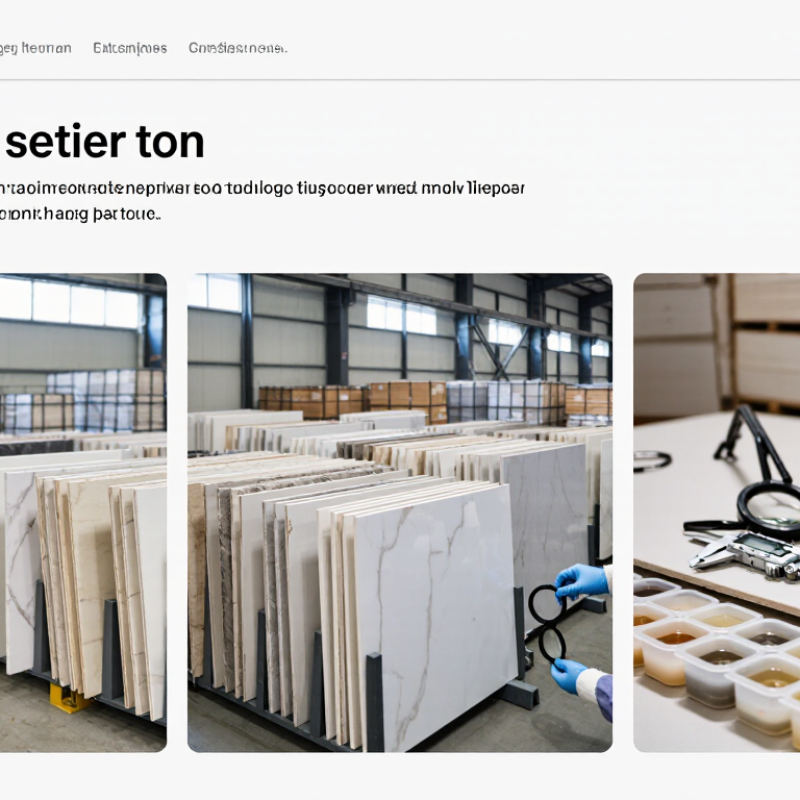
Choosing among China’s leading Artificial Marble suppliers requires more than comparing polished showroom photographs. Buyers should examine slab consistency, resin performance, surface finish, and the supplier’s quality-control process. A sample can look flawless beneath warm display lights, yet show cloudy patches near a window or uneven veining across a larger installation. Ask for recent production photos, technical specifications, and references for projects using similar colors and thicknesses. Then compare delivery capacity and packaging details, not just the quoted price.

One point needs care: no source material was provided to verify a quotation from a named Artificial Marble industry expert. Rather than invent an attribution, this introduction uses an editorial principle: “Judge the material under real light, not only in the showroom.” It captures a practical evaluation step, but it is not a sourced expert quotation. That distinction matters when supplier claims sound unusually certain. China’s manufacturers vary in product range, customization, inspection standards, and export experience; a prominent catalog alone proves little. Ask direct questions, request a clearly identified sample batch, and confirm how defects are handled before production. Small checks matter. Even careful buyers can miss a mismatch between the approved sample and the delivered slabs, so leave room for verification. This guide will help readers compare suppliers through observable product quality, credible documentation, and fit for the project—not reputation alone.
Who Are the Top Artificial Marble Suppliers in China?

What Is Artificial Marble and How Is It Manufactured?

Artificial marble is a manufactured surface made by combining mineral particles with a binding resin. Common fillers include crushed marble and calcium carbonate, while pigments create different colors and veining. It is not identical to natural stone. Its pattern is designed, so repeated slabs may look more consistent, though subtle variation can still occur.

Production starts with measured mineral filler, resin, and pigments. The mixture is blended, then poured into a mold. Many manufacturers use vibration or vacuum processing to reduce trapped air and improve density. After curing, slabs are removed, trimmed, and polished. The mix matters. Resin type, filler size, and curing conditions affect appearance, hardness, and stain resistance. Manufacturing methods vary, so a polished sample alone cannot show every performance detail.

Tips: Ask suppliers for the material composition, care instructions, and test data for water absorption and strength. Compare samples under natural and indoor light; a small chip may reveal the base color. Check whether the finish feels even across the slab. Minor color differences can happen between batches, and claims of perfect uniformity deserve a closer look. A practical assessment should include both appearance and intended use.

How Is China’s Artificial Marble Industry Organized?

China’s artificial marble industry is organized around several linked supplier groups. The structure is layered. Upstream businesses provide mineral fillers, pigments, and resin systems, while machinery firms supply mixers, molds, presses, and polishing lines. Formulations differ by product, so a slab’s appearance alone cannot reveal its composition or performance.

Manufacturers turn these inputs into slabs, countertops, wall panels, and custom components. Some focus on large production runs; others handle smaller orders with varied colors and finishes. Regional manufacturing clusters can bring material suppliers, workshops, and logistics services closer together, though the industry map is not perfectly neat. Wholesalers and export-oriented trading companies connect factories with overseas buyers, sometimes coordinating packing and shipping as well.

Buyers should check more than photographs. Ask for technical data, sample pieces, thickness tolerances, and details about surface treatment. Inspecting a finished edge can reveal consistency that a polished face may hide. Independent testing can help assess claims, especially when specifications vary between suppliers. A clear process matters. Even capable factories may describe grades differently, so written requirements reduce confusion before production begins.

Which Companies Are Among China’s Leading Artificial Marble Suppliers?

China’s leading artificial marble suppliers generally fall into three groups: engineered-quartz slab manufacturers, acrylic solid-surface producers, and stone processors with export operations. Their strengths differ. Large slab makers often offer broad color ranges and consistent thickness, while specialist factories may handle custom veining or project-specific dimensions. Look for documented production capacity, batch traceability, and recent export references—not just showroom photographs.

Grand View Research estimated the global engineered stone market at USD 24.5 billion in 2023, with projected growth through 2030. This is a related-market indicator, not a direct count of Chinese artificial-marble suppliers. It does show why buyers should compare technical data carefully: “artificial marble” can describe products with different resins, fillers, and performance. Ask shortlisted suppliers for water-absorption results, stain-test methods, slab tolerances, and a sample from the actual production batch. A polished sample can hide variation. I would also verify claims independently; supplier brochures are not enough.

Tips: Request two matching samples, inspect them under neutral light, and compare their color and finish. Confirm packaging and replacement terms in writing. Small details matter.

What Products and Services Do These Suppliers Offer?

Chinese artificial marble suppliers typically offer slabs, cut-to-size panels, vanity tops, and custom pieces for kitchens, hotels, and retail interiors. Collections often include solid colors, fine veining, and terrazzo-like patterns. Thicknesses commonly range from 12 to 20 millimeters, though specifications vary by factory and application. Good suppliers provide sample chips and full-size samples. Very helpful.

Their services may cover drawing review, color matching, CNC cutting, edge profiling, drilling, and dry-lay checks before packing. For a countertop order, a buyer can submit sink dimensions and cabinet plans; technicians can confirm cutouts and seams before production. Some factories also arrange export crating, inspection photos, and shipment coordination. Ask for tolerance ranges and packing details in writing. This matters.

Service quality is not uniform. Some suppliers have in-house fabrication, while others outsource polishing or installation support. That difference can affect lead times and responsibility when a panel arrives chipped. Request a recent production record, inspect a physical sample under natural light, and clarify who handles replacements. Digital renderings help, but they cannot show every batch variation. A faint mismatch may still appear.

How Can Buyers Evaluate and Select a Chinese Supplier?

When evaluating a Chinese artificial marble supplier, ask for recent, batch-linked test reports—not just a polished sample. Check flexural strength, water absorption, stain resistance, thickness tolerance, and color variation against the specification and intended use. Confirm which test methods and laboratories were used; standards can differ across product types. Ask to inspect production records, calibration logs, and packaging for a real export order. A small detail matters: compare several slabs under the same lighting.

One awkward truth: a perfect sample proves little about the next shipment. Request a pilot order and measure it on arrival. Check whether the supplier can explain resin and mineral composition, remake procedures, lead times, and how defects are recorded. ISO 9001 certification may indicate a quality-management system, but it does not guarantee that every slab meets your requirements. Verify certificates with their issuer and match report dates to the current product.

Environmental documentation also deserves scrutiny. UNEP and the Global Alliance for Buildings and Construction reported that buildings and construction accounted for 32% of global energy use and 34% of energy- and process-related CO₂ emissions in 2022. These figures cover the wider sector, not artificial marble alone. Still, ask for product-specific environmental data, such as an Environmental Product Declaration, where available, and check its scope and verification. Be cautious when a supplier offers broad sustainability claims but no traceable evidence.

Who Are the Top Artificial Marble Suppliers in China? - How Can Buyers Evaluate and Select a Chinese Supplier?

Use this weighted scorecard to compare prospective suppliers. It does not rank or endorse named companies; weights are suggested buyer-side priorities, not an industry standard. Score each supplier using documented evidence rather than claims alone.

Evaluation dimension Suggested weight Evidence buyers can request or verify Positive indicators Warning signs Score (1–5)
Product specification and conformity 20% Written specifications for the product type, dimensions, thickness, finish, tolerances, and intended application; relevant test reports where applicable. Specifications are clear, measurable, and consistent across quotation, sample, and contract. Vague descriptions, inconsistent specifications, or test documents that cannot be matched to the offered product. —
Quality control and traceability 20% Inspection procedures, batch records, defect criteria, calibration records, and a sample inspection report. Documented checks at relevant production stages and a process for handling nonconforming goods. No written acceptance criteria or no practical way to trace an order to its production batch. —
Sample and production consistency 15% Approved reference sample, color and pattern limits, sample sign-off process, and pre-shipment inspection options. The supplier explains how natural-looking pattern variation, color variation, and finish are controlled and assessed. A small sample is treated as a guarantee of identical appearance across every full-size slab or batch. —
Factory capability and capacity 15% Live or independent factory audit, relevant equipment list, production workflow, and confirmation of available capacity for the order. The production site and capabilities can be verified, and the proposed schedule fits the buyer’s quantity and specifications. Unclear whether the seller is a manufacturer or trading intermediary, or unsupported claims about capacity. —
Export, packing, and logistics readiness 10% Packing plan, loading photos or records where available, shipping documents, delivery terms, and responsibility for transit damage. The quotation identifies packing, shipment responsibilities, required documents, and the process for reporting damage. Packing and delivery responsibilities are omitted or left unclear in the quotation and contract. —
Commercial terms and contract clarity 10% Itemized quotation, payment schedule, production lead-time definition, order-change terms, warranty wording, and dispute process. Key terms are written, internally consistent, and tied to measurable product and delivery requirements. Material terms are only verbal, or the contract does not define remedies for defects or delays. —
Business identity and communication 5% Business registration details, contracting-party information, verifiable contact channels, and prompt, consistent written answers. The legal entity on the quotation and contract can be checked, and responses address technical questions directly. Unexplained differences between the seller, payee, and contracting entity, or reluctance to provide basic verification details. —
Environmental and workplace documentation 5% Applicable permits, management-system certificates, or audit records; verify scope, issuing organization, and validity directly where possible. Documents are current and relevant to the manufacturing site and activities being assessed. Certificates are presented without verifiable details or do not cover the relevant site or product scope. —
Total suggested weight 100% Weighted result = sum of (dimension score ÷ 5 × suggested weight). Compare suppliers using the same evidence requirements and scoring rules. —

Scoring guide: 1 = no adequate evidence; 2 = limited or incomplete evidence; 3 = acceptable evidence with gaps; 4 = strong, verifiable evidence; 5 = comprehensive evidence independently verified where practical. Confirm that the specified artificial-marble product is suitable for its intended application, and agree on inspection and acceptance criteria before production.

ICB_lOGO_2023