What is a Traditional Putting Mat and How Does It Work?
In the world of golf training, a "Traditional Putting Mat" stands out as an essential tool for practice. Expert golfer and coach Mike Adams says, “A good putting mat transforms any space into a personal practice green.” This statement highlights the versatility and importance of a putting mat in perfecting one’s skills, regardless of location.
Traditional Putting Mats simulate real putting greens. They are often made from high-quality materials, ensuring a realistic feel. Many mats come with alignment guides and varied lengths to enhance training. However, it’s crucial to recognize that while they provide benefits, they are not a substitute for on-course experience. Practicing on a mat may not fully replicate the challenges of actual greens.
Despite their advantages, putting mats can be misleading. Some users may develop habits that don't translate well to real gameplay. It's essential to supplement mat practice with regular play on real courses. This combination fosters true improvement. A Traditional Putting Mat can serve as a valuable asset in your golf toolkit, aiding development but requiring careful use and reflection.
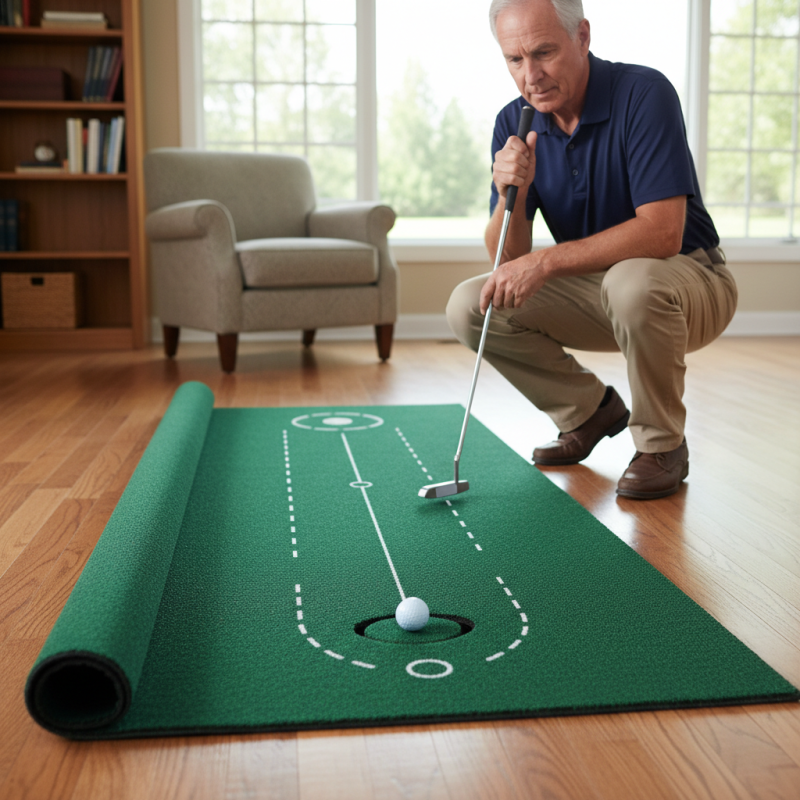
Definition of a Traditional Putting Mat and Its Purpose
A traditional putting mat is a popular training tool for golfers. It mimics the experience of a real putting green. Made from synthetic materials, these mats provide a smooth surface to practice on. They come in various sizes, accommodating different spaces, from living rooms to garages.
The primary purpose of a traditional putting mat is to improve putting skills. Golfers can work on their aim and stroke while staying indoors. Many mats have alignment guides printed on them to assist with technique. Using these mats regularly can enhance muscle memory. However, some golfers find it challenging to adjust to real greens after long practice sessions. The mat’s friction and speed can differ.
While putting mats offer convenience, their effectiveness depends on consistent practice. They may not replicate real-life conditions perfectly. A golfer might need to reflect on their performance after each session. It's essential to recognize the mat's limitations while maintaining focus on core skills. Achieving true proficiency requires more than just using a mat.
What is a Traditional Putting Mat and How Does It Work? - Definition of a Traditional Putting Mat and Its Purpose
| Feature | Description | Benefits |
| Material | Typically made of synthetic fibers or grass-like material. | Durable and mimics outdoor putting greens. |
| Size | Comes in various lengths, usually between 6 to 12 feet. | User can practice different putting distances. |
| Design | Often features alignment guides and target holes. | Helps improve accuracy and consistency. |
| Portability | Lightweight and rollable for easy storage. | Convenient for indoor and outdoor use. |
| Usage | Ideal for golfers of all skill levels. | Enhances practice routine and skill development. |
Key Features of Traditional Putting Mats for Golf Practice
A traditional putting mat is a popular tool for golf enthusiasts. It allows players to practice their putting skills at home or in the office. These mats simulate the feel of a real putting green. Many include markings to guide alignment and distance. Players can use them to develop precision in their strokes.
Key features of traditional putting mats include their surface material and size. A high-quality mat mimics the grass found on professional courses. Some mats are portable and can be rolled up easily. Others have a more substantial design for stability. The size varies, with options for small spaces or larger areas. A wider mat may offer more room for practice but can be difficult to store.
Putting mats often come with additional tools. Some models include cup targets to improve accuracy. Others may feature slope indicators. This adds a layer of challenge to practice. However, it's important to note that using a mat can sometimes lead to bad habits. Without proper guidance, players may develop poor putting techniques. This needs reflection to ensure effective practice.
How Traditional Putting Mats Work: Mechanics and Design
Traditional putting mats are designed to mimic real putting greens. They help golfers practice their aim and stroke at home. The materials typically include nylon or polyester, which create a smooth, realistic surface. This mimics the grass found on a golf course. Reports suggest that golfers who practice on these mats can improve their putting accuracy by as much as 30% over time.
The mechanics of these mats involve a layer of padding beneath the surface. This padding absorbs impact and provides feedback during practice. Some mats even feature alignment lines to guide players in the right direction. According to a study by the Golf Performance Institute, using a putting mat can reduce a golfer’s handicap by an average of 2-4 strokes. However, not all mats offer the same experience. Some may not roll correctly or feel off during use. Players need to assess their options carefully.
Another interesting aspect of these mats is their size. Standard putting mats vary from 8 to 15 feet in length. This can make it challenging to find a suitable space for practice at home. Whether placed in a living room or garage, the environment can affect the practice session. Many golfers realize they need to adjust their routine based on available space. Creating a dedicated practice zone may help achieve better results. Nonetheless, the quest for the perfect putting mat often leads to trial and error.
Traditional Putting Mats Performance Analysis
Benefits of Using a Traditional Putting Mat for Golf Skills
A traditional putting mat is an excellent tool for golfers seeking to improve their skills at home. These mats simulate real putting greens, allowing players to practice their strokes without leaving their homes. According to a recent industry report, around 70% of golfers believe that consistent practice helps lower their scores. Using a putting mat can contribute significantly to this practice.
Benefits of using a traditional putting mat include enhancing focus and precision. Mats often come with alignment guides. These features help golfers develop a consistent stroke and better aim. Data indicates that practicing on a putting mat can increase putting accuracy by 20% over time. However, some may find it easy to overlook the nuances of real greens. It’s essential to recognize this limitation and seek actual courses as part of a balanced practice routine.
Additionally, using a putting mat can save time. Golfers can practice during breaks or in their living room. This convenience makes it easier to fit skills training into busy schedules. Yet, golfers must remain aware that indoor practice lacks factors like wind or slope. Acknowledging these deficiencies is crucial for realistic skill development. Balancing mat practice with on-course play can lead to the best results.
Tips for Choosing the Right Traditional Putting Mat for Your Needs
Choosing the right traditional putting mat can enhance your golfing skills. A good putting mat mimics real greens. It should have the right surface texture. A rough surface can hinder practice accuracy, while a smooth one aids in a consistent stroke.
Consider the mat's size. A larger mat allows for more complex drills. However, it needs sufficient space for setup. Research shows that golfers often struggle to evaluate their distance control. A mat with distance markings can help with this. According to a 2021 industry report, 65% of golfers prefer putting mats with alignment guides. These features can improve aim and boost confidence.
Another aspect to ponder is portability. Some mats are easy to roll up and store. While lightweight versions may be convenient, they might compromise durability. Ultimately, finding the right balance between convenience and quality requires reflection. Evaluating your specific needs will lead to better outcomes in your practice routine. Each choice impacts the learning curve.

 Skip to content