How to Choose Perfume Boxes for Global Wholesale Buyers?
Choosing perfume boxes for global wholesale buyers requires more than attractive printing. The box must protect glass bottles, communicate quality, and survive long international routes. Smithers’ packaging industry research identifies sustainability, e-commerce, and supply-chain efficiency as major forces shaping packaging decisions. These pressures directly affect fragrance packaging.
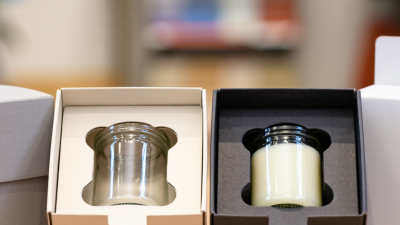
A buyer should begin with the bottle’s exact dimensions and weight. A rigid box with a fitted insert can reduce movement, scratches, and impact damage. Test the packed product through compression, vibration, and drop conditions before placing a large order. A glossy sample can still fail. It may collapse after several humid warehouse days.
Material selection also requires practical judgment. FSC-certified paperboard can support responsible sourcing claims. Recycled content may improve environmental performance, but it can change surface smoothness and structural strength. The Sustainable Packaging Coalition and ISO 18601 provide useful frameworks for evaluating material choices and environmental claims. Do not treat certification logos as decoration. Verify current certificates and permitted usage.
Color accuracy matters across different print factories. Request a physical proof, not only a digital file. Specify board thickness, coating, insert material, tolerance ranges, carton dimensions, and packing methods. These details reduce disputes between factories, importers, and retailers. Incoterms 2020 should also clarify transport responsibilities and risk transfer.
Euromonitor International’s beauty and sustainability research shows that consumers increasingly notice packaging waste and responsible brand behavior. However, sustainability cannot excuse weak protection. The best perfume boxes balance presentation, durability, cost, and measurable environmental improvements. There is no universal solution. A premium magnetic box may impress in a department store, yet create unnecessary freight volume for wholesale distribution. Careful testing, transparent documentation, and realistic market requirements create a more reliable purchasing decision.
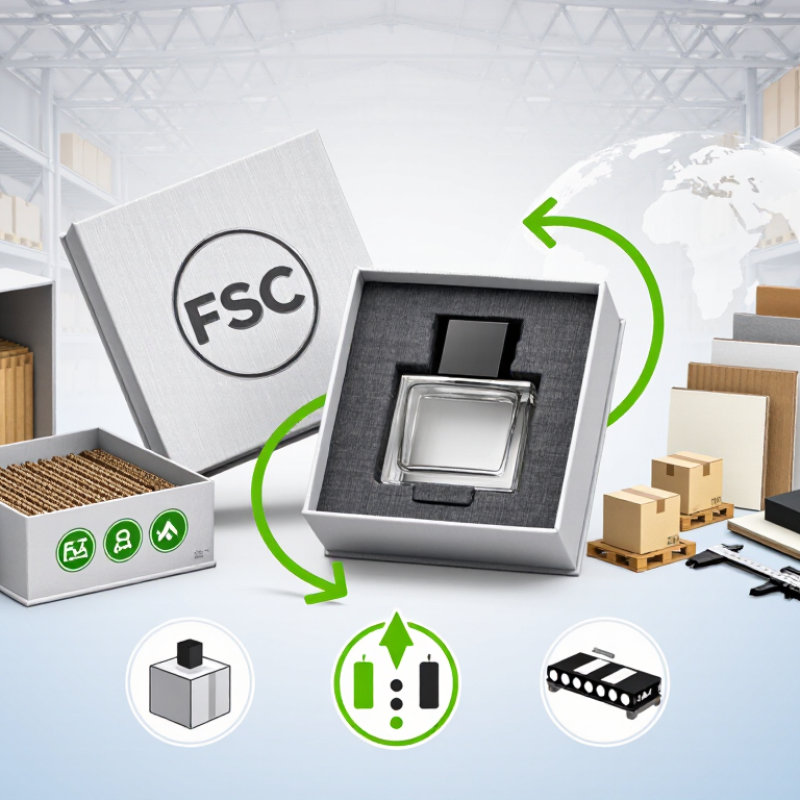
Define Perfume Box Requirements for International Wholesale Markets
International wholesale buyers need perfume boxes defined by destination, product size, and handling conditions. A 50 ml glass bottle may need a tight insert, while a heavier bottle requires stronger board and edge protection. Confirm box dimensions, folding style, paperboard thickness, coating, insert material, print colors, barcode position, and carton quantity before requesting quotations. Small errors can create large losses across ocean shipments.
Sustainability now affects purchasing decisions. McKinsey’s 2023 global packaging survey reported that 60–70% of consumers would pay more for sustainable packaging. This does not mean every buyer wants premium materials. Cost still matters. Choose recyclable paperboard, water-based inks, and minimal plastic when the supply chain supports them. The OECD’s Global Plastics Outlook identifies packaging as the largest generator of plastic waste, at about 40% of total plastic waste. That figure deserves attention.
Think beyond appearance. Export cartons should resist humidity, compression, and repeated handling. Ask suppliers for drop-test records, moisture testing, and batch inspection photos. In my experience, buyers often approve a beautiful sample too quickly. It may fail after three weeks at sea. One detail is easy to miss: inner movement. If the bottle shifts, even thick board cannot prevent damage. Requirements should also reflect destination recycling systems, language rules, and local labeling expectations. Perfect specifications are rare. Review them after every shipment.
Compare Materials, Sizes, and Protective Packaging Features
How to Choose Perfume Boxes for Global Wholesale Buyers?
Material selection affects cost, protection, and environmental claims. Smithers’ 2024 assessment forecasts the sustainable packaging market will grow from about $274 billion in 2023 to nearly $394 billion by 2028. Paperboard remains practical for perfume boxes because it is printable, lightweight, and widely recyclable. Recycled board can work well, but its surface may feel rougher. That trade-off deserves testing.
Size should follow the bottle, not the catalogue template. A 30 ml bottle may need a compact 45 × 45 × 125 mm box, while a 100 ml bottle requires more clearance and stronger internal support. Measure the cap, shoulders, and glass thickness. Small gaps reduce movement. Excess space increases freight volume and corner damage. I have seen attractive boxes fail because the insert was only two millimeters too shallow.
Protective packaging needs both structure and restraint. Molded pulp inserts suit buyers seeking fiber-based solutions, while paperboard collars offer cleaner presentation for lighter bottles. For fragile glass, test compression, vibration, and drop performance before approving bulk production. ISTA testing methods provide a recognized framework for shipment simulation. UNEP’s Global Resources Outlook 2024 states that global material extraction has tripled since 1970, so oversized packaging deserves careful review. A thin box is not automatically sustainable. Sometimes, it is simply under-protected.
Evaluate Customization, Branding, and Printing Options
Global wholesale buyers should treat perfume boxes as a sales tool, not merely protective packaging. Customization begins with structure. A rigid box may create a premium unboxing experience, while a folding carton can reduce storage volume and shipping costs. Measure bottle height, cap clearance, insert stability, and carton strength before approving a design. Small details matter.
Branding should remain recognizable across different markets. Use consistent colors, typography, logo placement, and product information. However, avoid overcrowding the front panel. Buyers often need clear details about size, fragrance name, materials, and care instructions. A quiet design can feel more confident. I have found that many buyers focus on appearance first, then discover that poor inserts allow bottles to move during transit.
Printing options require practical testing. Offset printing suits larger runs and detailed color work, while digital printing can support smaller quantities or multiple designs. Foil stamping, embossing, spot coating, and soft-touch finishes add texture, but each affects cost and production time. Request physical samples under natural and indoor lighting. Screen images can mislead. Test before scaling.
Ask the supplier about color matching, proof approval, minimum order quantities, and quality inspections. A sample may look excellent, yet production consistency can still vary. This is where careful communication matters. Leave room for revision. Perfect packaging on the first attempt is uncommon.
How to Choose Perfume Boxes for Global Wholesale Buyers?
This practical 1–10 evaluation framework compares common perfume box formats across customization, branding, printing flexibility, and product protection. Folding cartons generally provide efficient full-color printing, while rigid and magnetic boxes offer stronger protection and a more premium unboxing experience. Final selection should also consider order quantity, shipping conditions, target price, and decoration requirements.
Check Supplier Quality, Compliance, Pricing, and Minimum Orders
For global wholesale perfume buyers, supplier quality should be tested, not assumed.
Request a production sample, board specification, color tolerance, and recent compression or drop-test records. Inspect corner joints, foil adhesion, magnetic closures, and the fit around a glass bottle. A beautiful prototype can still fail in humid warehouses. Use pre-shipment inspections with clear acceptance limits, including print defects, box dimensions, and carton damage. Keep the criteria measurable. Vague approval creates expensive arguments.
Compliance needs equal attention.
Ask for material declarations, ink and adhesive information, recycled-content evidence, and restricted-substance test results. The EU Packaging and Packaging Waste Regulation entered into force in February 2025, increasing pressure on recyclability, labeling, and packaging reduction. Requirements vary by destination, so obtain written advice from a qualified local compliance professional. Do not treat an “eco” claim as proof. It is not enough.
Pricing should compare landed cost, not unit price.
Include sampling, tooling, plates, inserts, freight, duties, inspection, and replacement allowances. McKinsey’s 2023 global packaging survey reported that 60% of consumers would pay more for sustainable packaging, but wholesale budgets remain tight. Ask for tiered quotations at several MOQs, then calculate inventory risk and storage space. A small trial order may cost more per box, yet it can expose weak glue or inaccurate color before a container-sized commitment. I would rather pay for evidence than discount a preventable failure.
Select Shipping-Friendly Perfume Boxes for Global Distribution
Global wholesale buyers need perfume boxes that survive long, varied distribution routes. A box may face humidity at a port, vibration in a truck, and tight stacking in a warehouse. In practical packaging evaluations, the safest starting point is structural fit. Measure the bottle, cap, and internal clearance accurately. Too much empty space invites movement. Too little space creates pressure on glass and closures. Small details matter.
Choose rigid paperboard or strong corrugated construction according to bottle weight and shipping distance. Use inserts that hold each bottle upright without blocking inspection. Edge protection helps when cartons are dropped or shifted. Moisture-resistant coatings can support transit, but they should not replace sealed outer cartons. Ask suppliers for compression, vibration, and drop-test records. Sample testing is more reliable than attractive photos. Still, testing one carton is not enough. Mixed pallet conditions can reveal weak corners.
For global distribution, keep box dimensions consistent and avoid oversized decorative structures. Compact cartons improve pallet use and may reduce freight volume. Clear labels for orientation, quantity, and handling reduce warehouse mistakes. Check that inks, adhesives, and packaging materials meet destination-market requirements. Requirements differ. I have seen elegant boxes fail because the insert loosened after repeated temperature changes. That mistake is easy to miss. Review the full route, from factory packing to final delivery, and revise the design after real shipment feedback.

 Skip to content